
OBJECTS
Since the beginning of civilization, Silk Road networks have connected people, goods, and cultures through dialogue around the globe. This flow of people, goods, and ideas contributed to some of the most significant evolution of Humanity, from writing, mathematics, and astronomy to the invention of agriculture, pottery and urbanism.
THE PROJECT
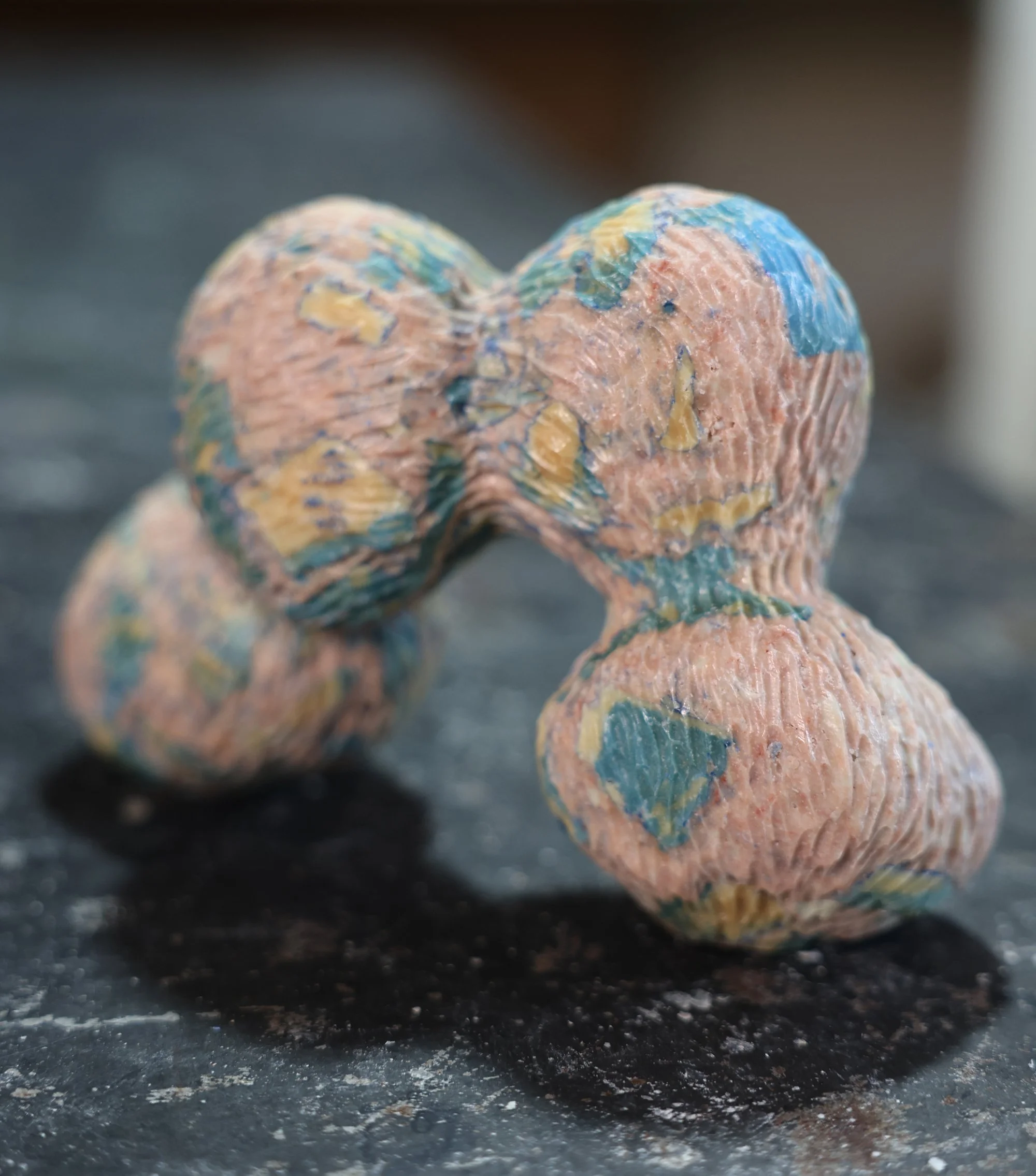
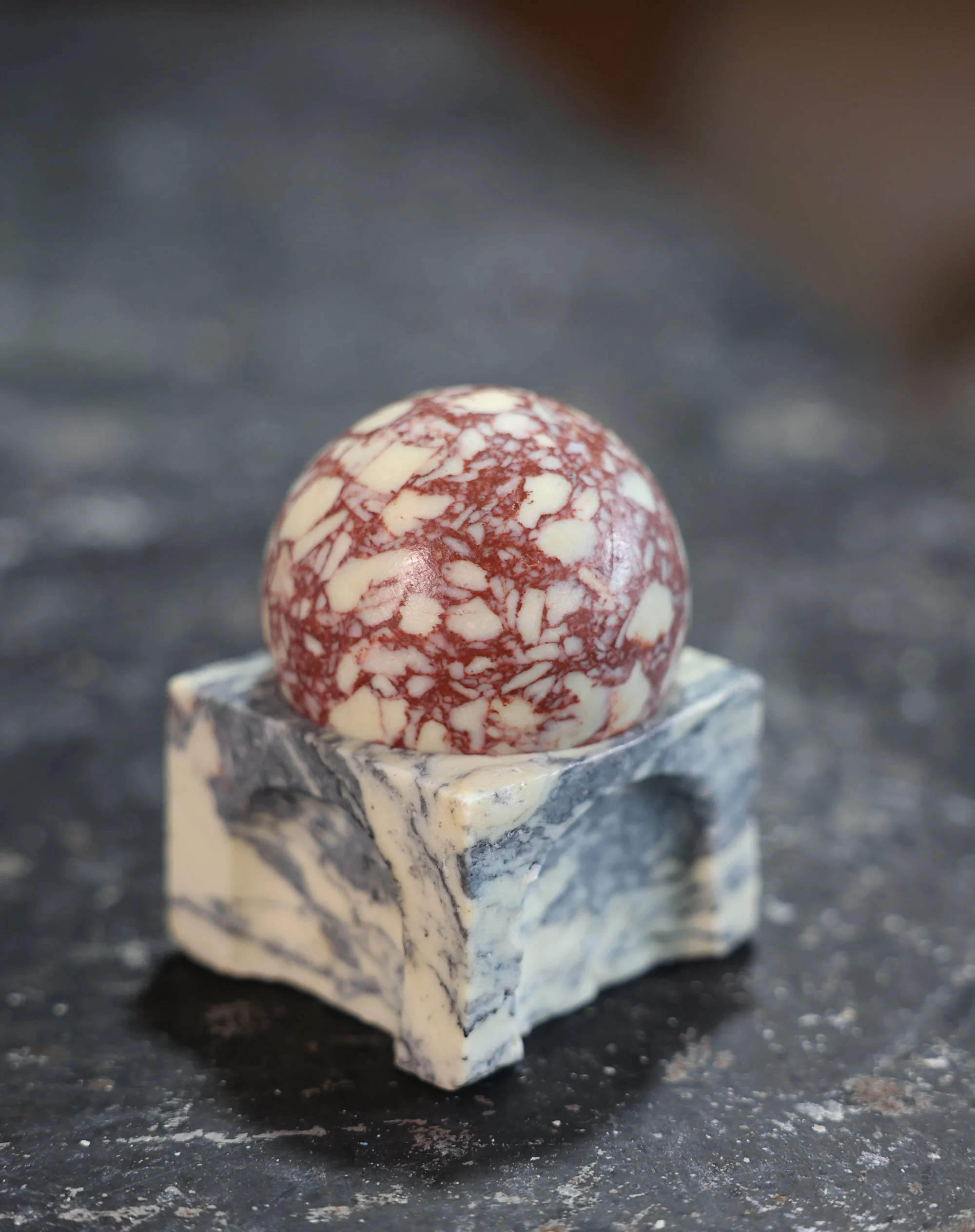
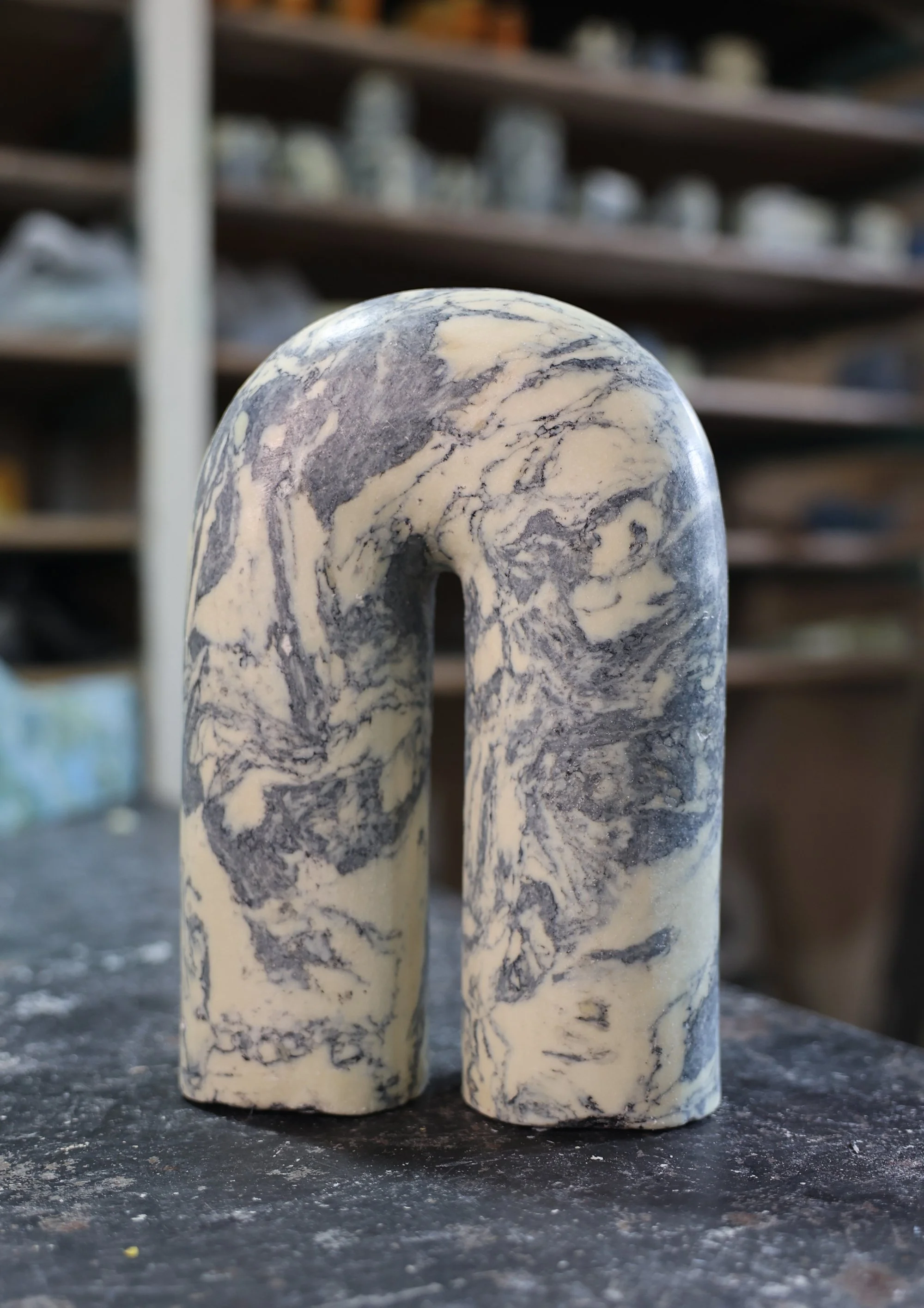
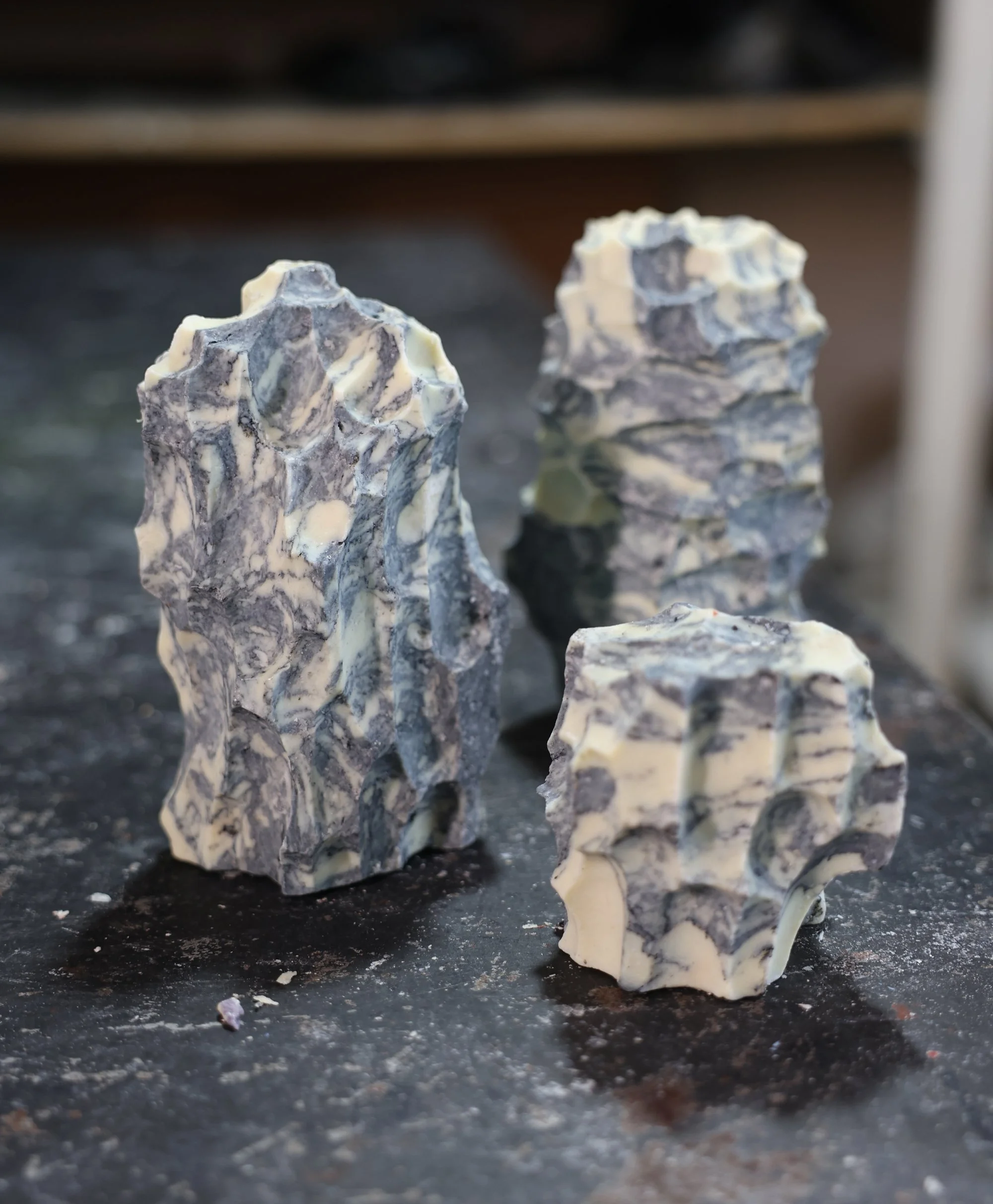
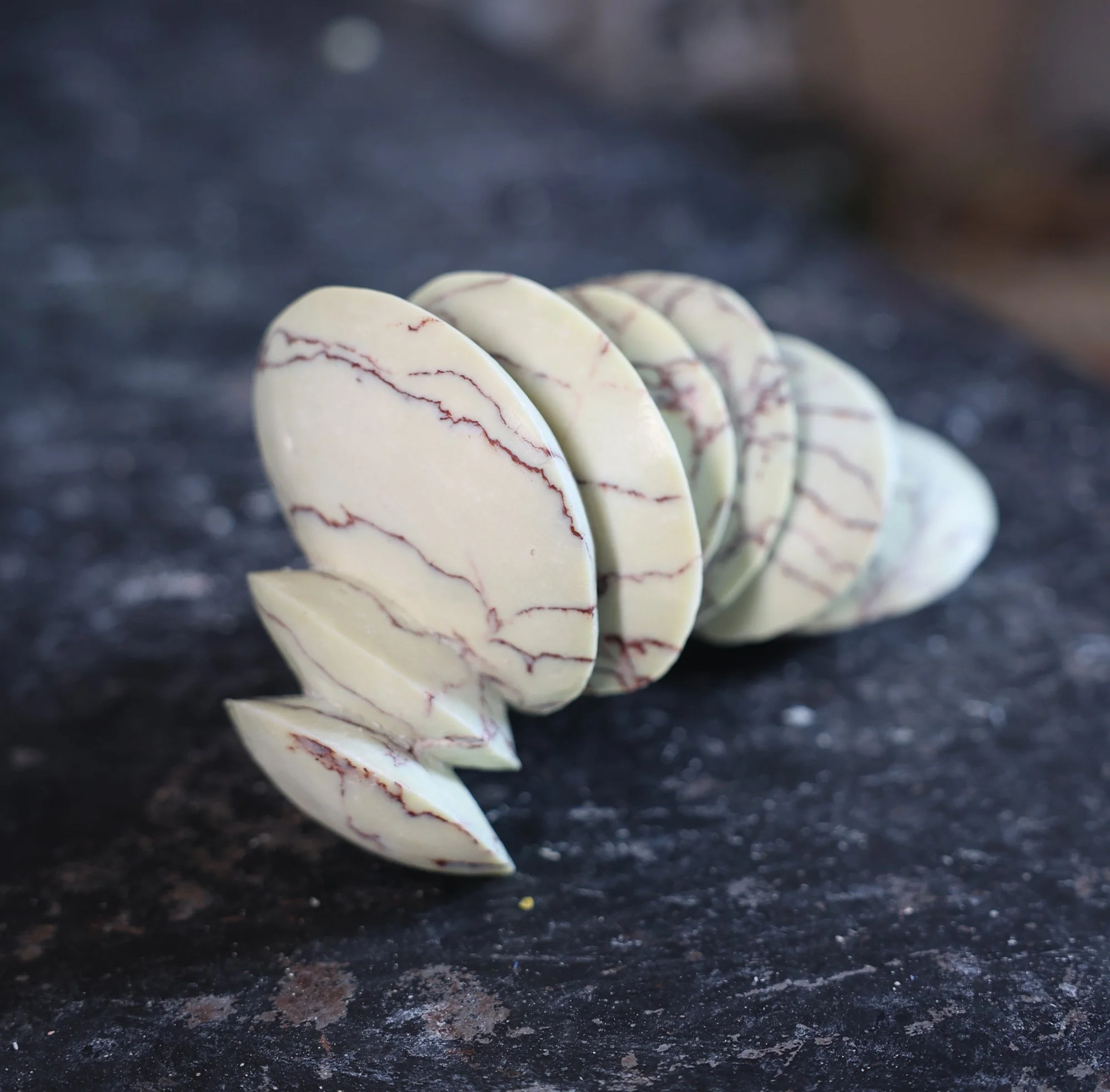
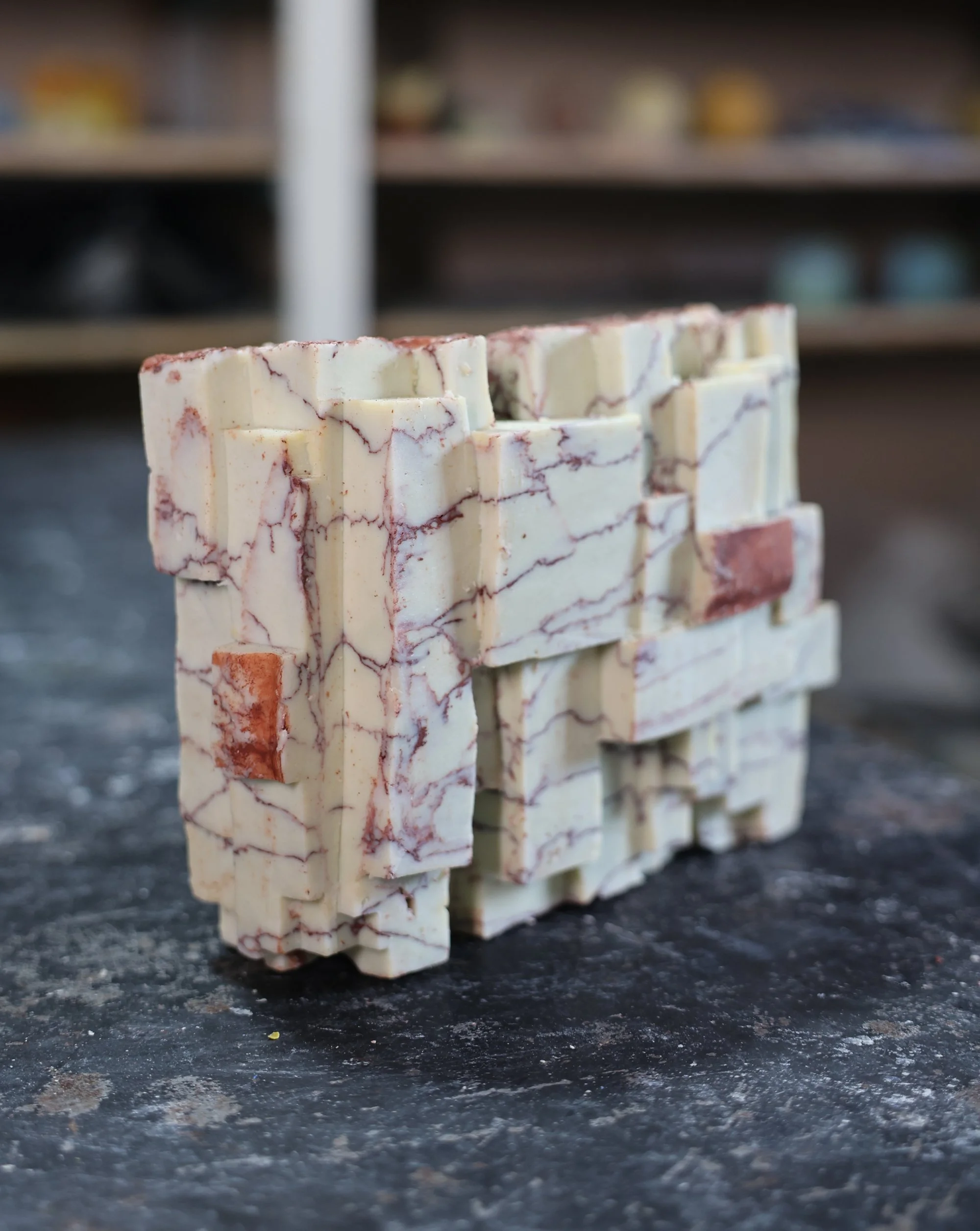
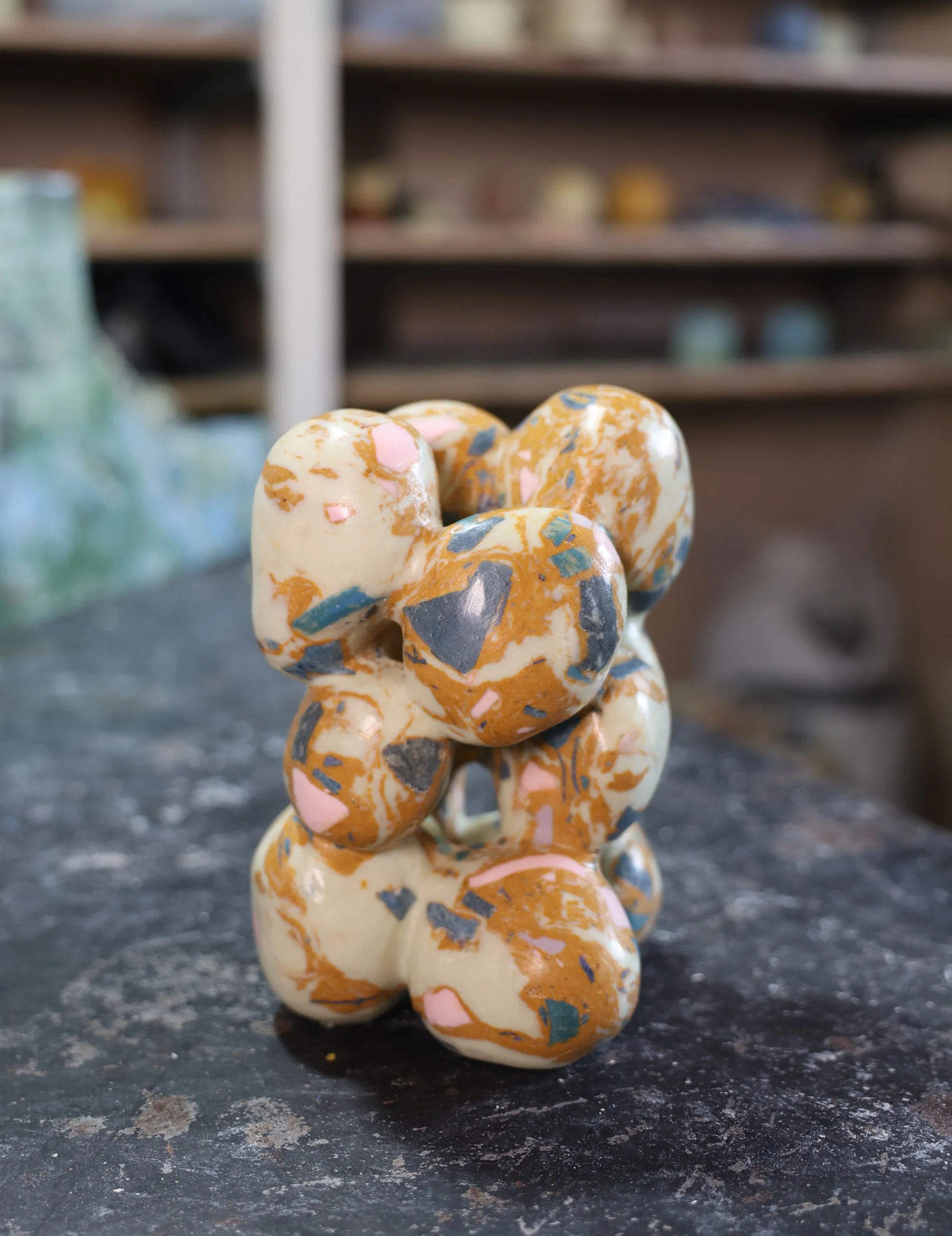
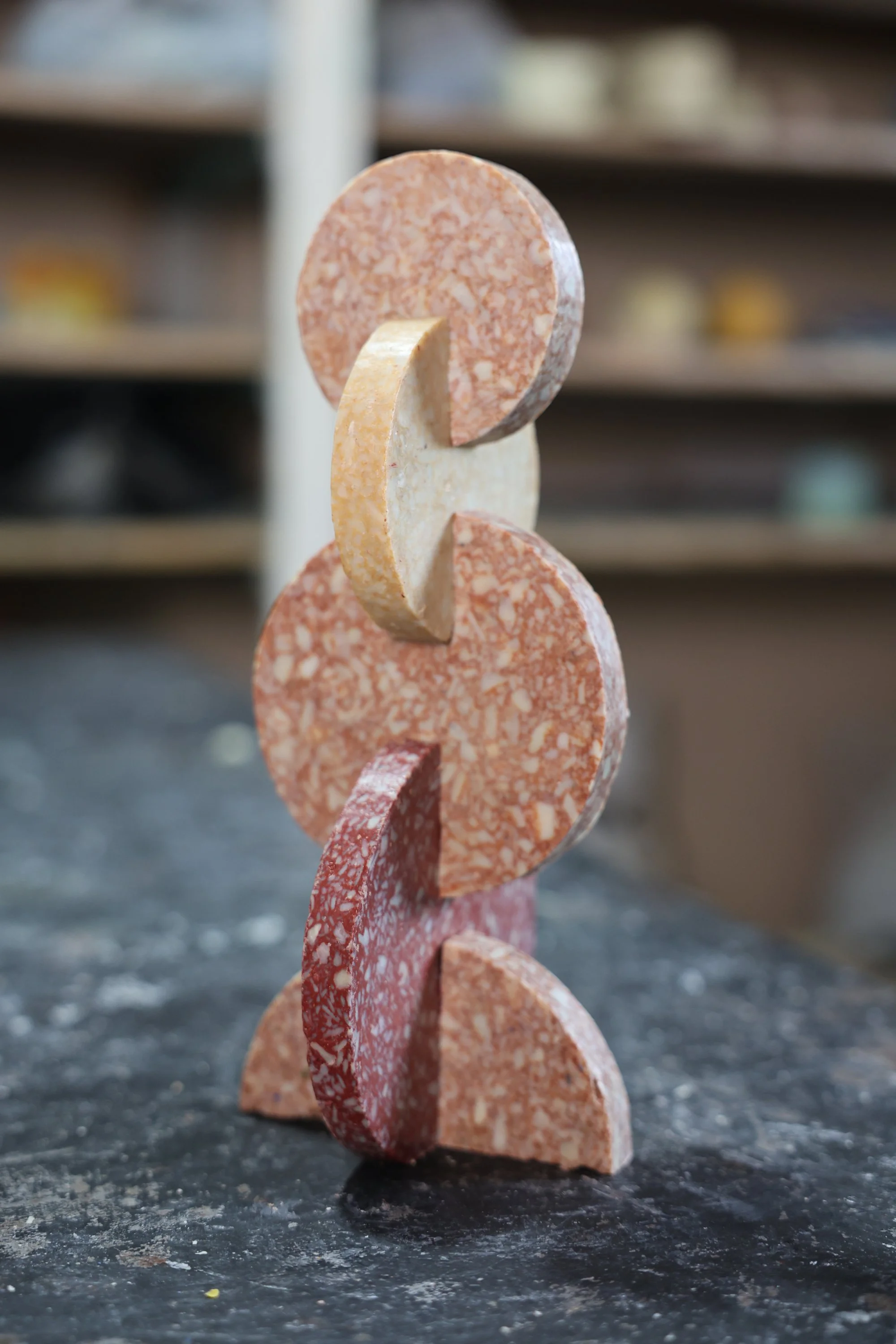
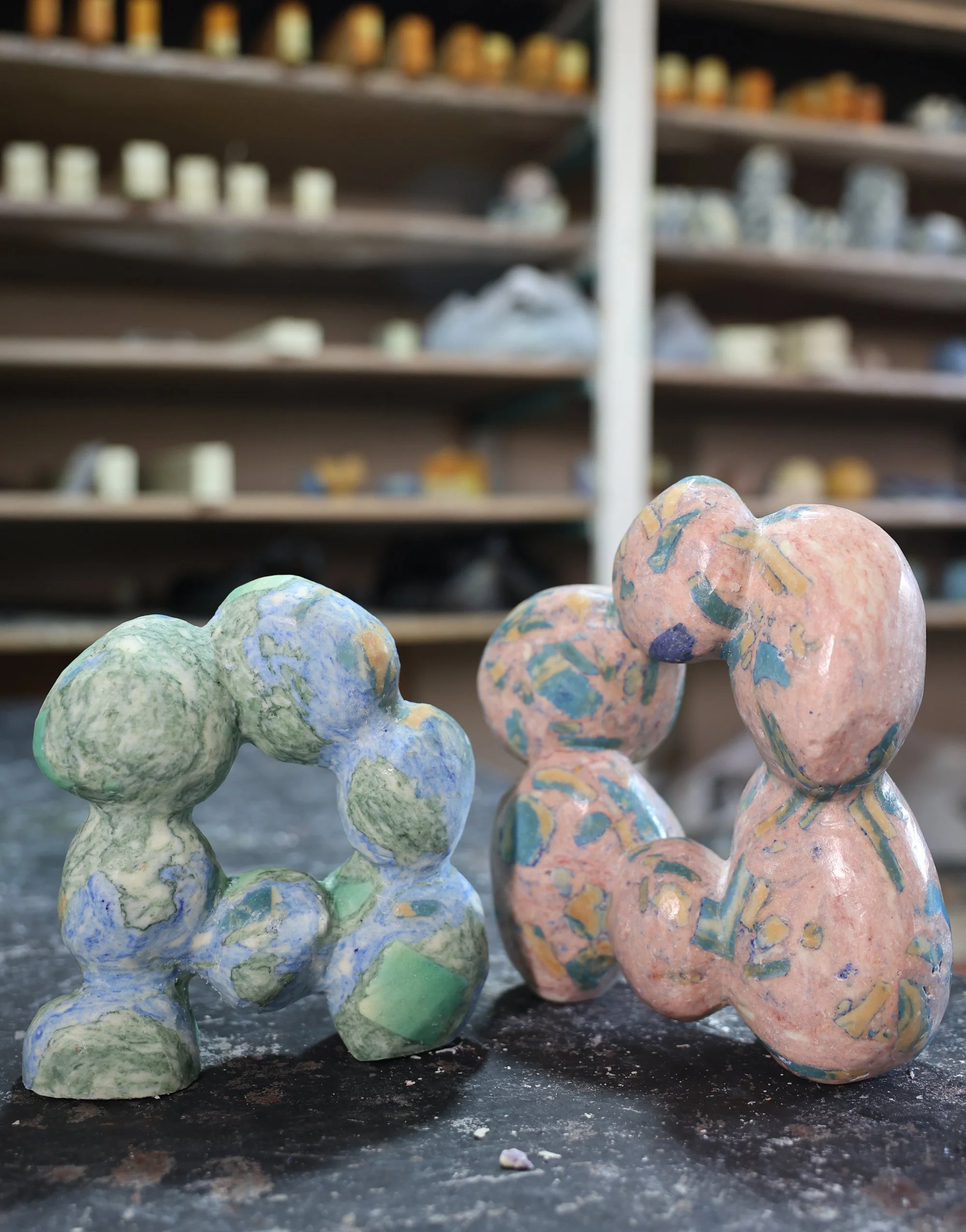
Originating in Syria using a traditional method where natural oils are saponified together before aging for six months, Aleppo soap has been crafted for over 3,000 years, making it one of the oldest soaps in the world.
The encounter between Kia and Michel is a story of hope and creativity. And what SILA aims to share: Preserving craftsmanship, encouraging dialogue, and appreciating the magic embedded in each product we embrace.
True magic, however, manifested in the relationship between Michel and Kia. Despite numerous differences in their world views, life situations and initial hesitations, a precious dialogue emerged. This dialogue evolved into a mutual respect, creating a transformative learning curve as they shared diverse perspectives.
ALEPPO SOAPS
KIA UTZON-FRANK - Designer (42, Danish)
and goldsmith founder of KUFstudios.
MICHEL MANSOUR - Artisan (90, Lebanon).

KIA UTZON-FRANK
Designerand goldsmith founder of KUFstudios. (Danemark)
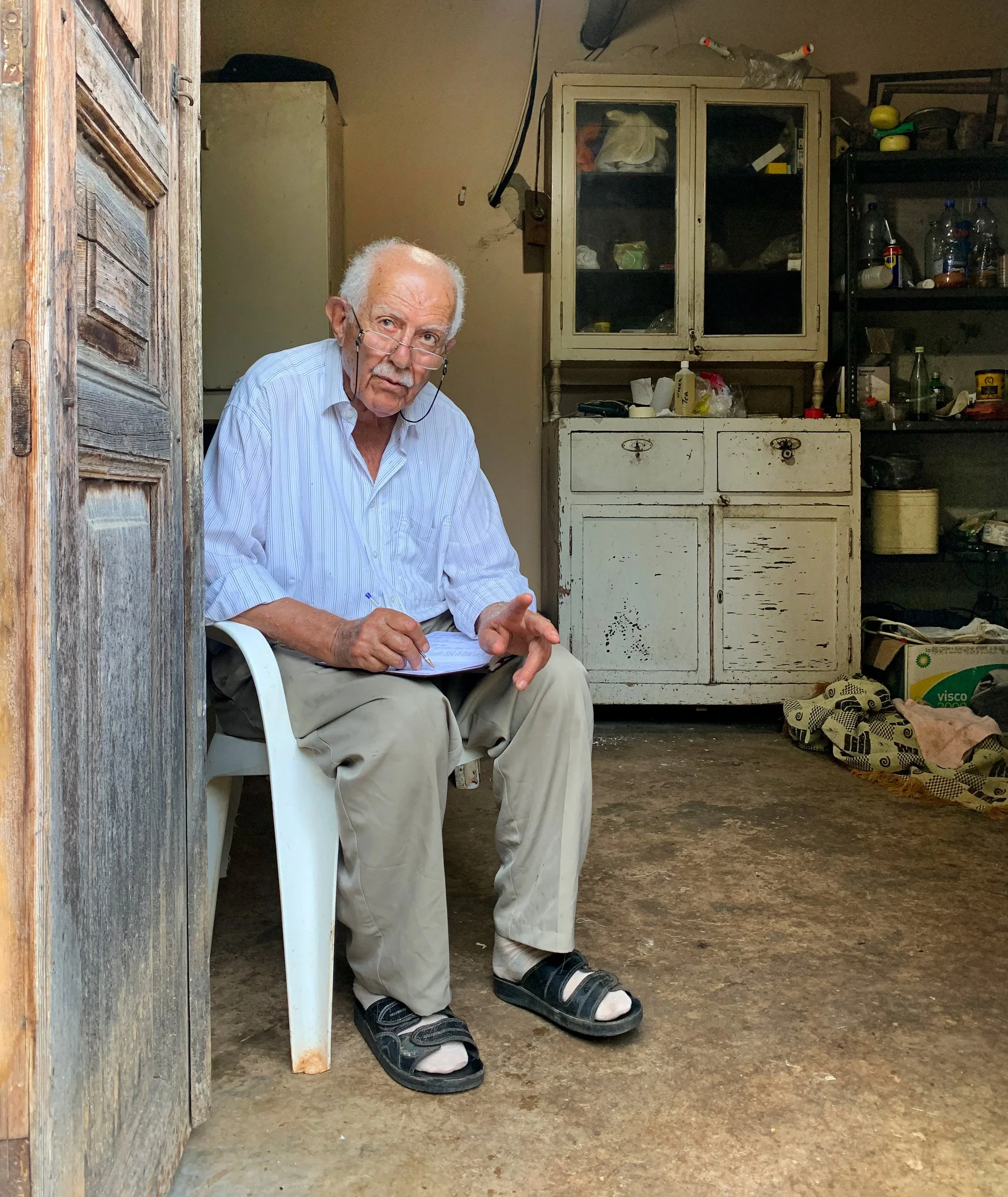
MICHEL MANSOUR
Artisan (Lebanon).

©Joe Chaaya
MEASURES OF FRAGILITY
SAHEL ALHIYARI - Architect & Professor (Jordan)
THE PROJECT
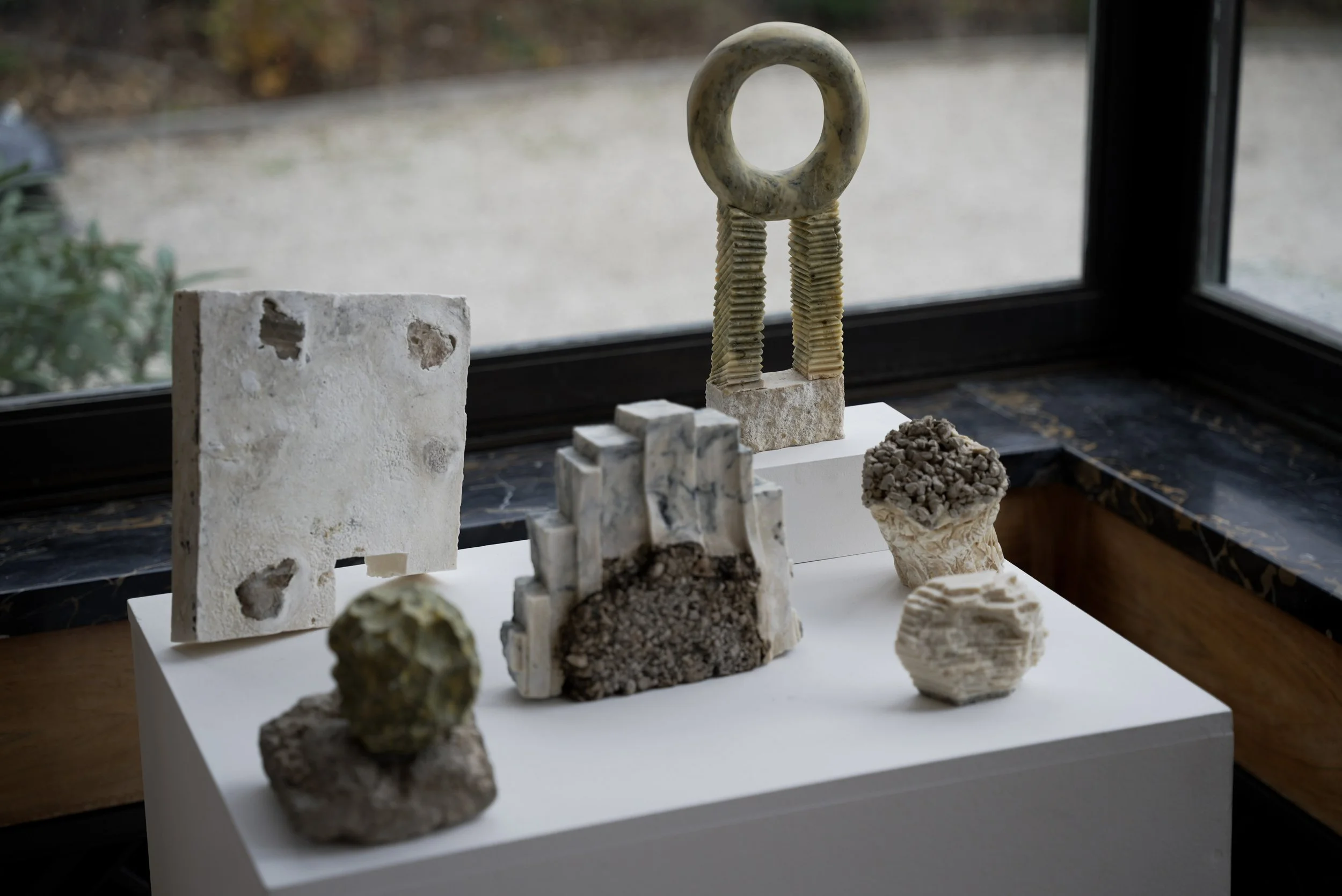
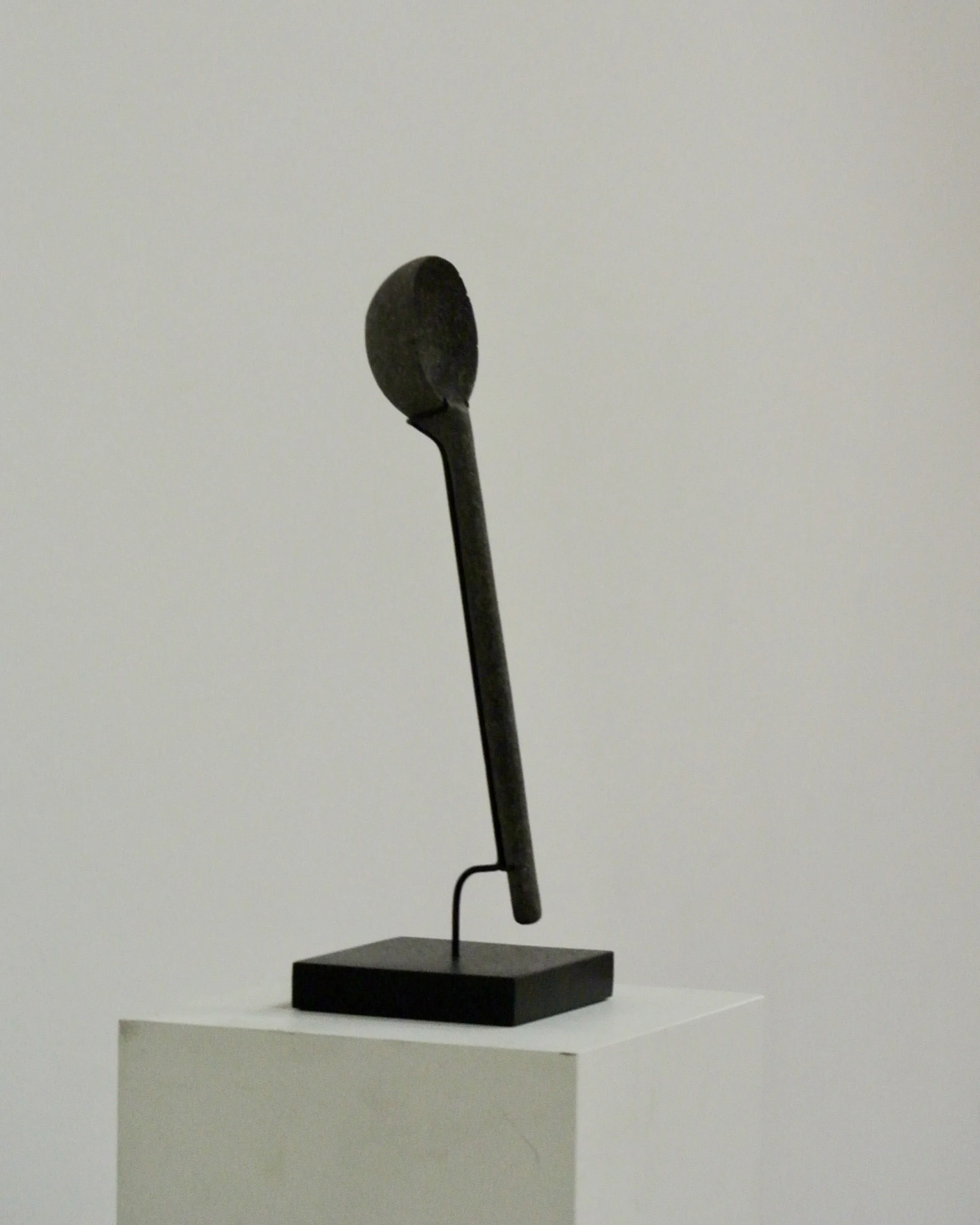
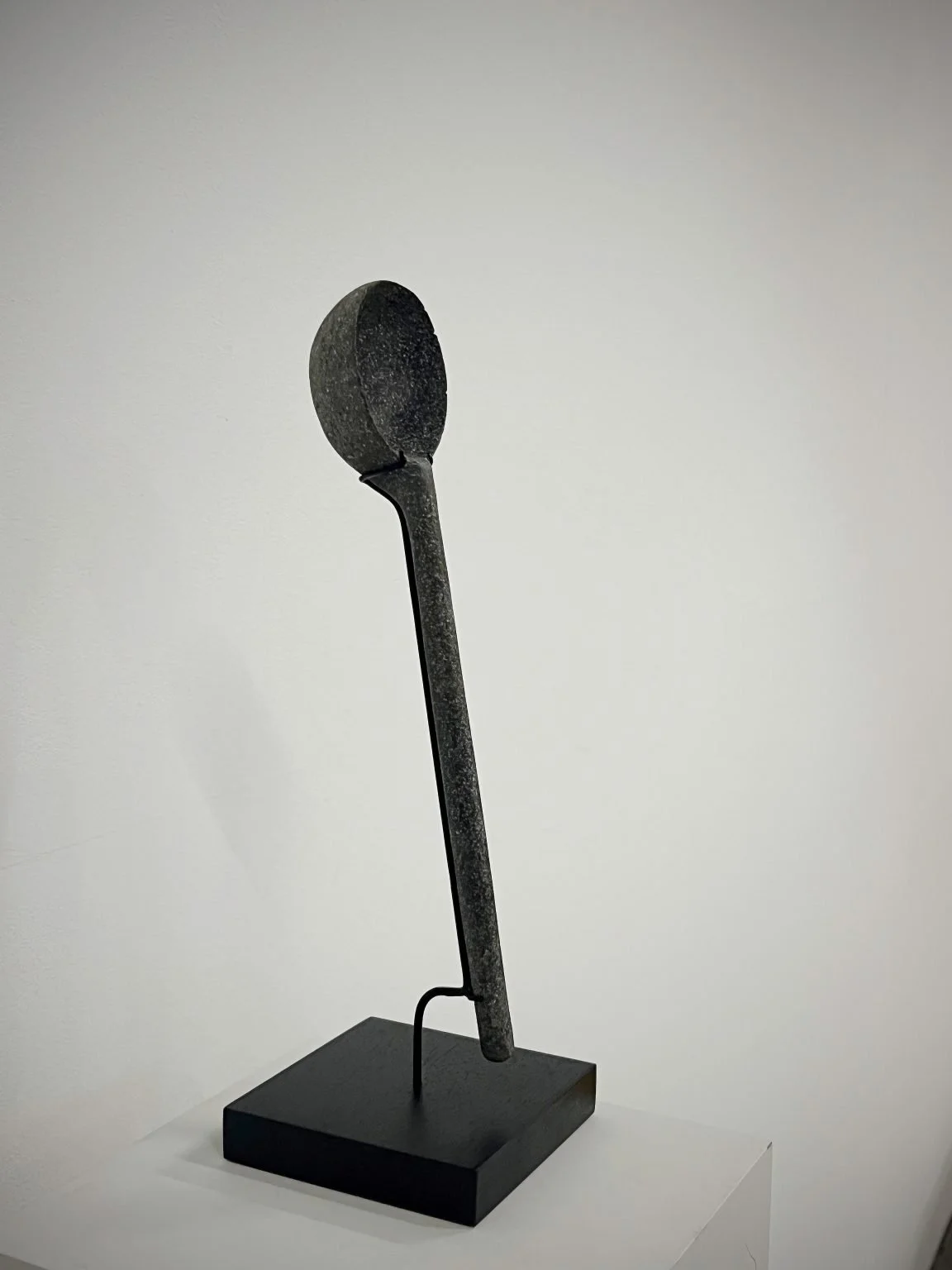
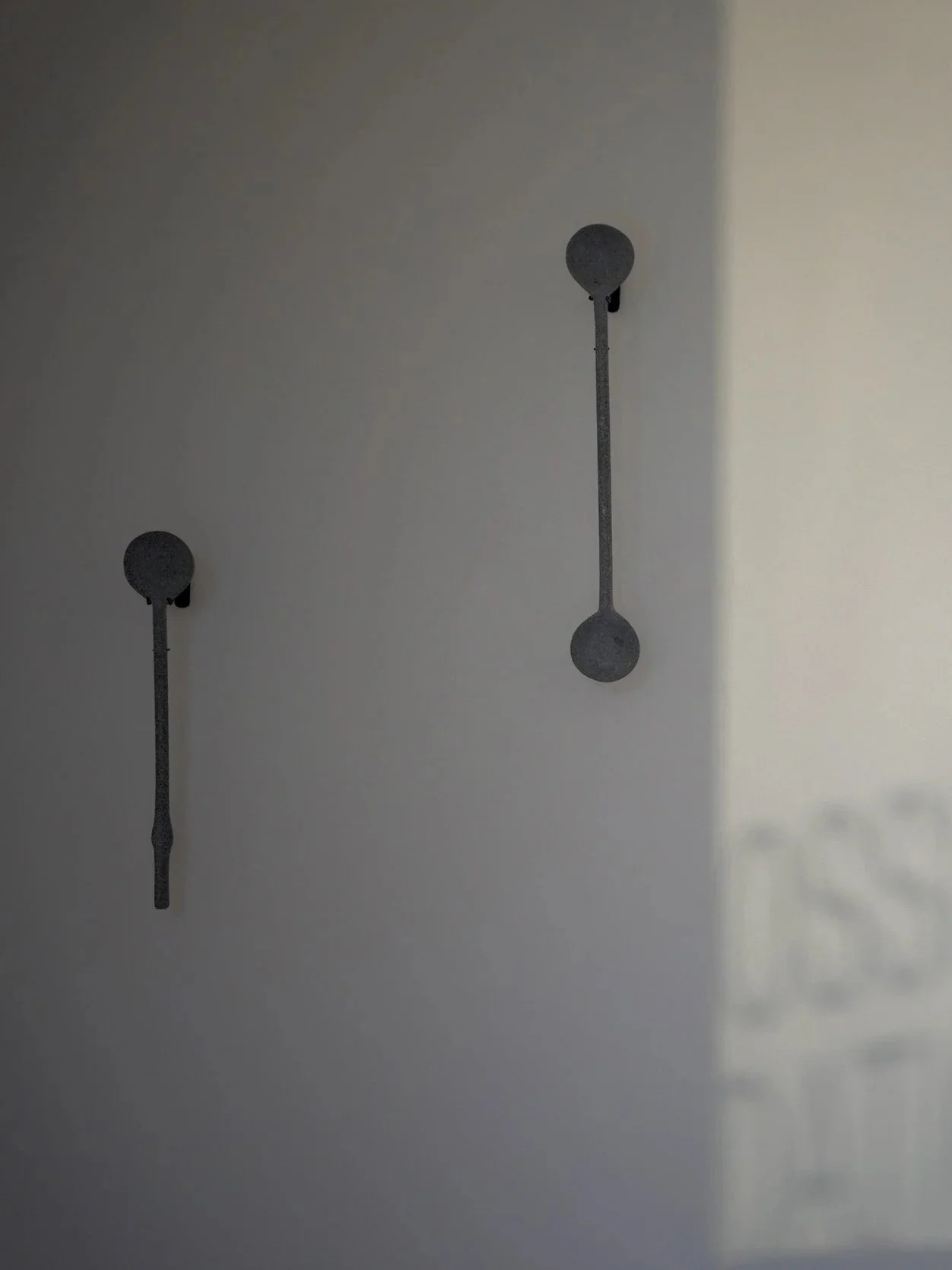
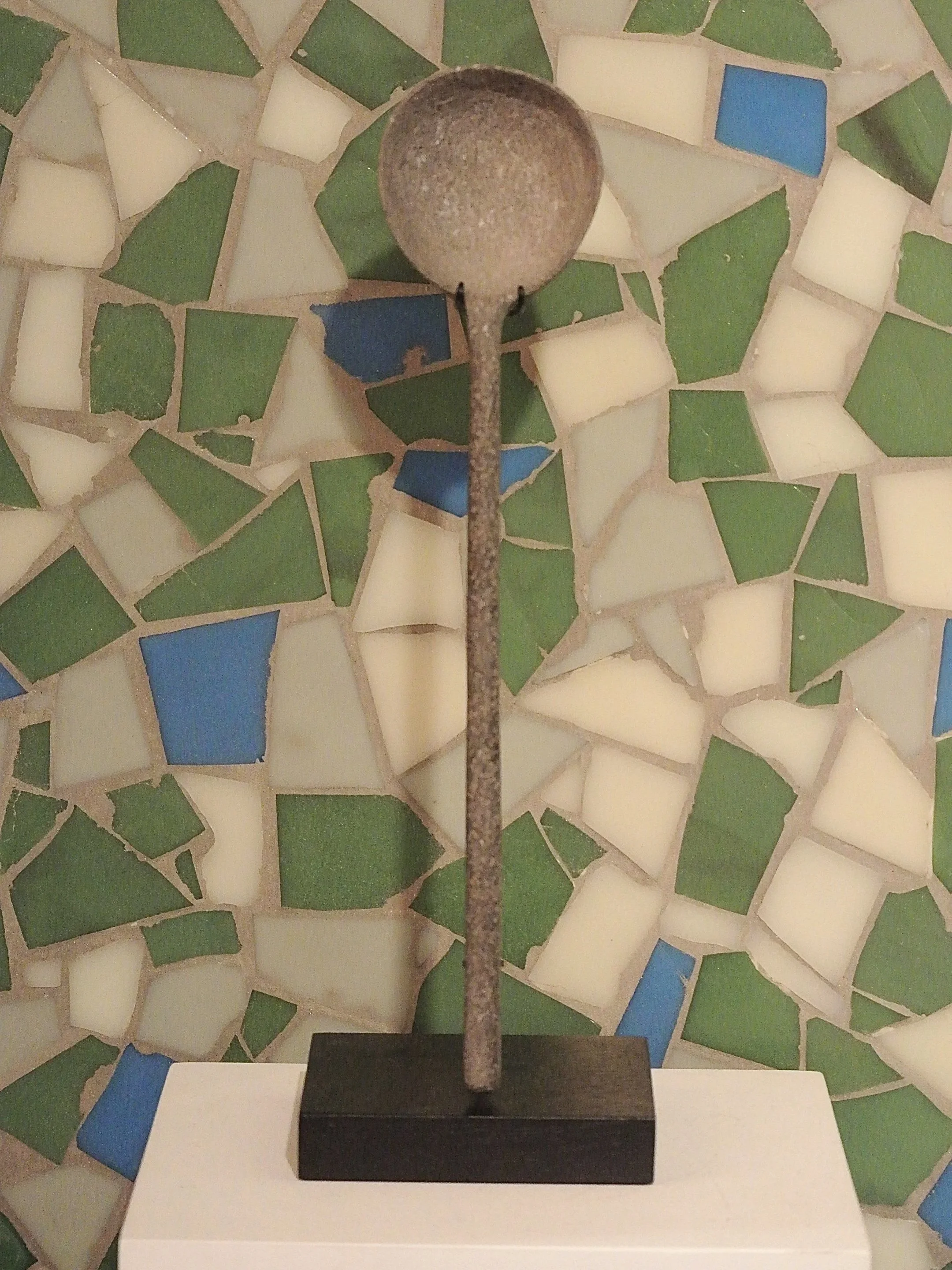
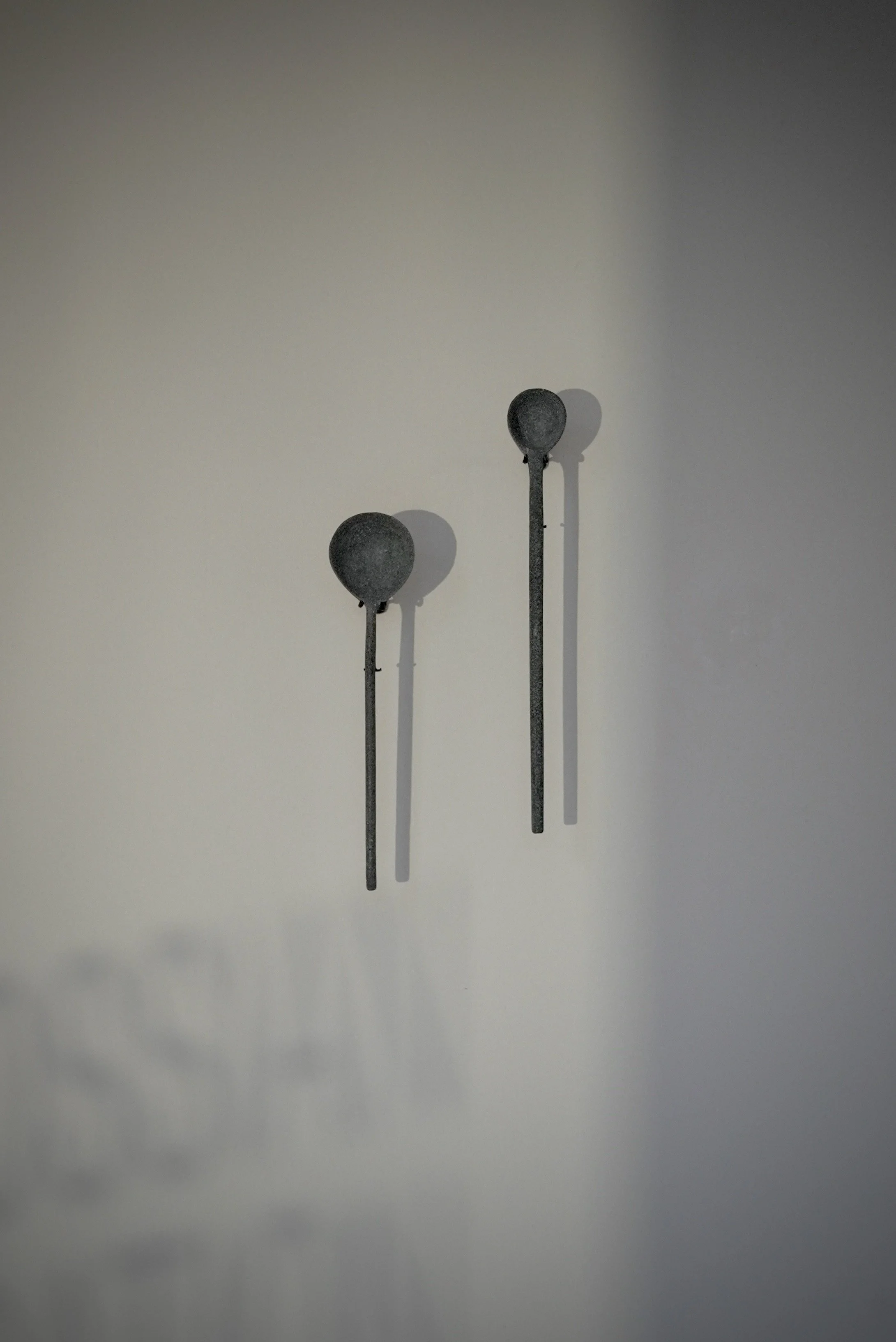
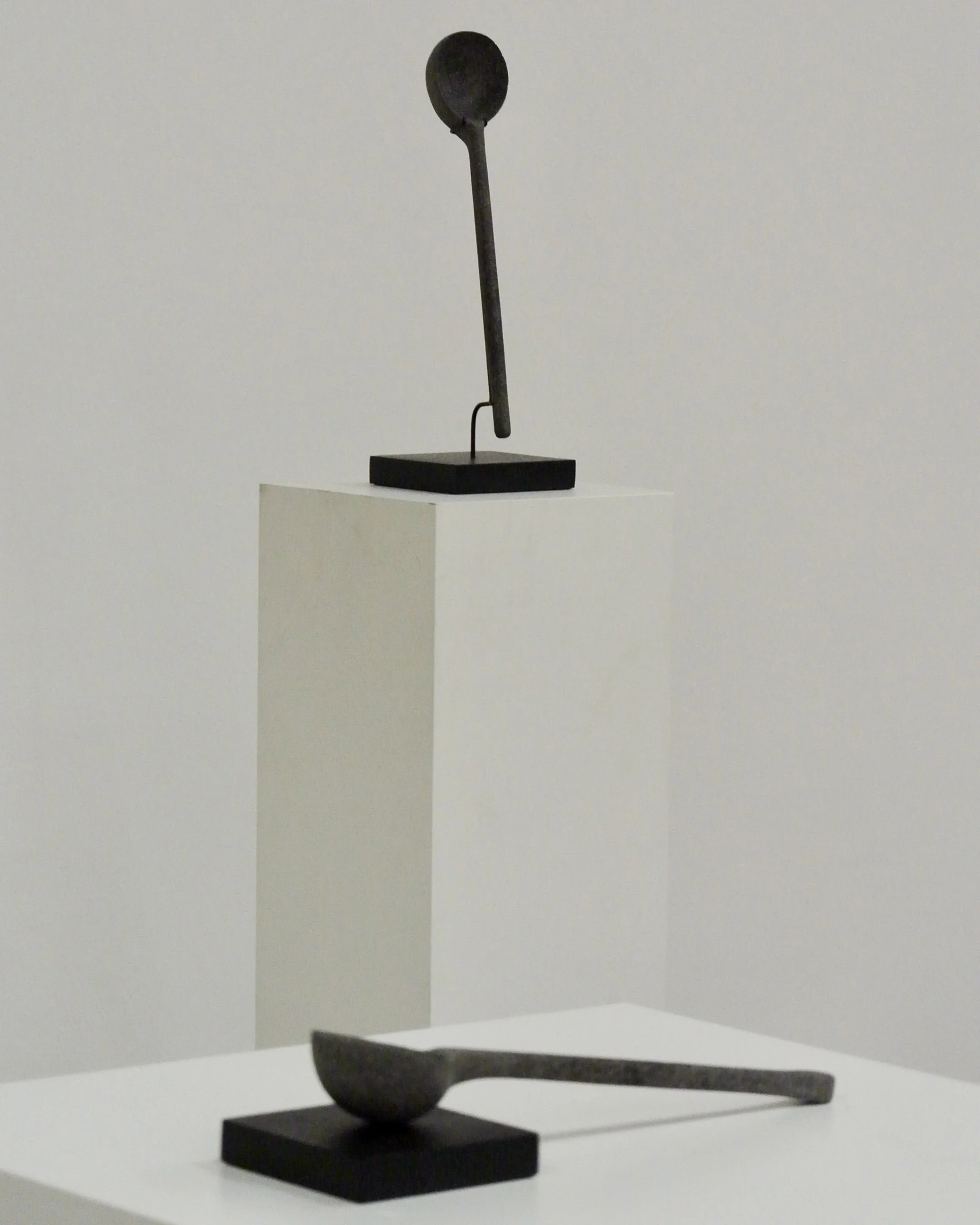
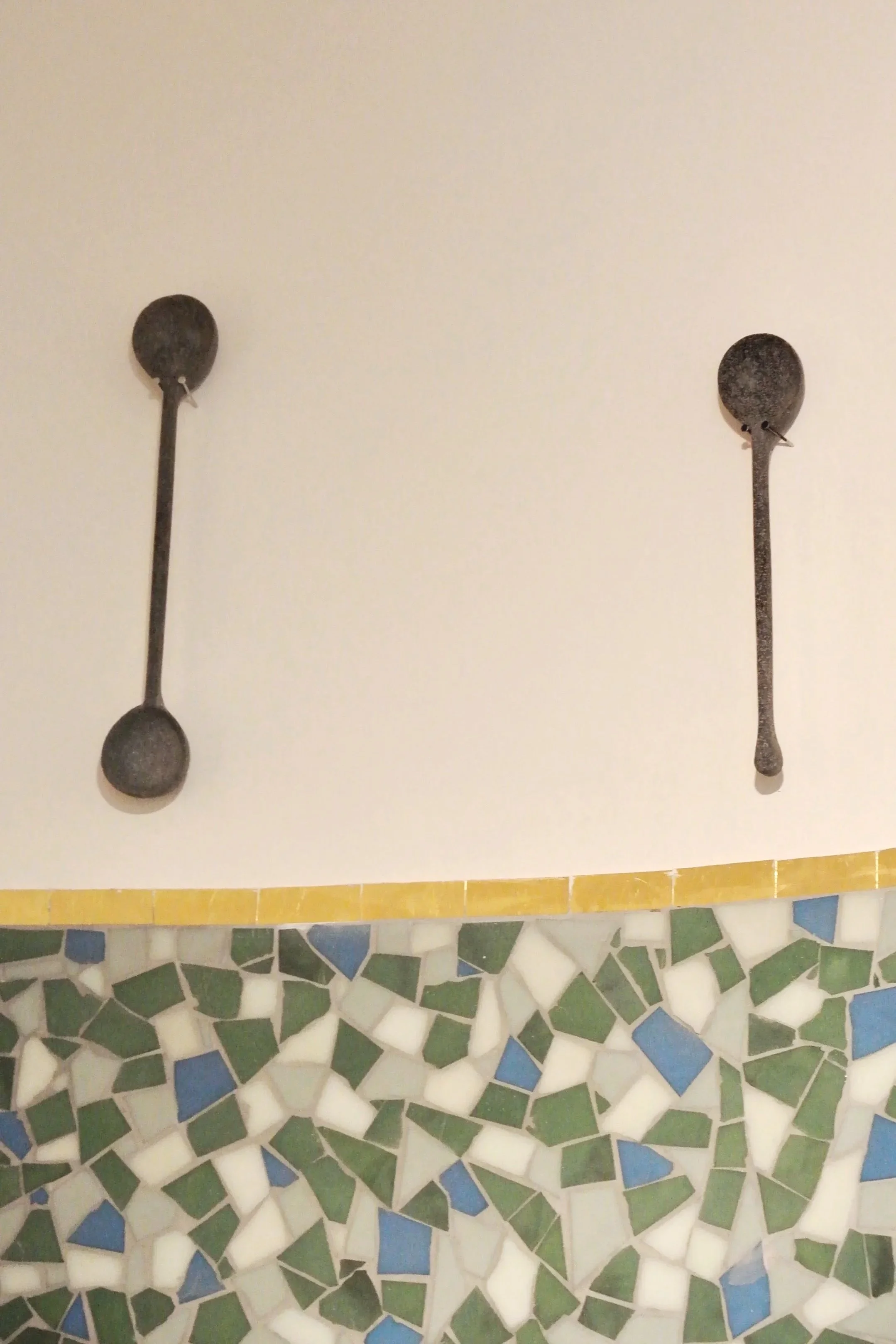
Basalt carving predominantly used for architectural, sculpture and inscriptions, dates back to ancient Syria, 3000 years ago.
Basalt being exceptionally hard material to carve, becomes increasingly delicate as it becomes thinner. These spoons were carved from a solid block of basalt by the Syrian artisan Firas Al Musili. Sahel inherited a spoon from his Circassian grandfather, whose family fled persecution and genocide. This spoon carries his essence. Made from the most resilient wood, it bears the patina of something deeply loved. Sahel recasted its legacy into a series of vignettes carved from Jordanian basalt. Each spoon, shaped by hand to echo the original, transforms as the stronger substance becomes delicate and brittle, evoking the fragile nature of displacement and refuge.
This project is a deeply collaborative journey, with the designer acting as an editor, entirely reliant on the artisan’s skill. Here, the role of the artisan is not merely that of a craftsman but a co-author in the creation of the work.

SAHEL ALHIYARI
Architect & Professor (Jordan)

FIRAS AL MUSALI
Sculpor (Syria)

VERY-GO-ROUND
RICHARD YASMINE - Interior Architect and Designer (Lebanon).
THE PROJECT
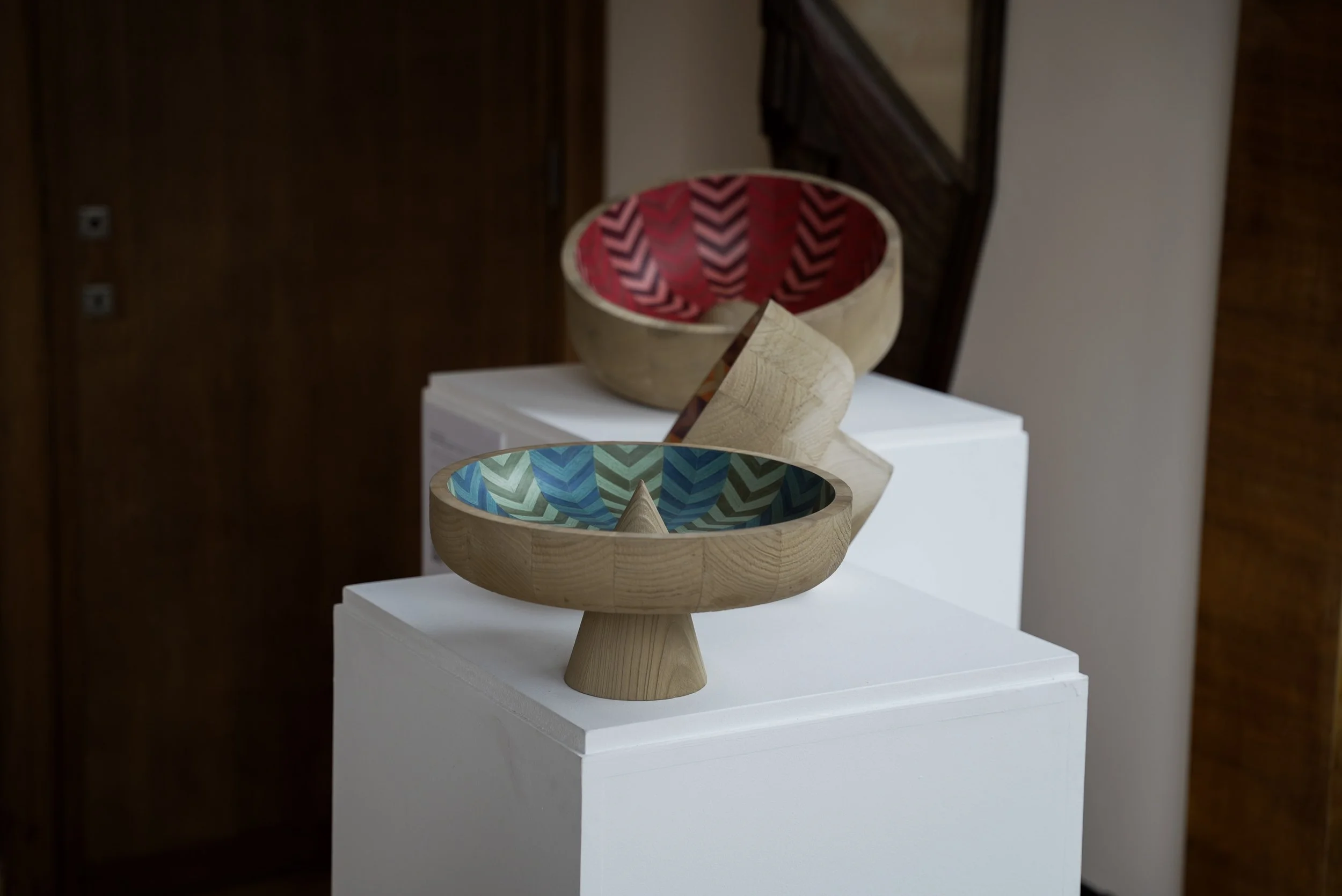
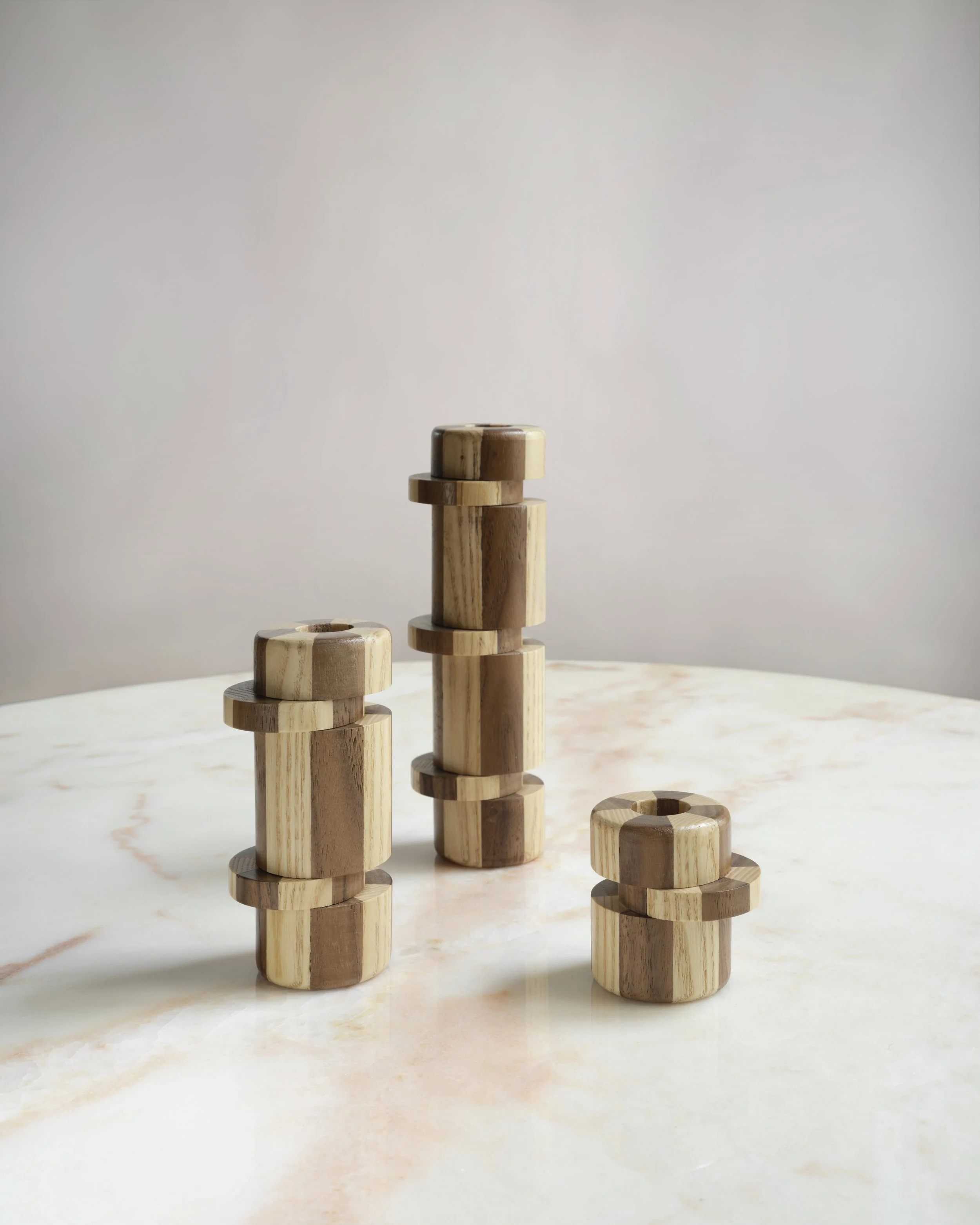
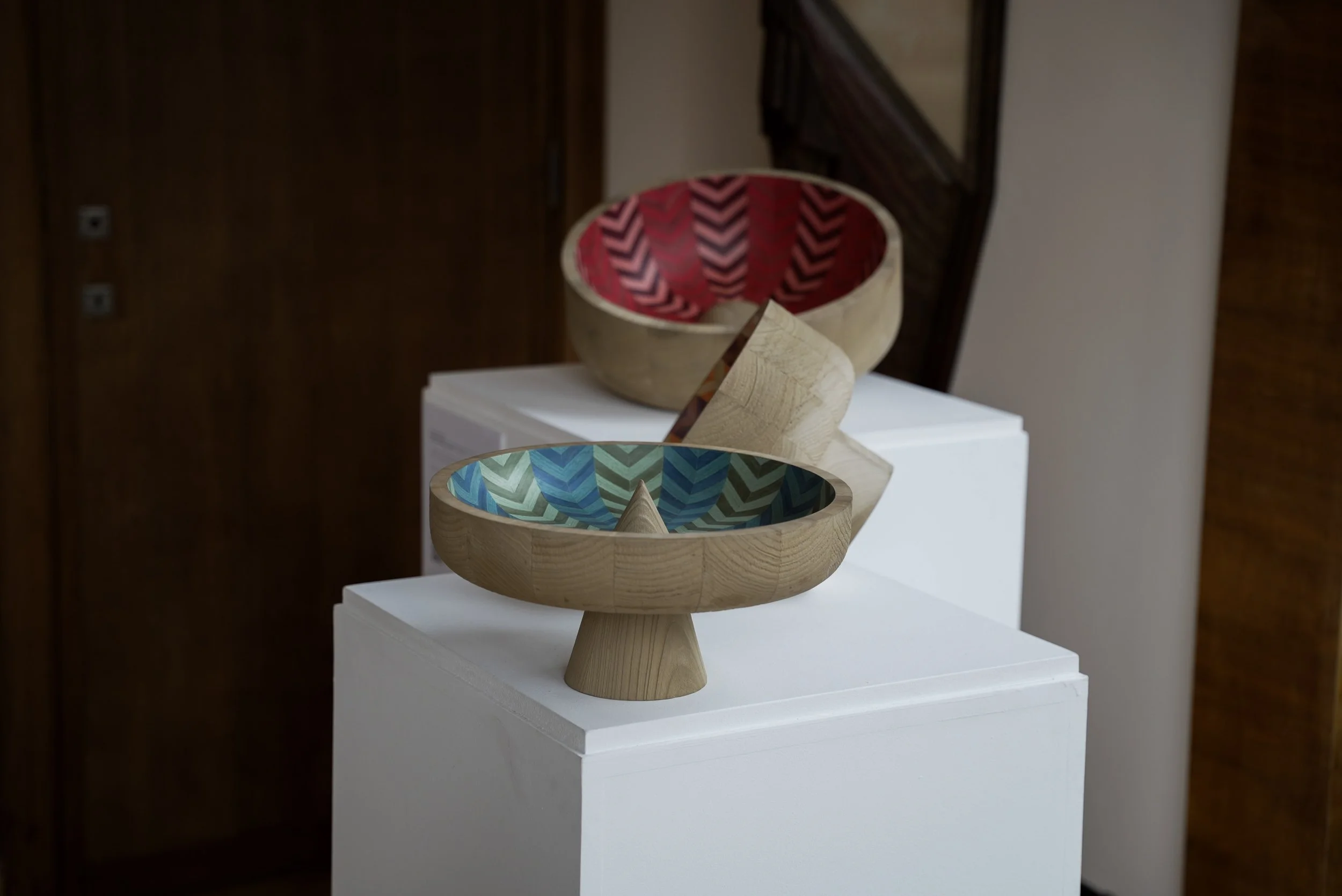
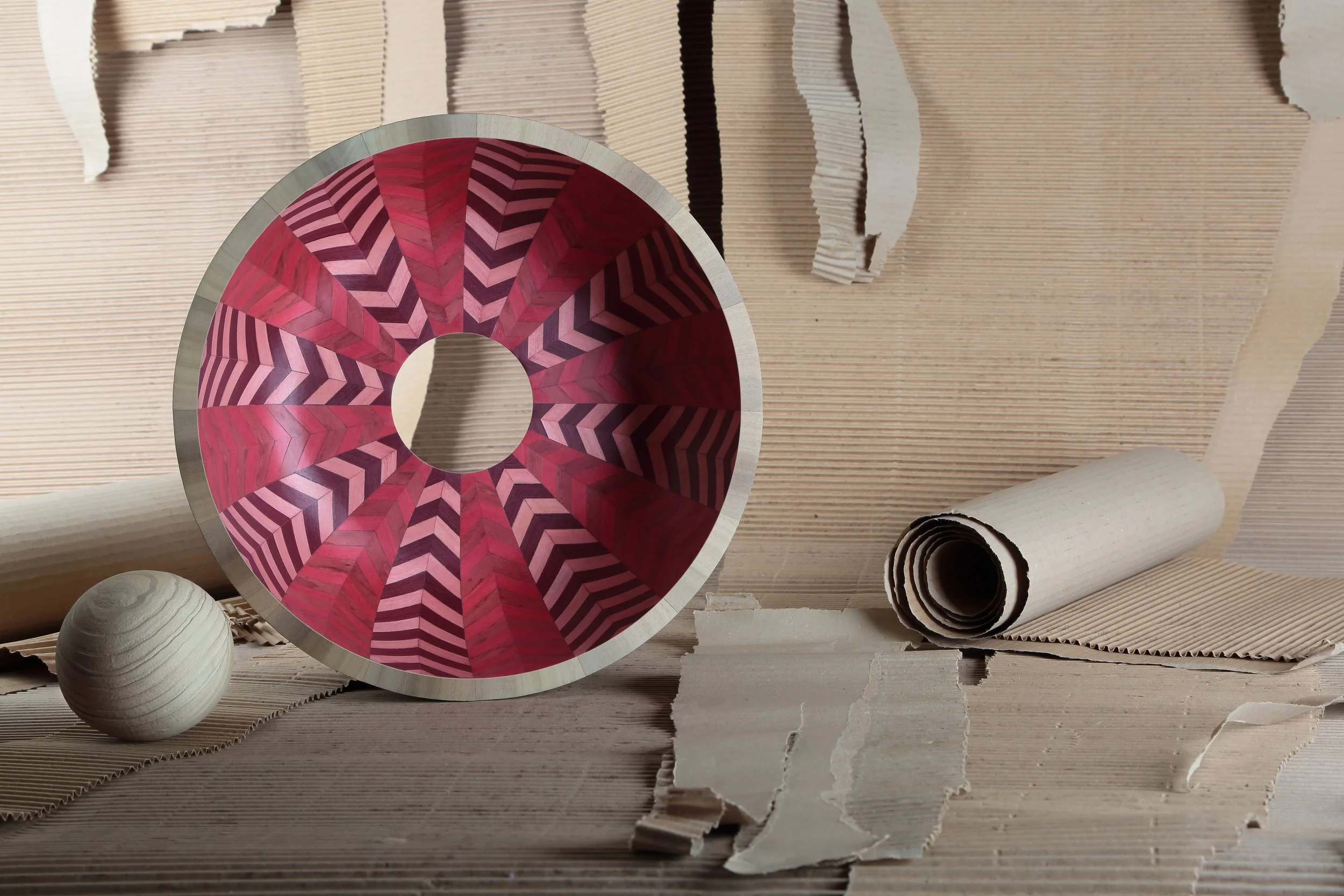
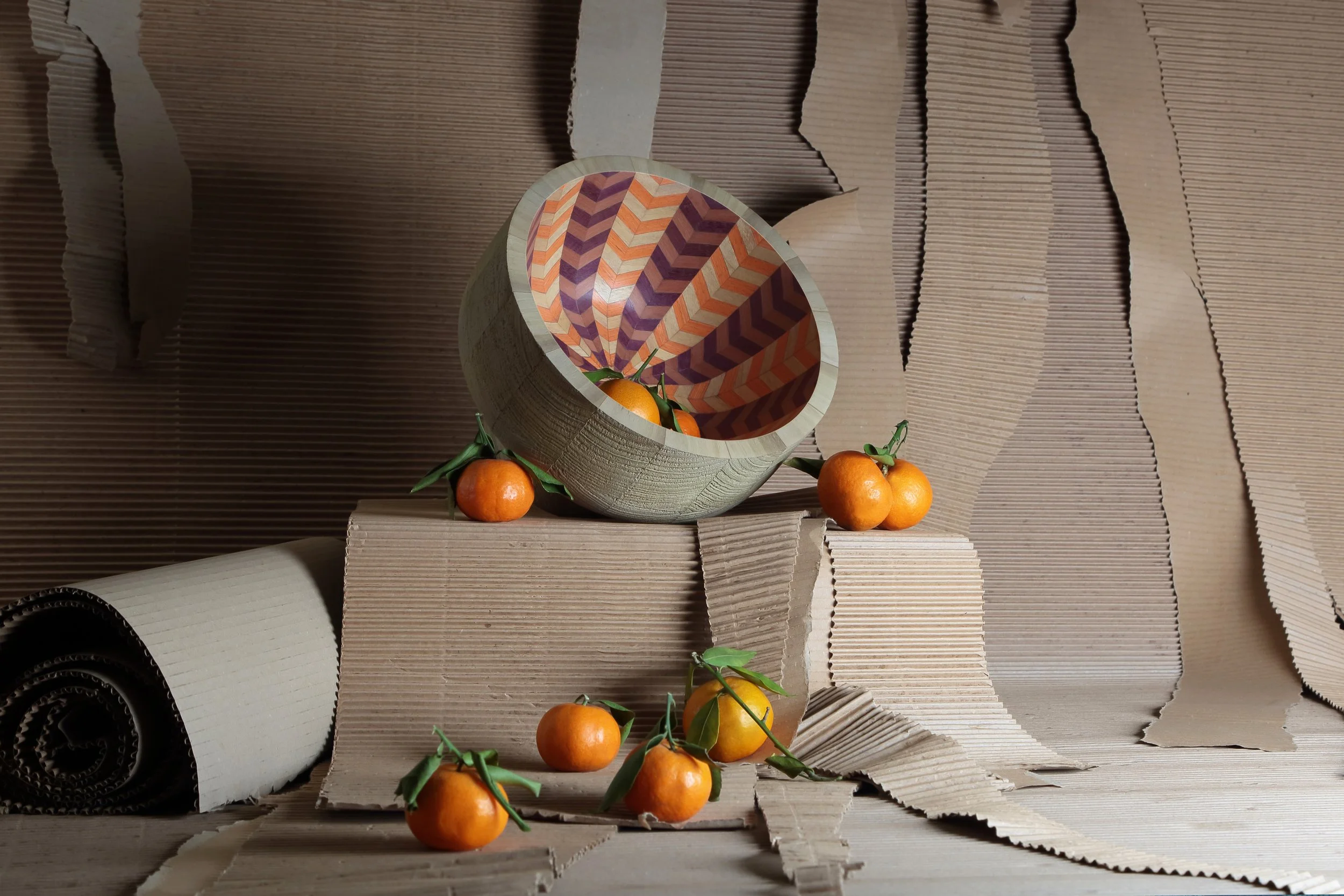
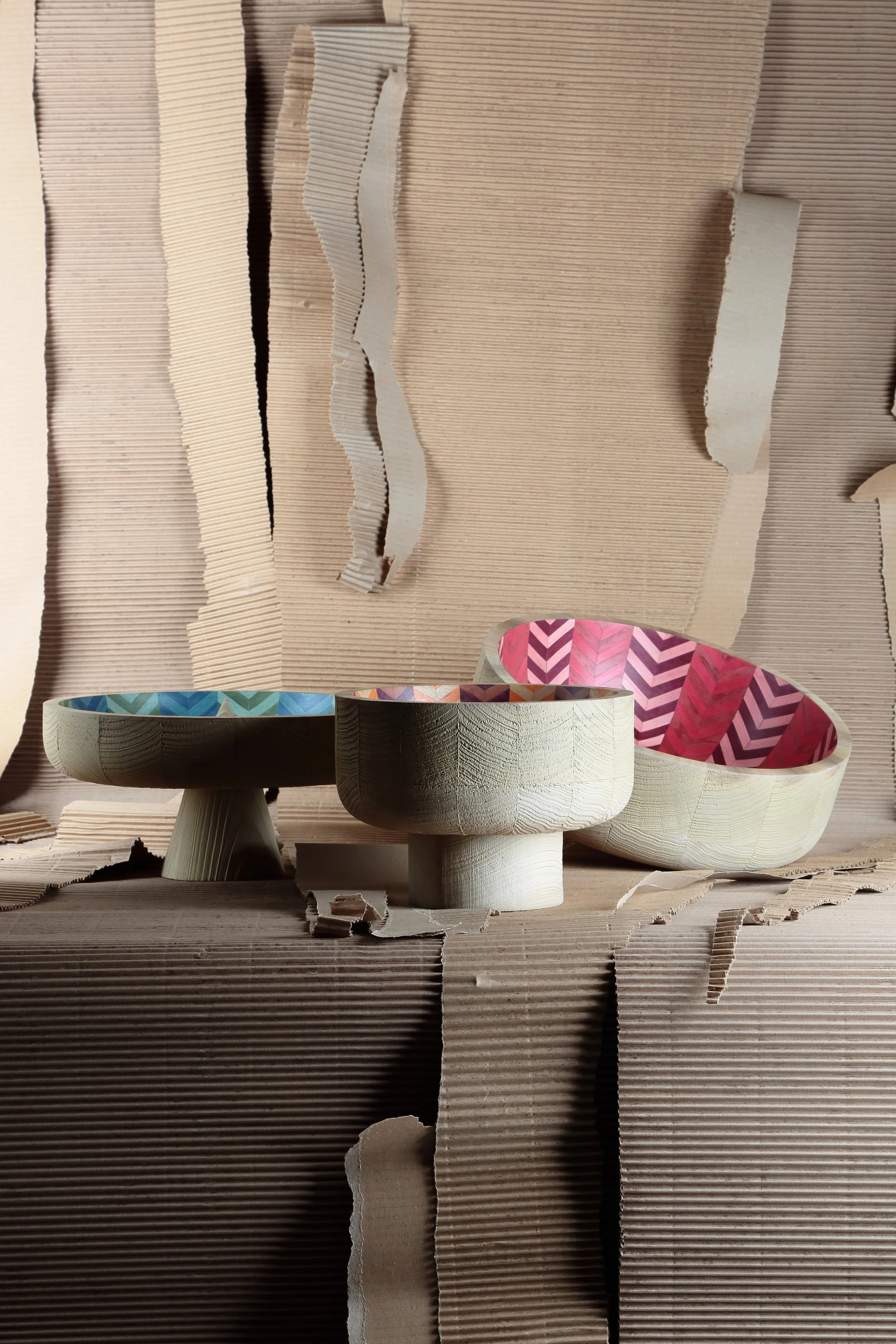
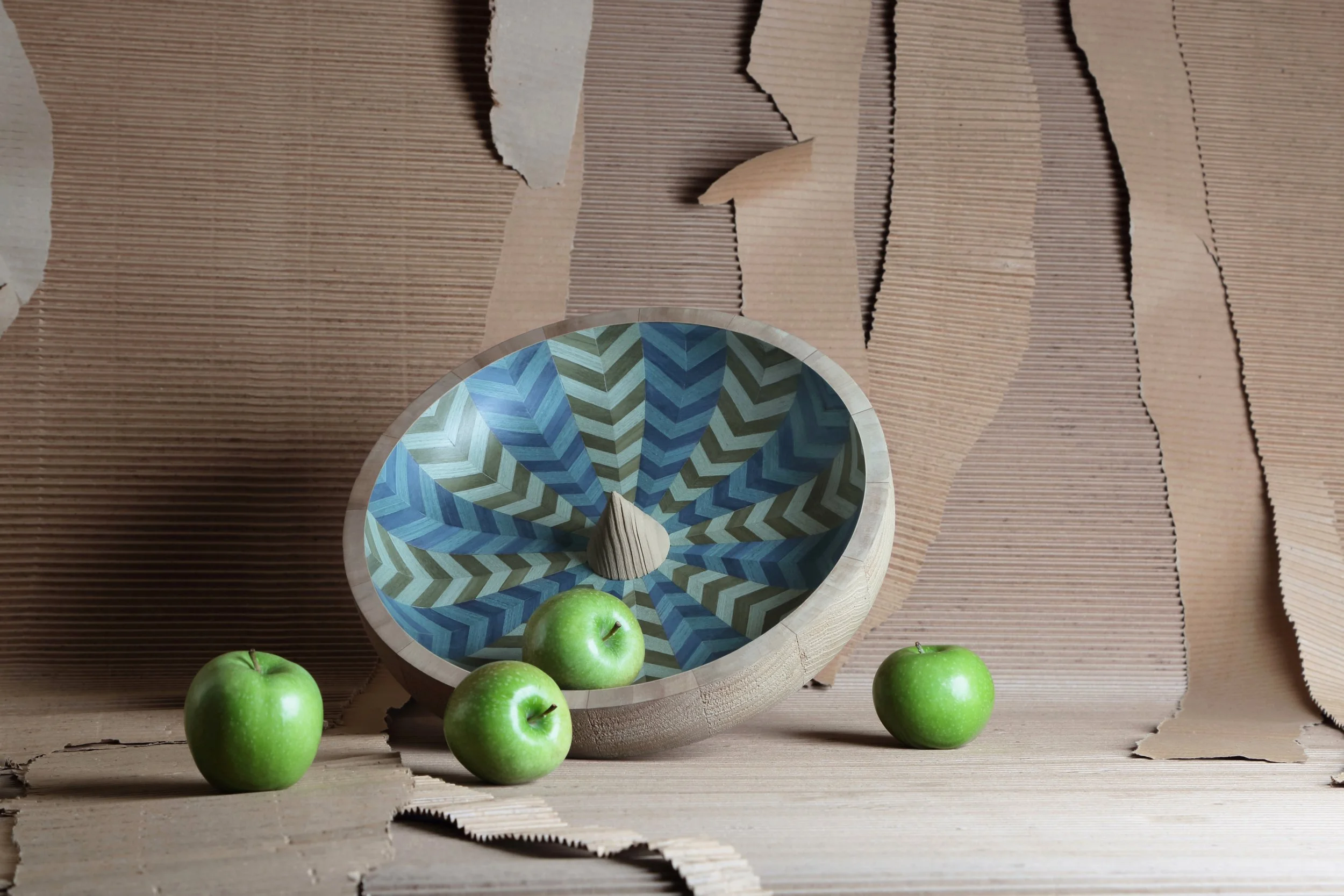
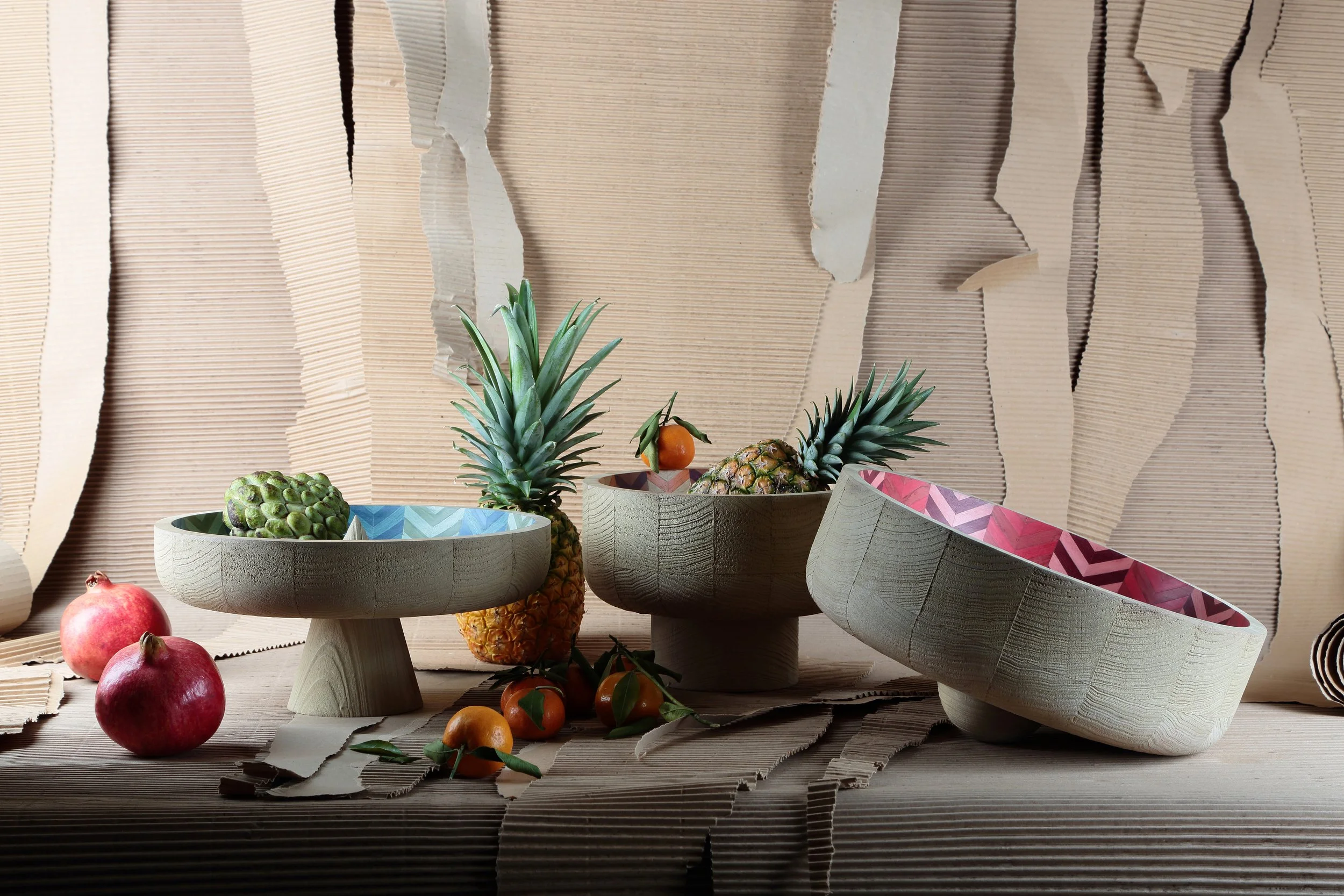
The wood marquetry is a technique that involves applying thin layers of wood veneer and assemble them. The veneer is glued onto a solid wood surface or substrate. Once applied, the surface is sanded and polished.
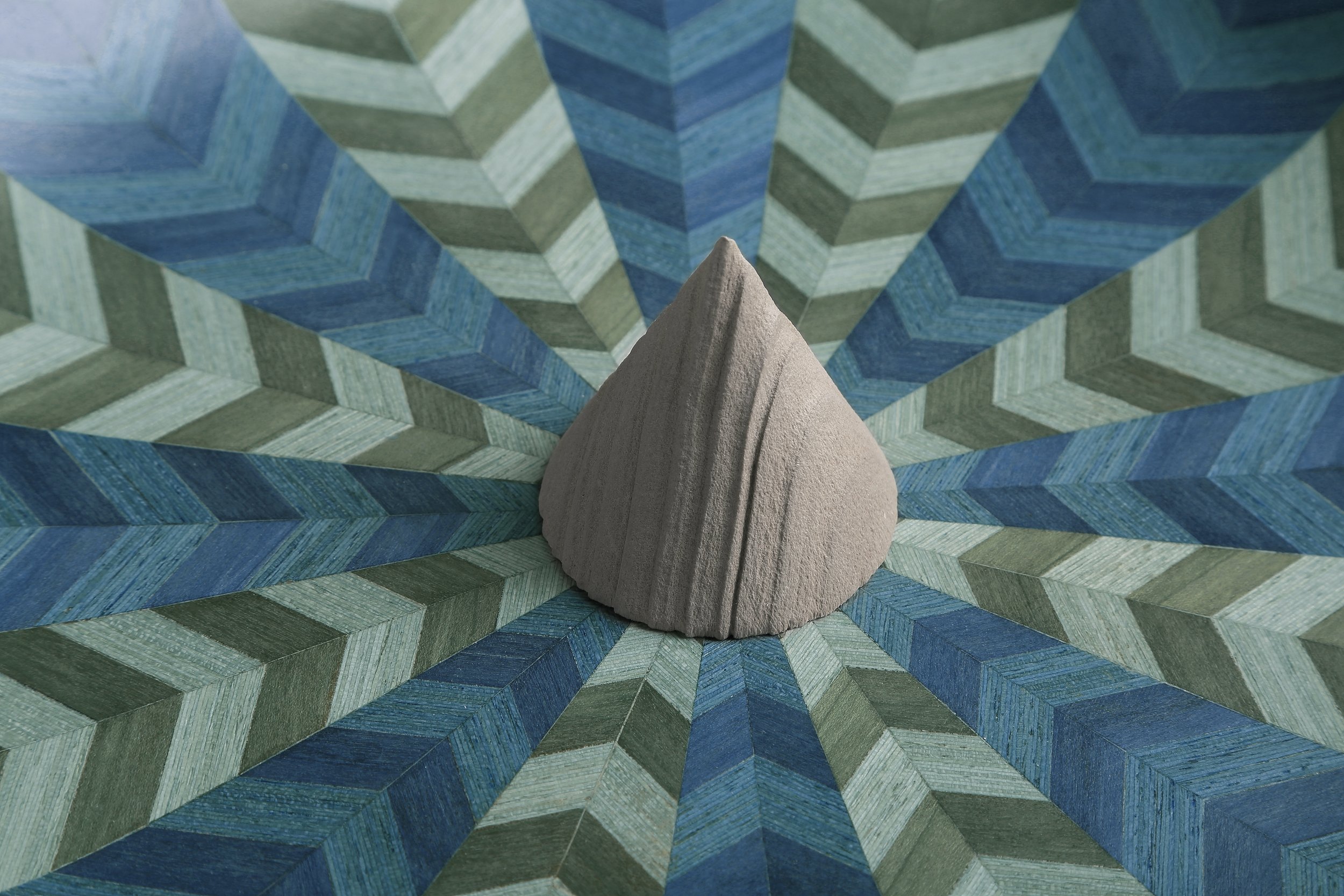
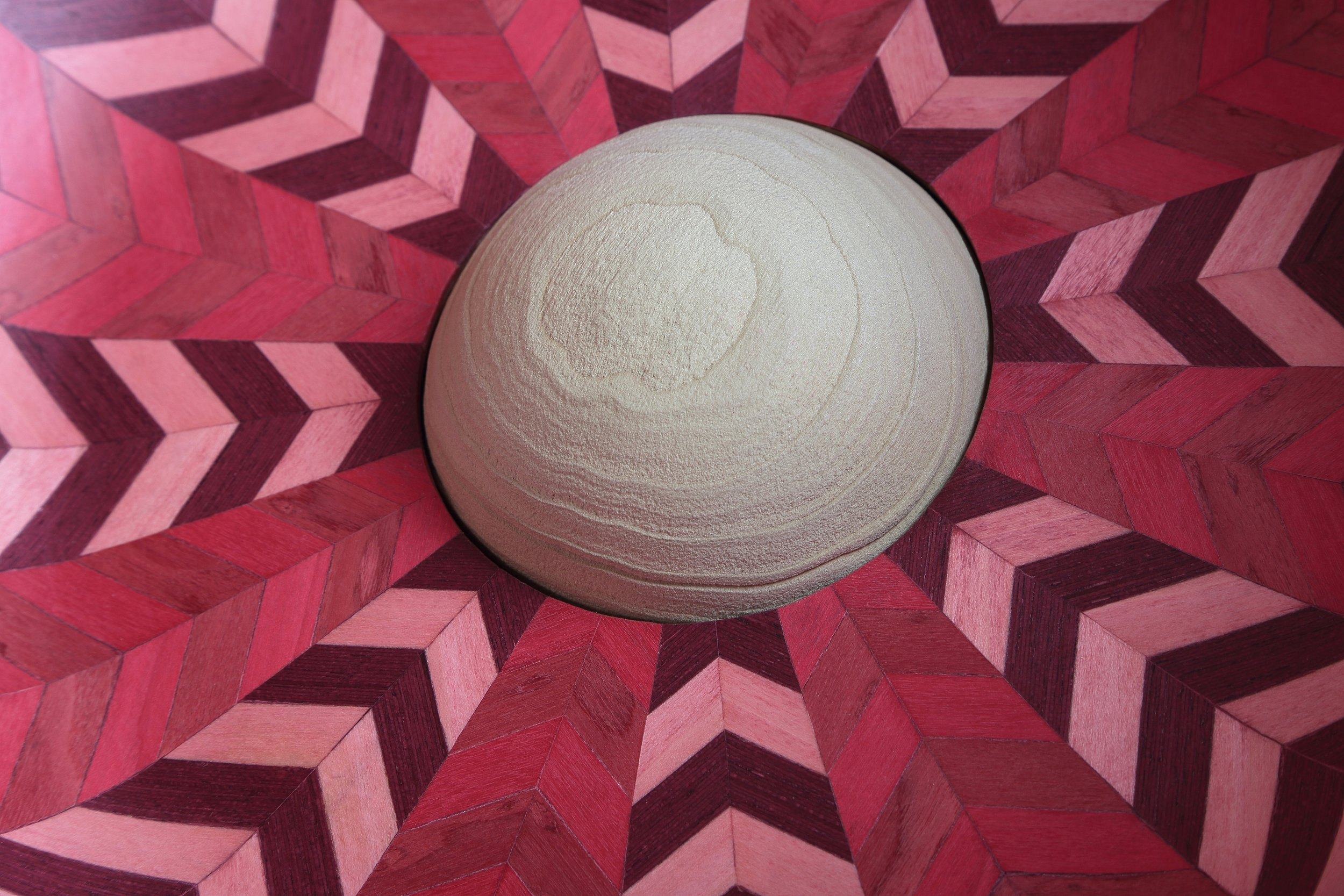
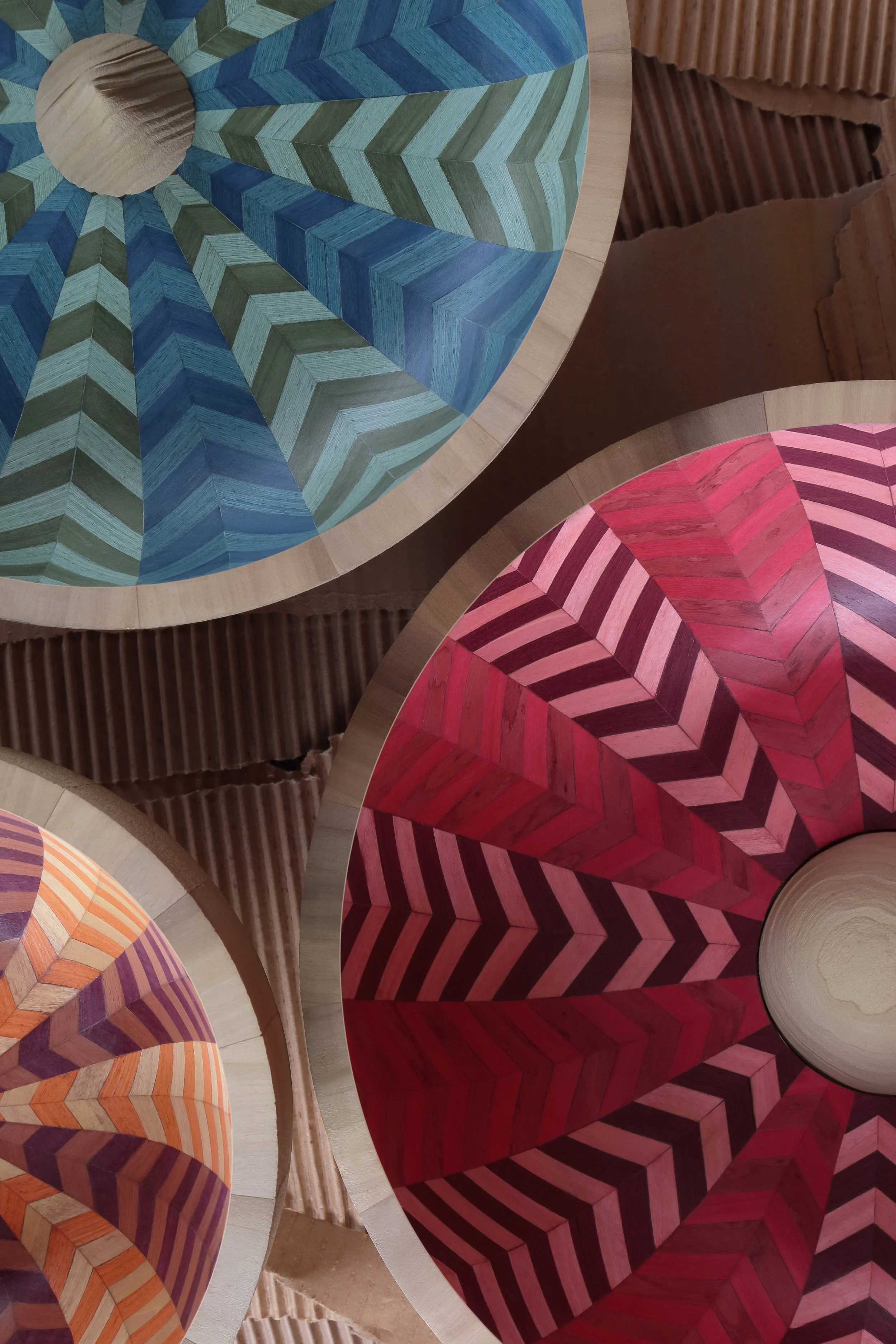
The technique here involves cutting thin colored veneers of different woods to create intricate patterns and designs on a surface.
Crafted from turned wood, the inner surface is covered with a dynamic zigzag marquetry.
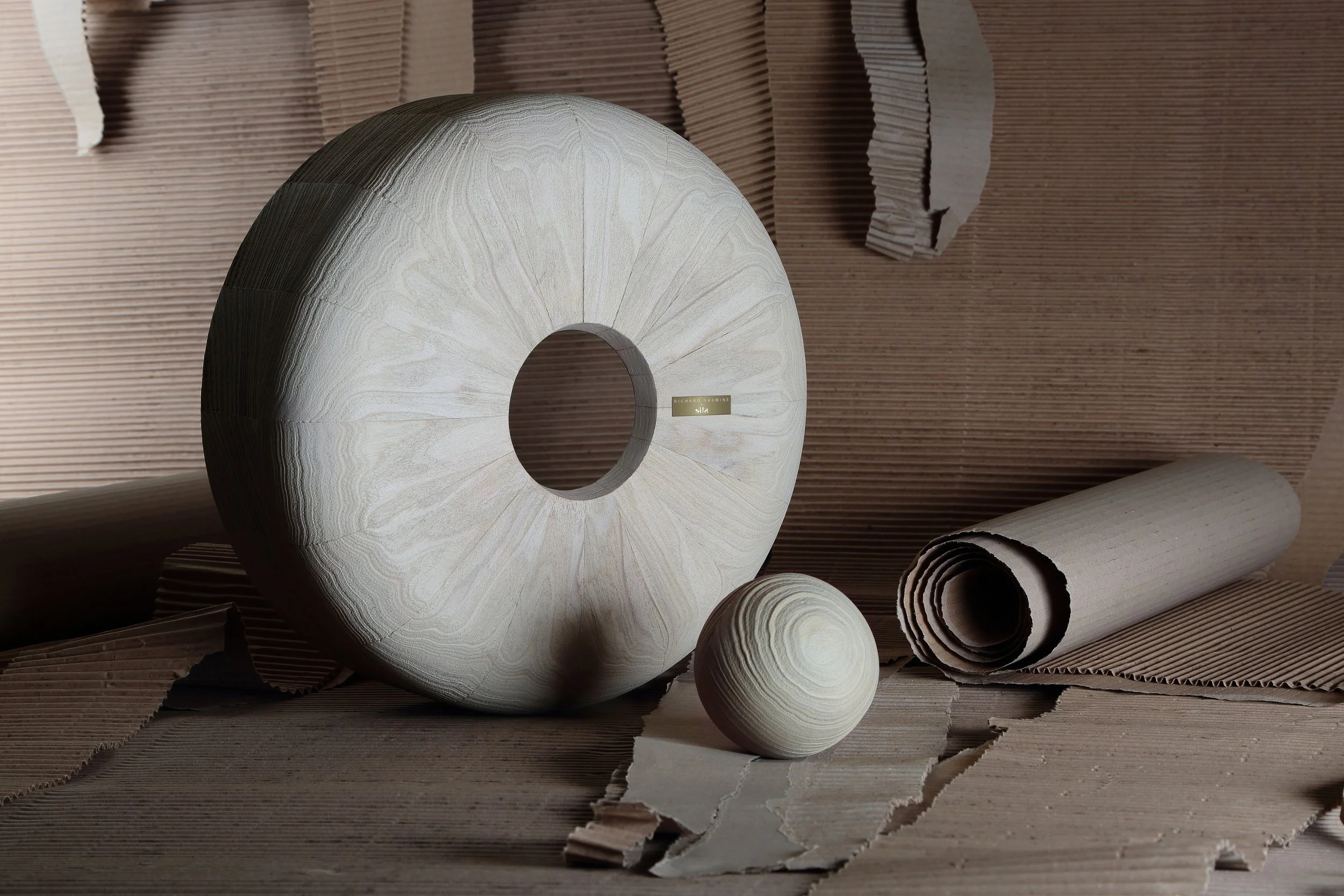
Where the outer surface unveils its natural veins through a sandblasted finish, evoking eroded ancient ruins.
RICHARD YASMINE
Interior Architect and Designer (Lebanon).
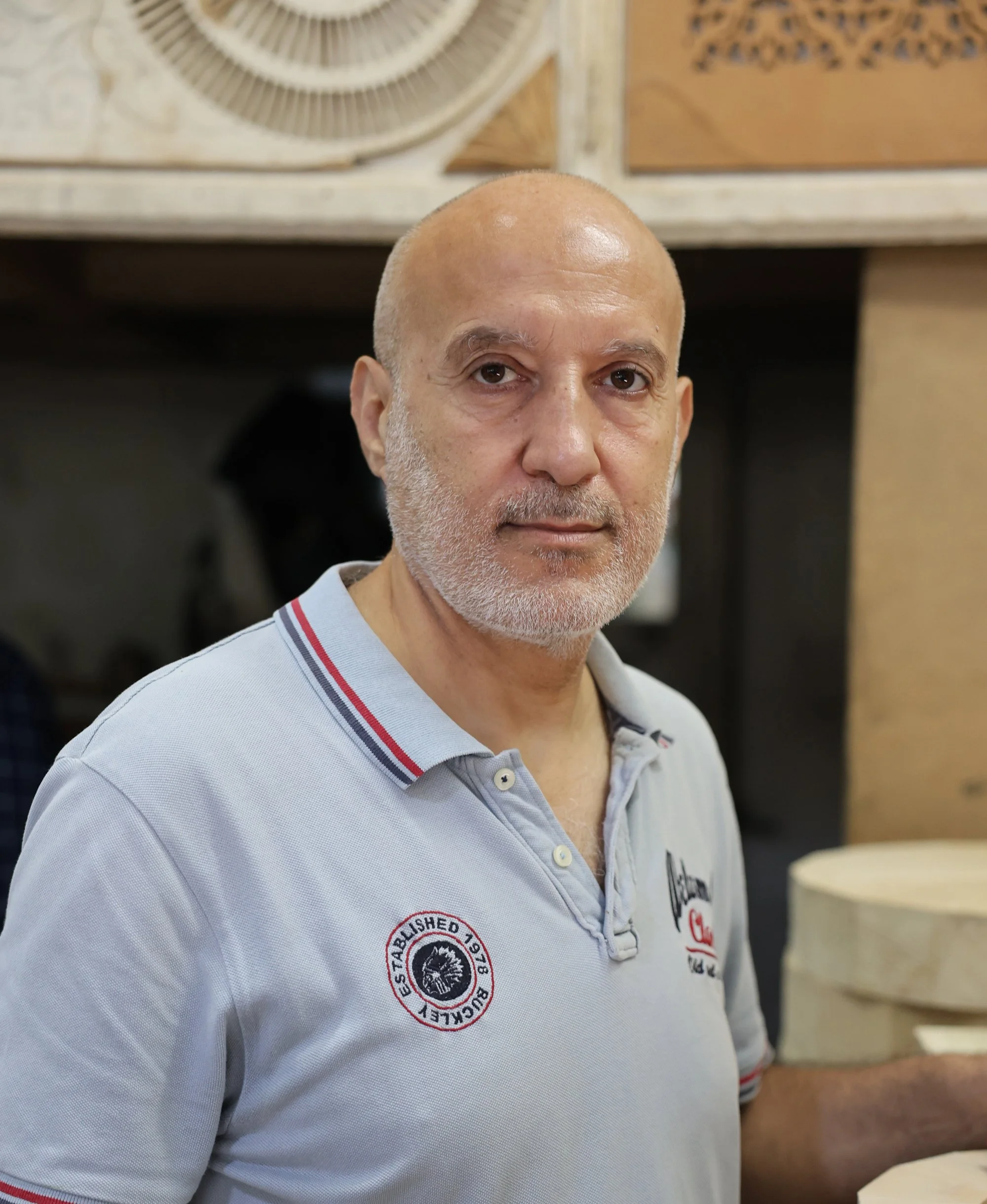
MUSTAFA FATAH AL-ASSAAD
Artisan (Lebanon).

AHMAD MOHAMAD AL REMO
Artisan (Lebanon).
FOUNTAINHEAD COLLECTION
BY PIERRE GONALONS
Designer and Interior Architect (Paris).
THE PROJECT
Under the artistic direction of ANDRE CHAMI – Engineer and designer born in Beirut (1989) works and lives between Paris and Beirut.
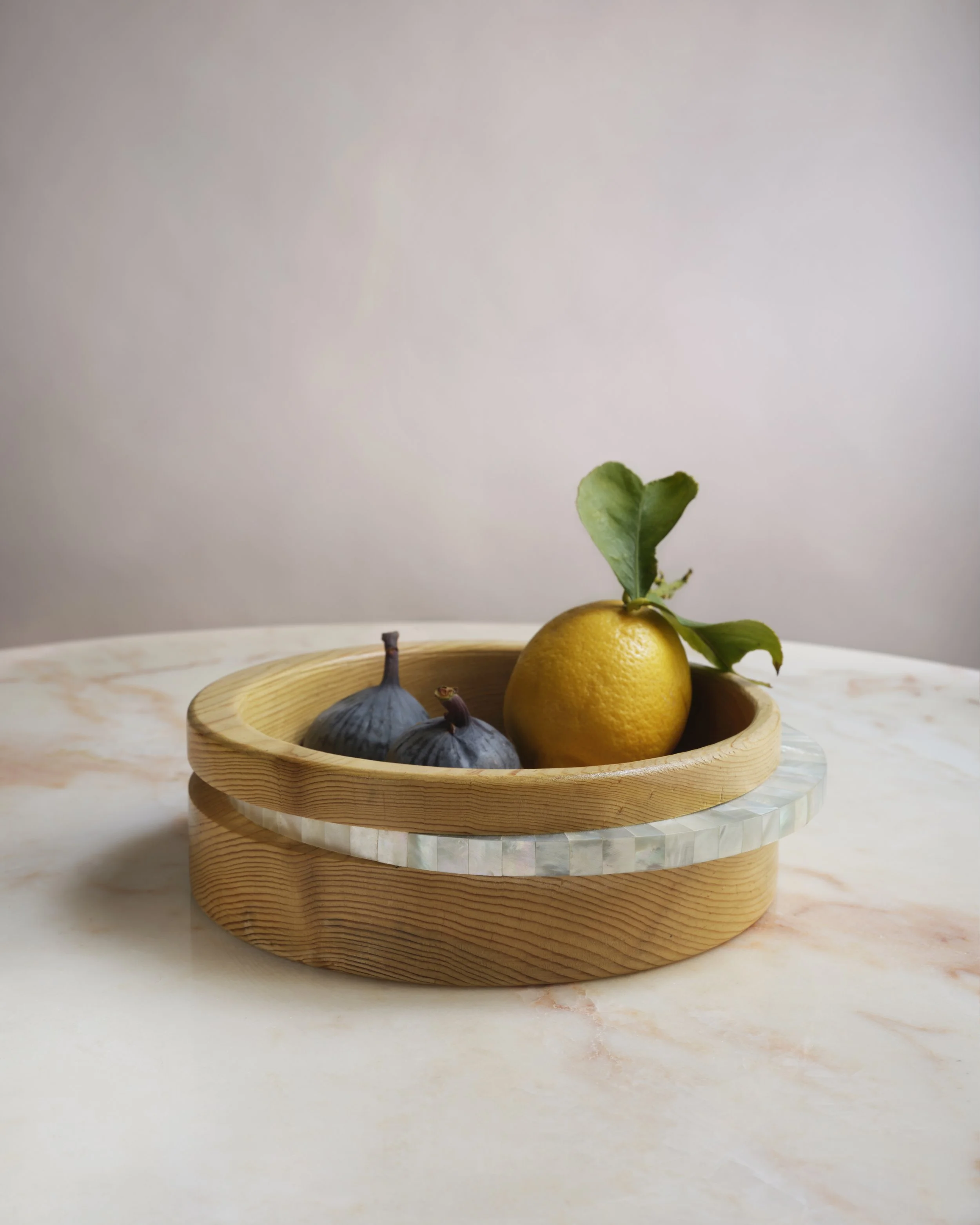
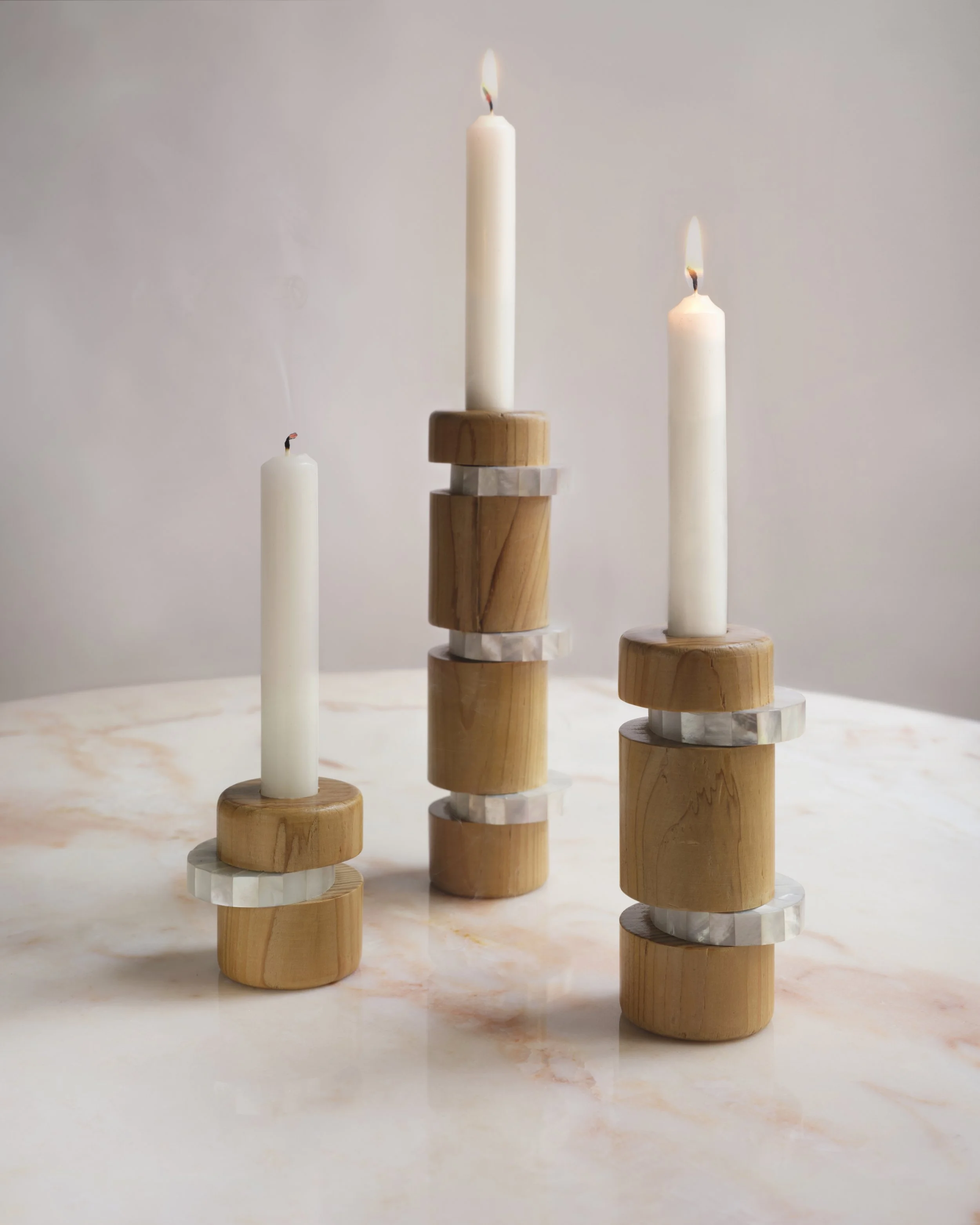
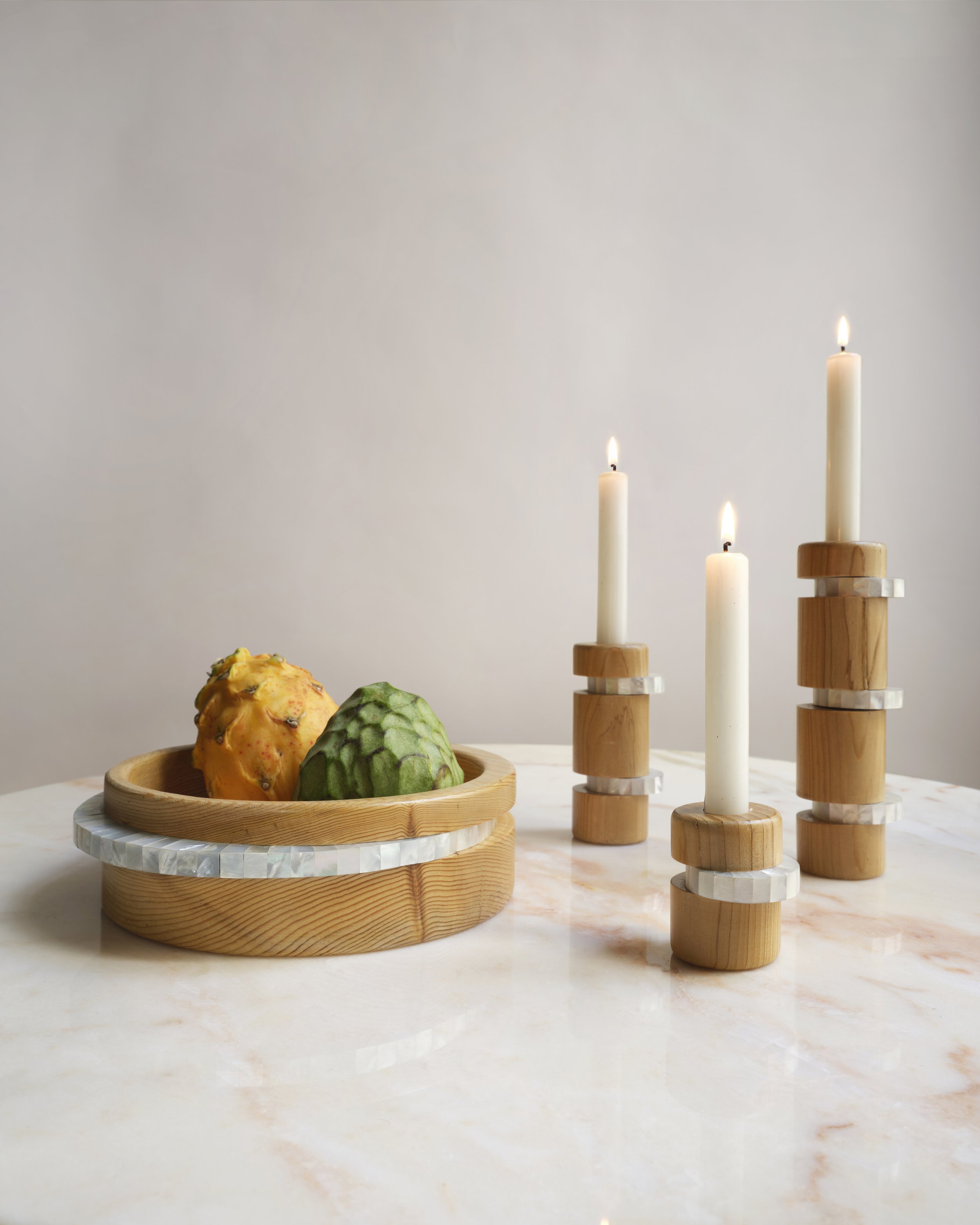
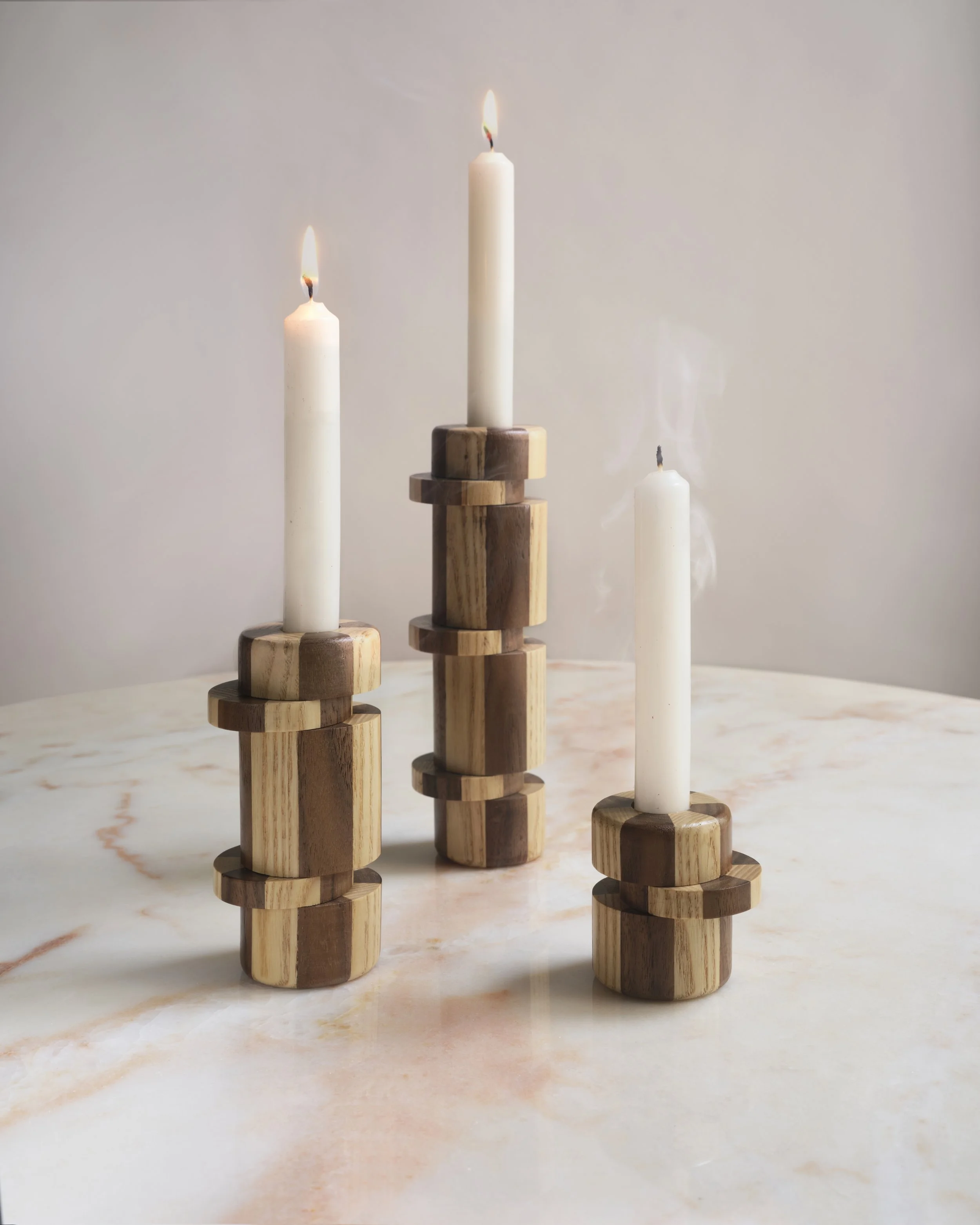
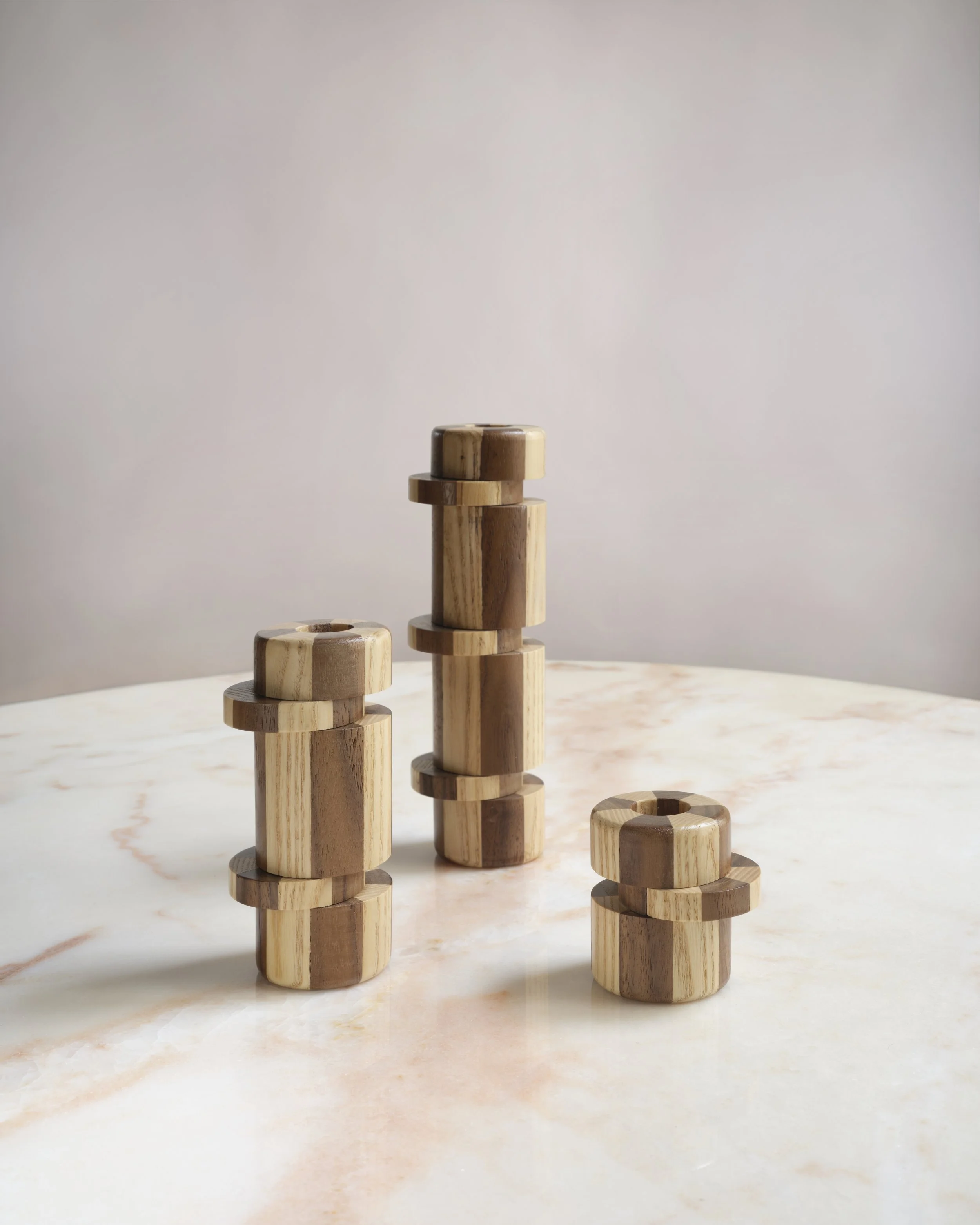
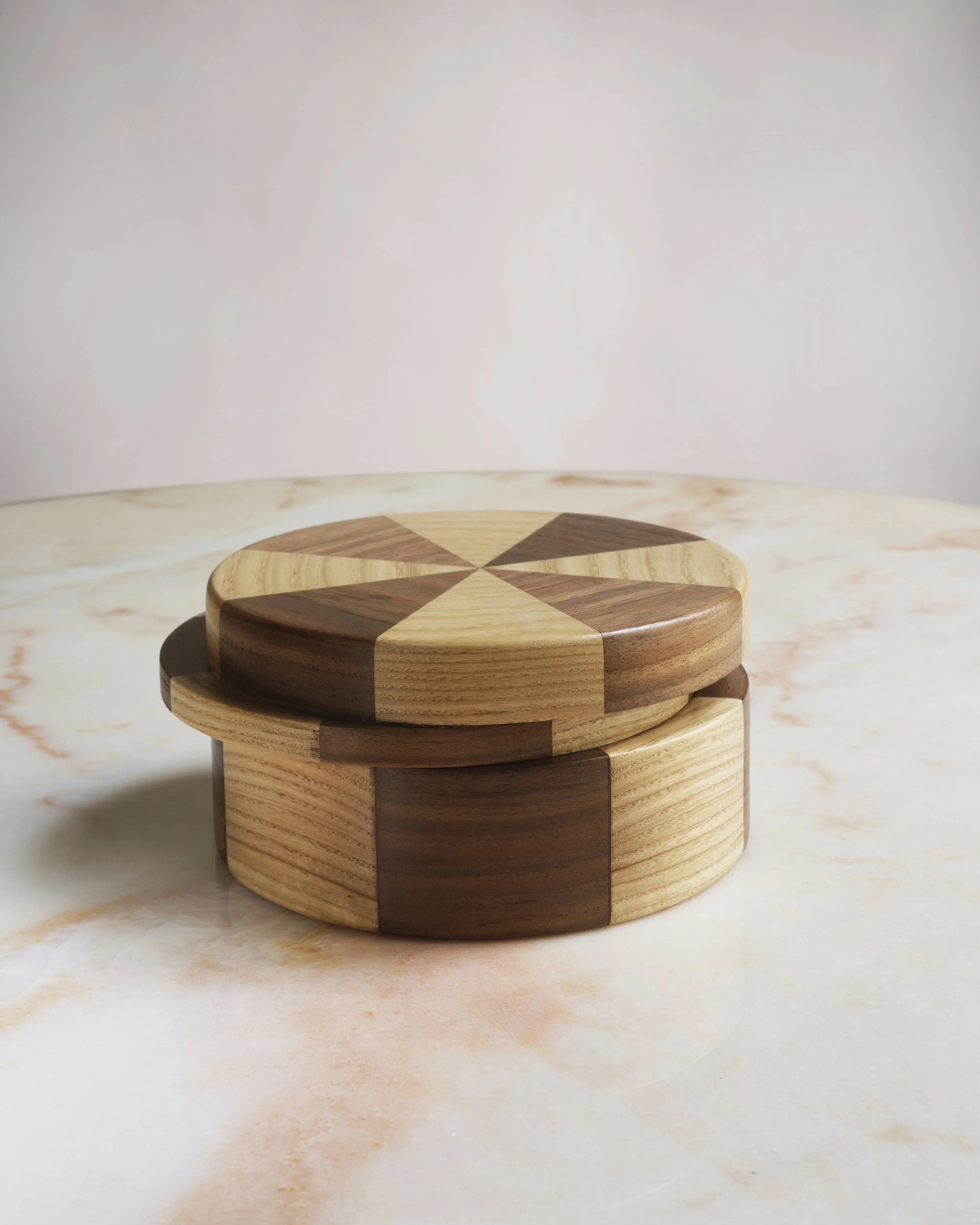
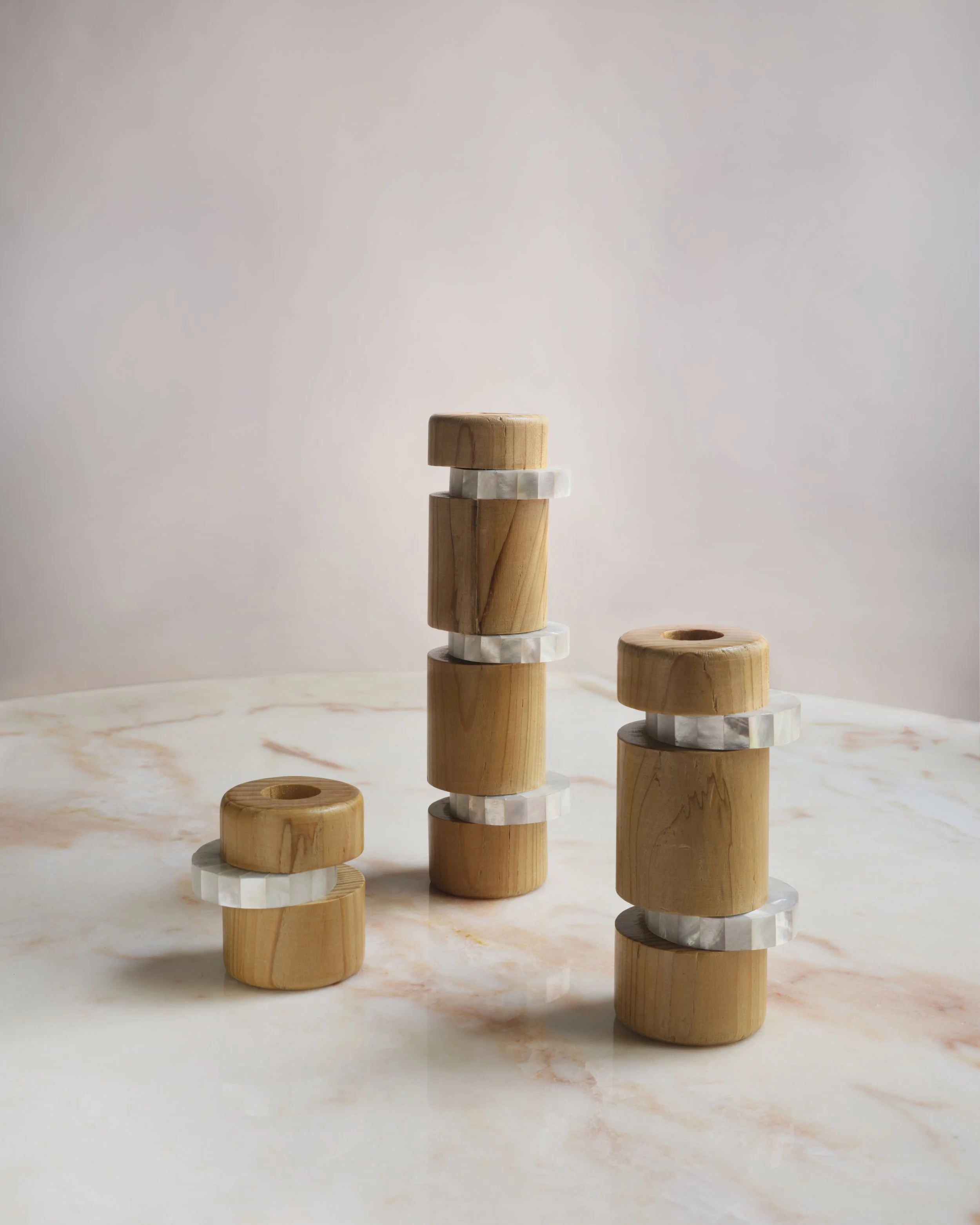
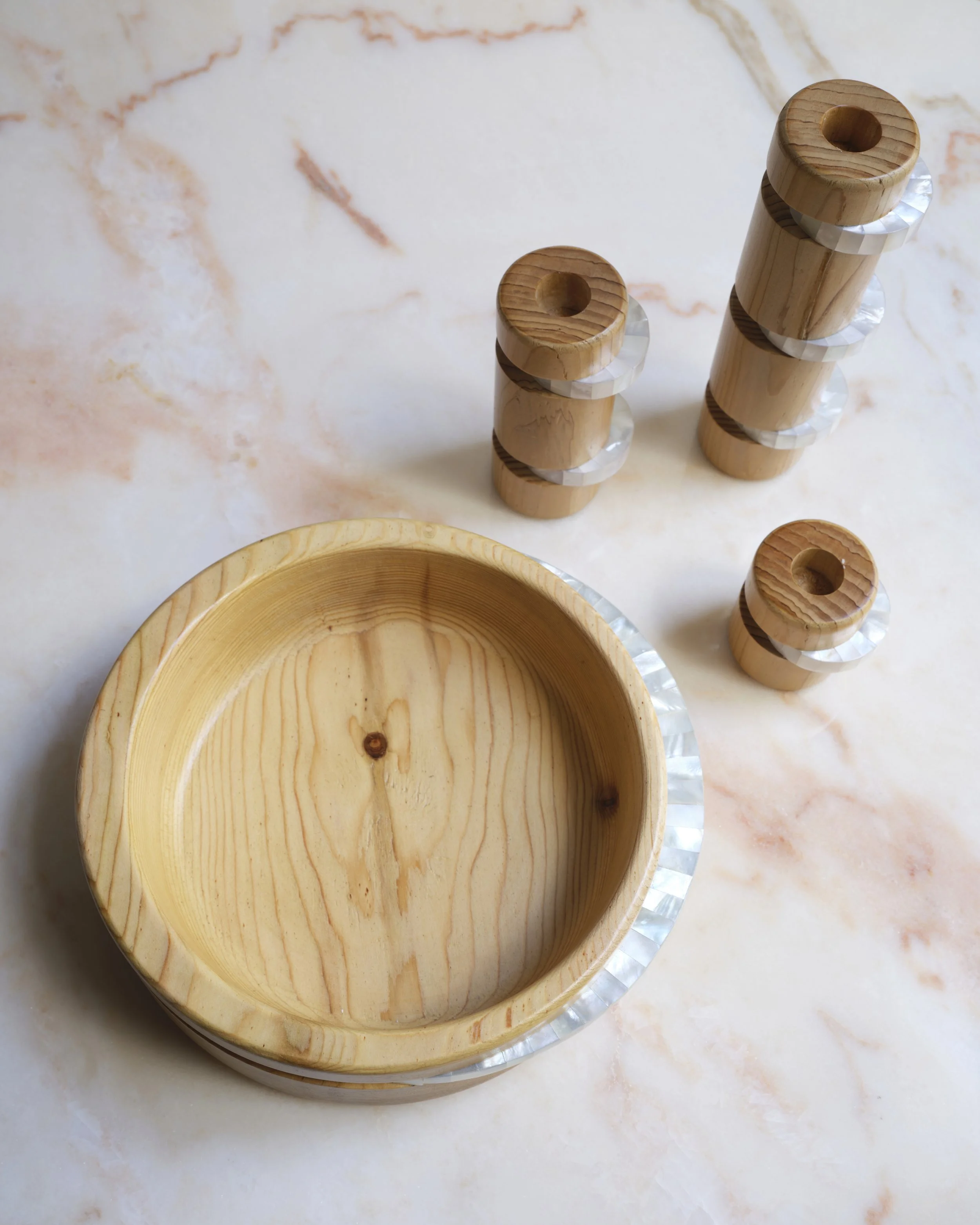
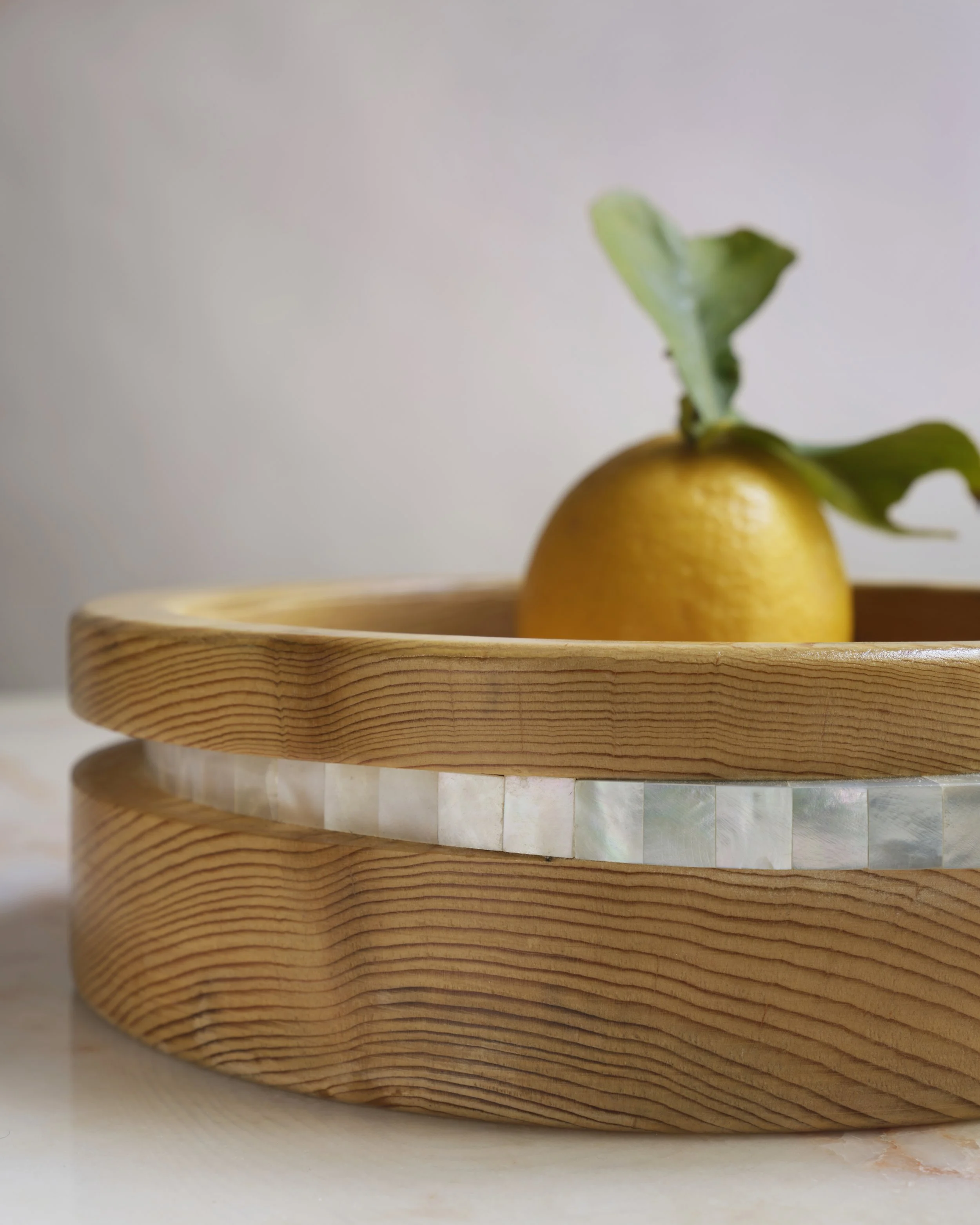
Inspired by Phoenicians marble-inlaid fountains dating back to 2,000 years, this collection combines two traditional techniques: wood marquetry and mother-of-pearl inlay. The wood marquetry is a technique that involves applying thin layers of wood veneer and assemble them. The veneer is glued onto a solid wood surface or substrate. Once applied, the surface is sanded and polished.
Mother-of-pearl inlay involves hand-cutting delicate pieces, shaping them into intricate patterns, and embedding them into carved recesses in the wood.
The technique dates back to ancient civilizations, in-cluding Mesopotamia and Egypt (around 3000 BCE). Predominantly found in Middle Eastern countries, especially Lebanon, Syria, Egypt.
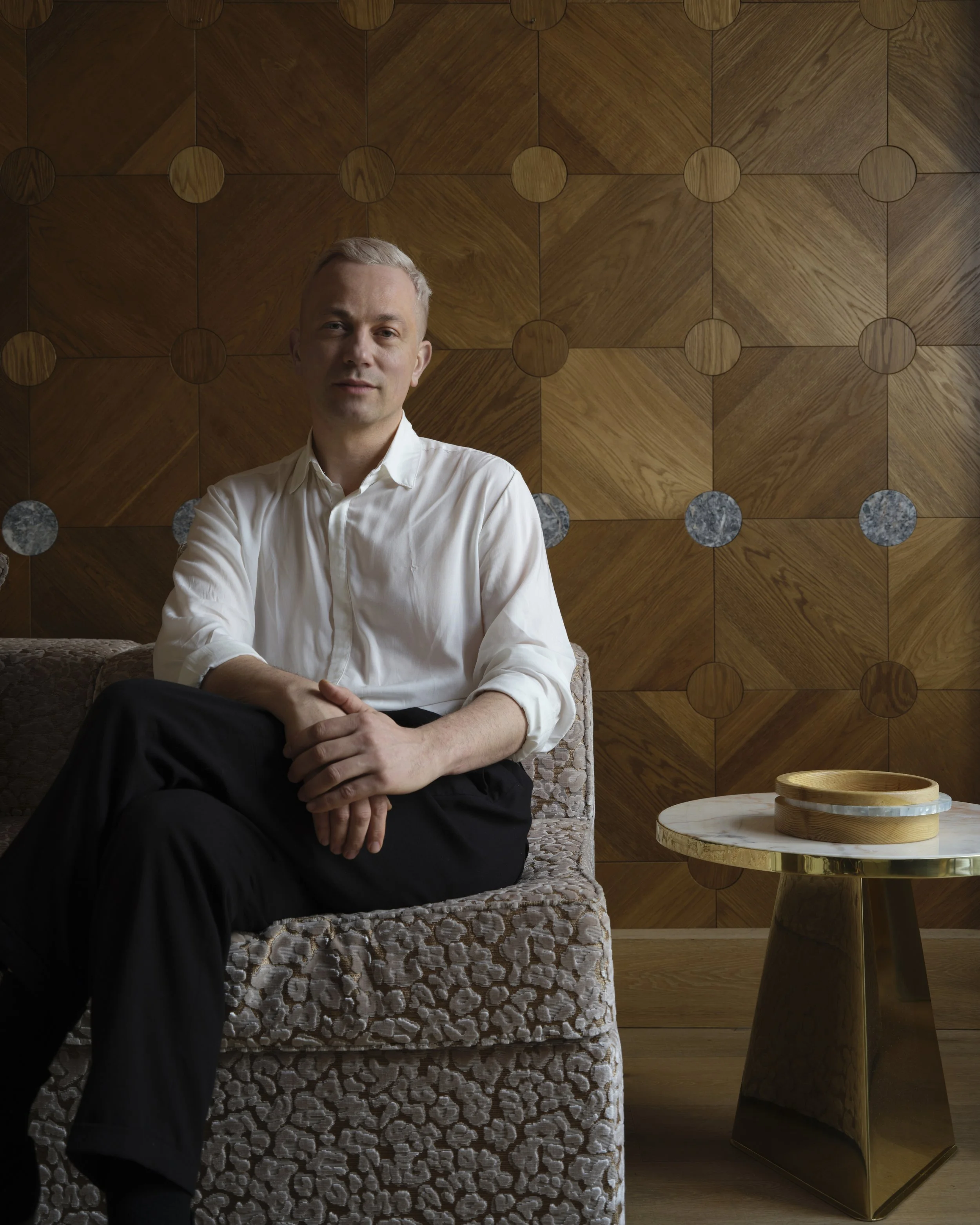
PIERRE GONALONS
Designer and Interior Architect (Paris).

CAMILLE TARAZI
Director of Maison Tarazi (Beirut).

ANDRE CHAMI
Artistic Director (Paris & Beirut).

©yosukekojima
ALCÔVE COLLECTION
BY PIERRE GONALONS
Designer and Interior Architect (Paris)
THE PROJECT
Under the artistic direction of ANDRE CHAMI – Engineer and designer born in Beirut (1989) works and lives between Paris and Beirut.
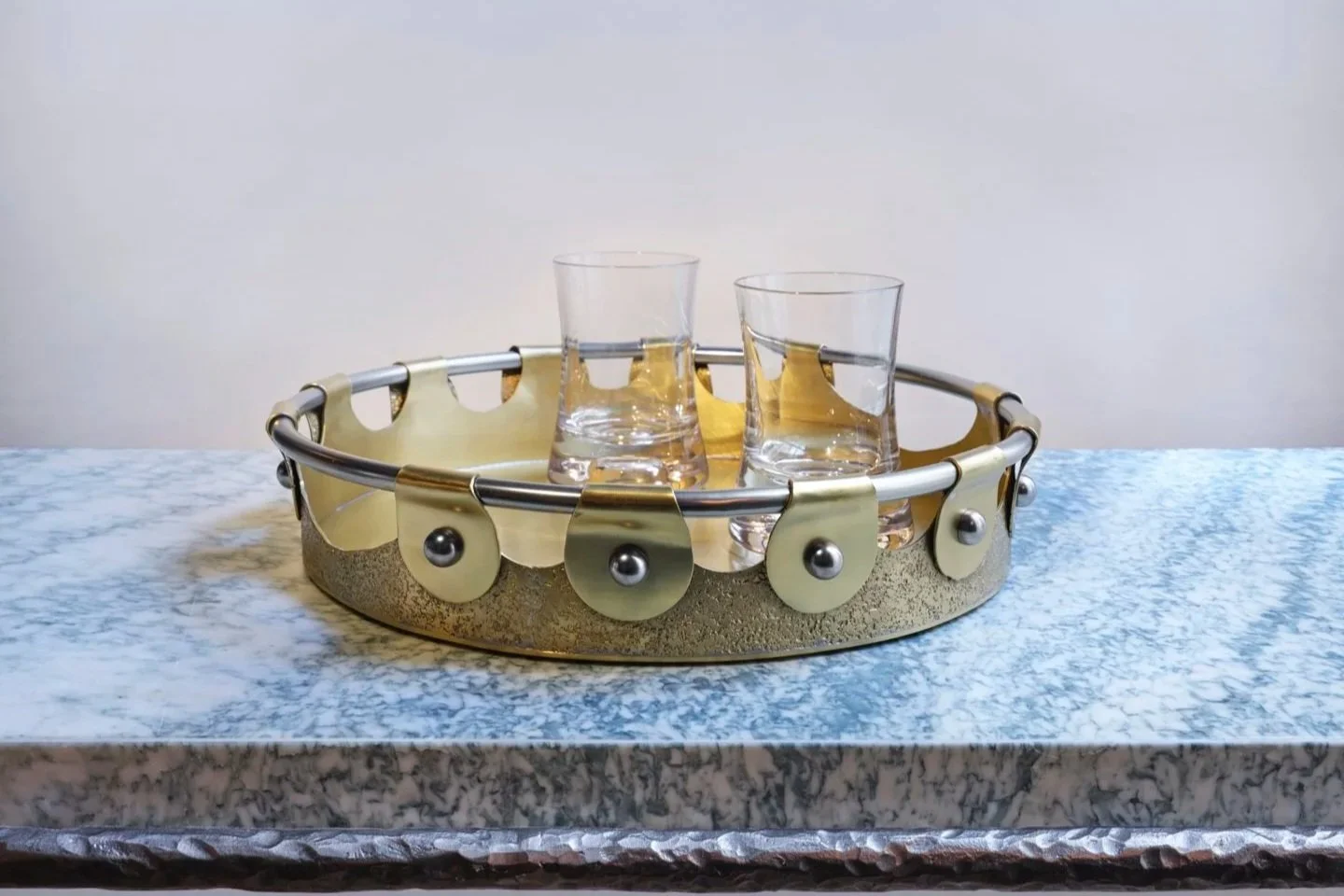
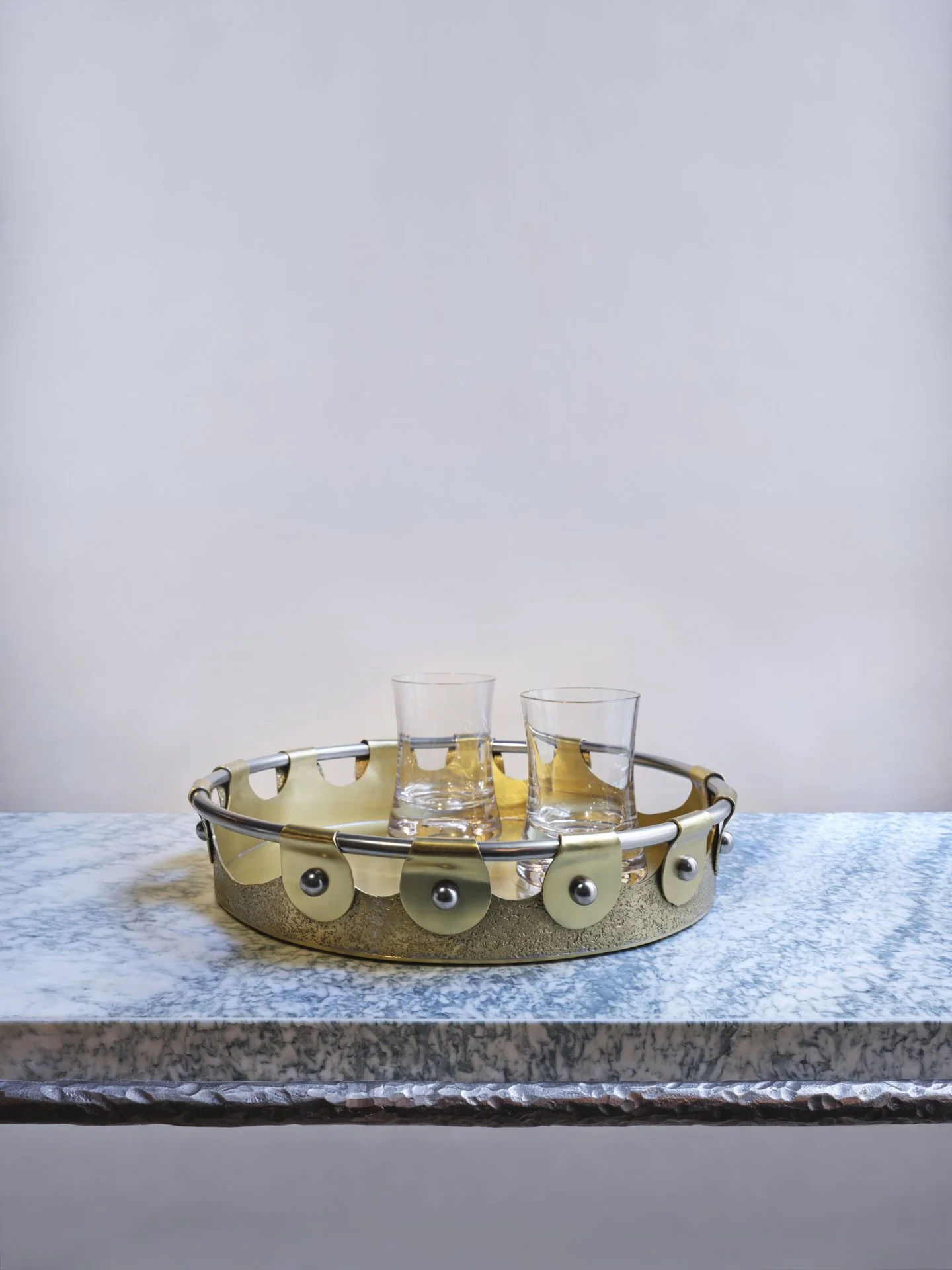
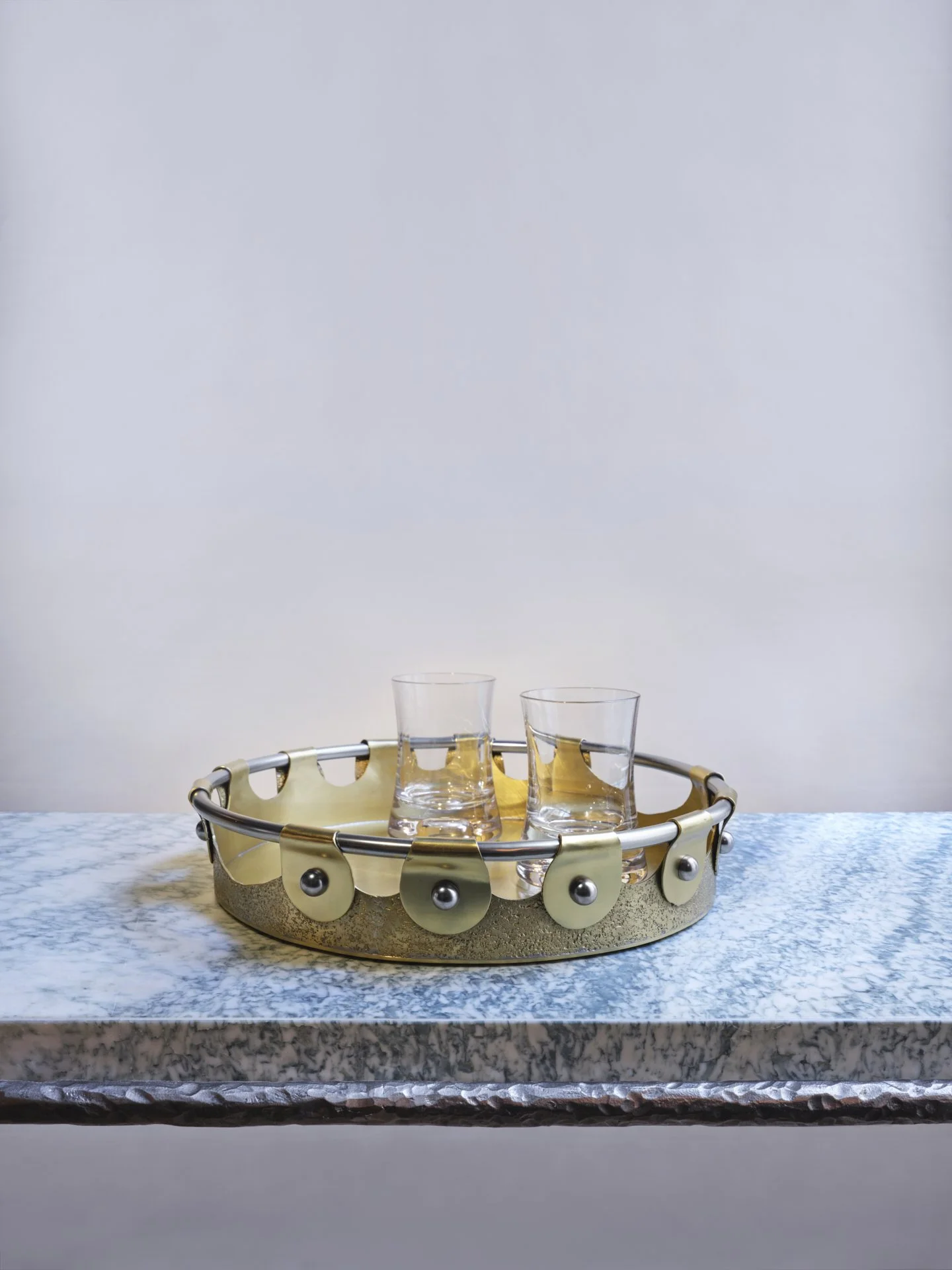
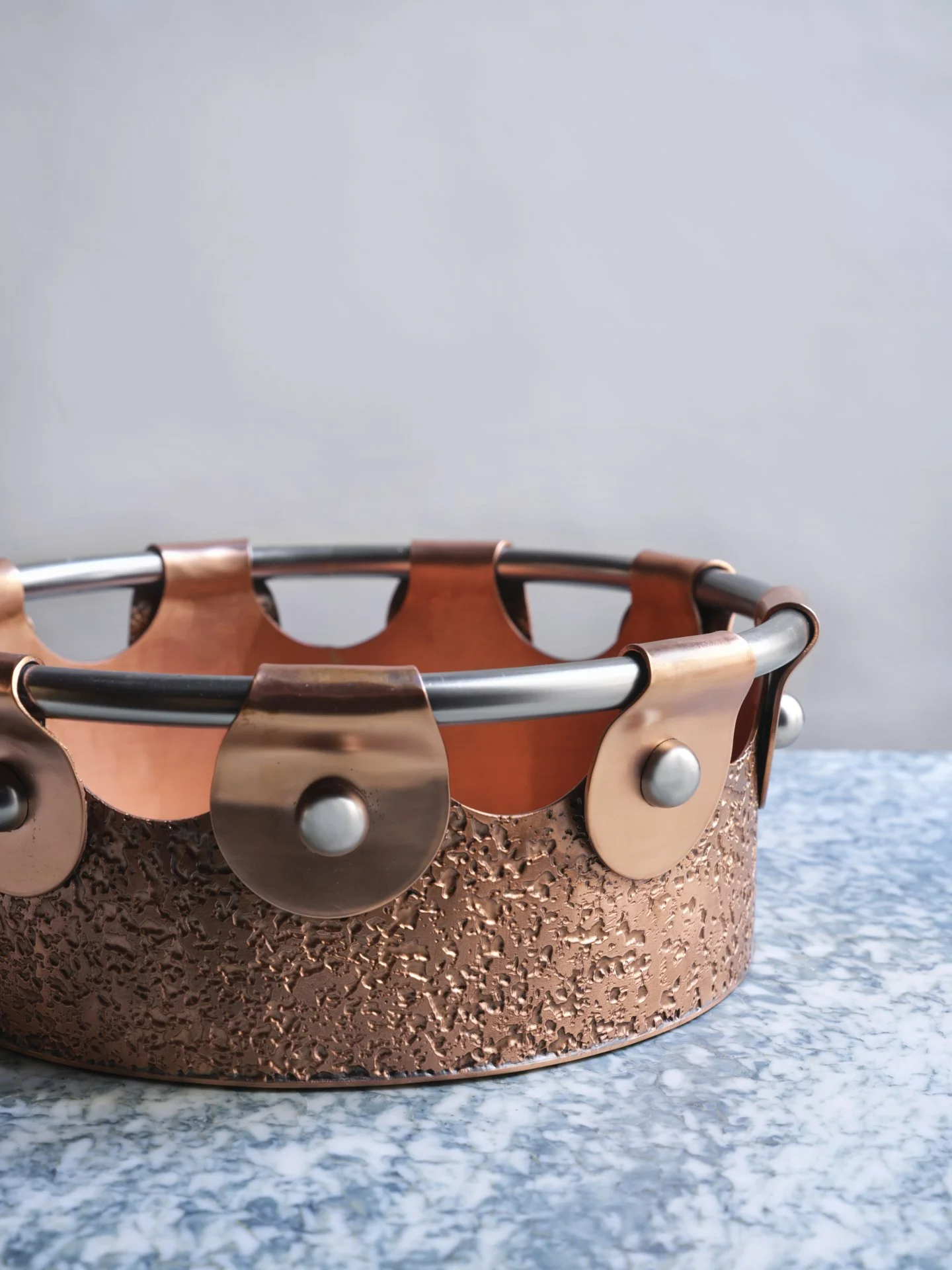
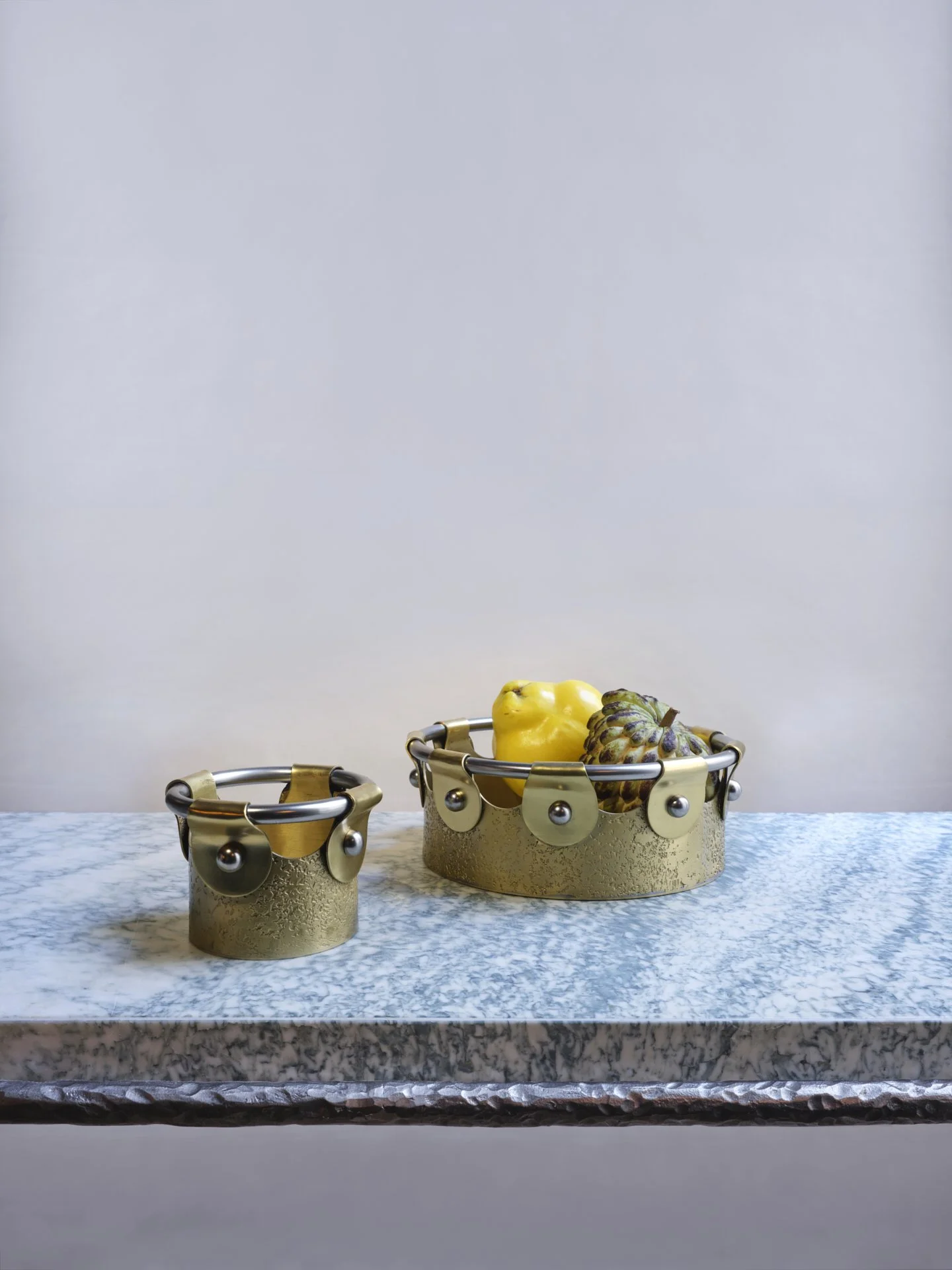
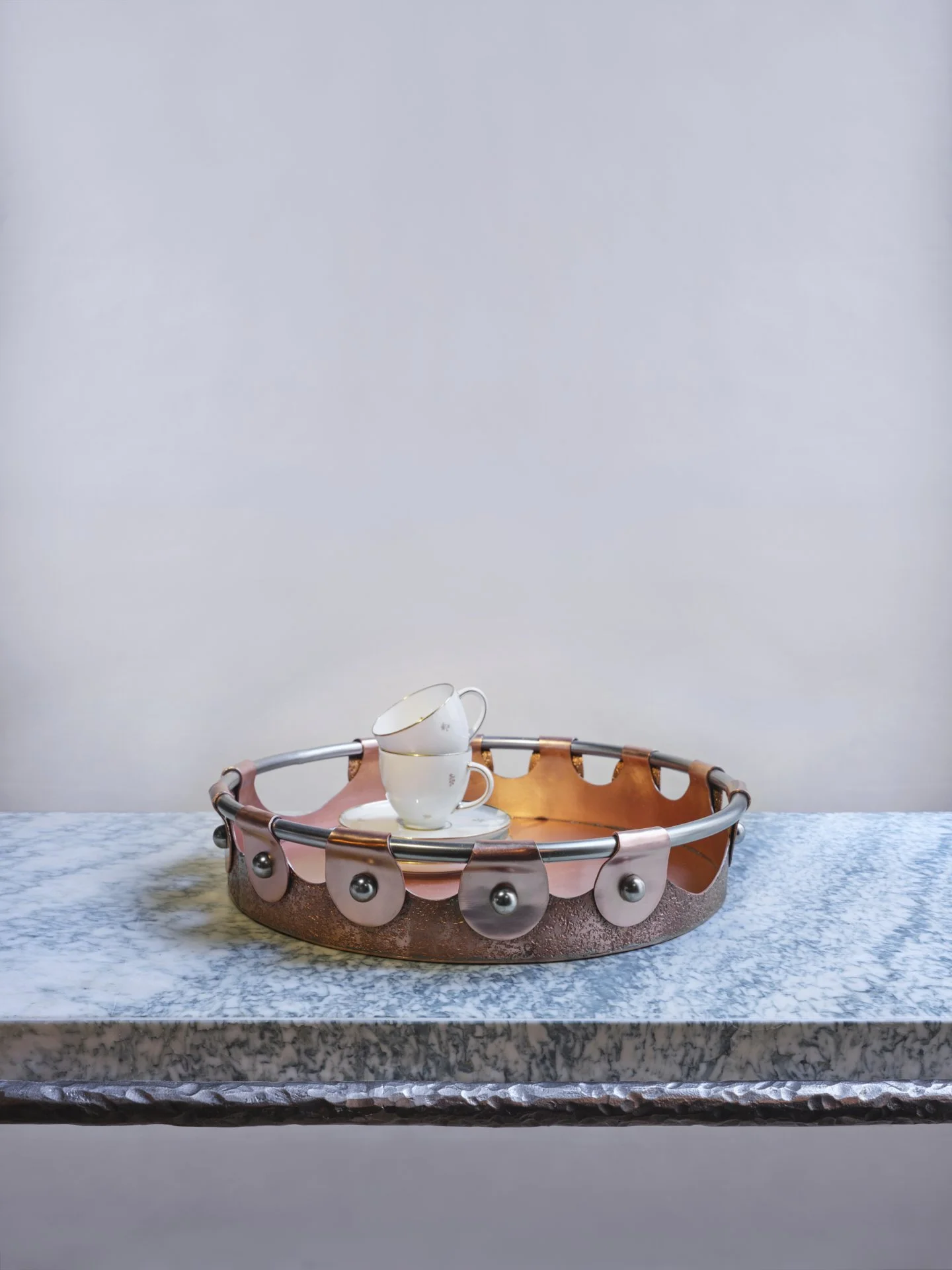
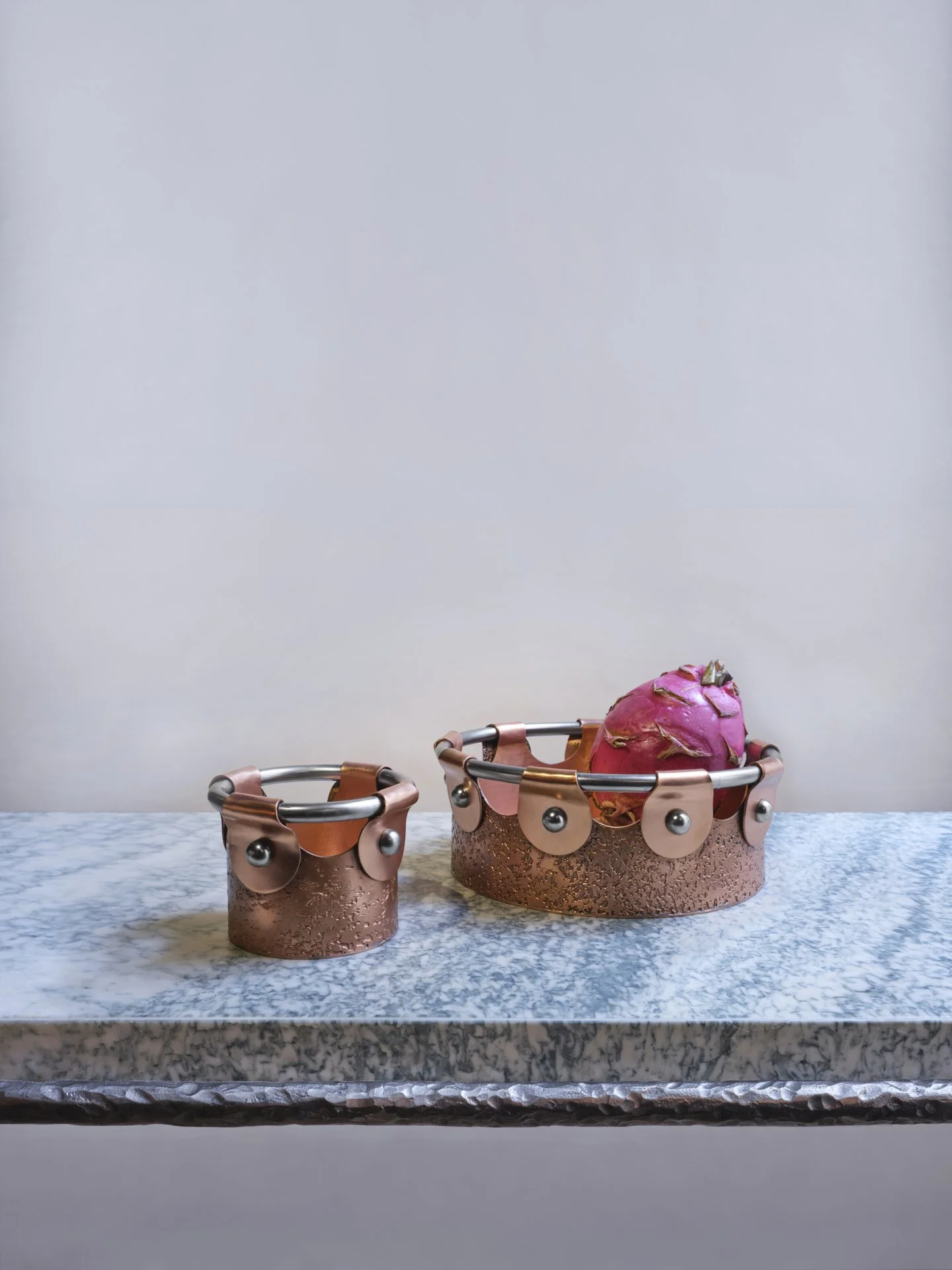
For this collection, Pierre Gonalons revisited traditional copper and brass craftsmanship in a series of vessels built around the same motif: a sequence of inverted, pressed alcoves. The designer stumbled upon this motif during his residency in Beirut, notably in the archaeology section of the National Museum and in Oscar Niemeyer’s architectural work in Tripoli.
Copper and brass craftsmanship in Lebanon begins as early as the Phoenician period (c. 1500– 300 BCE), when coastal cities like Byblos, Sidon, and Tyre were important centres of metalworking and Mediterranean trade.
The tradition continued through the Mamluk and Ottoman eras (13th–19th centuries CE), during which Lebanese artisans—especially in Tripoli and Beirut—developed the hand- hammered, engraved brassware still associated with the region today.
The designer stumbled upon this motif during his residency in Beirut, notably in the archaeology section of the National Museum and in Oscar Niemeyer’s architectural work in Tripoli.
PIERRE GONALONS
Designer and Interior Architect (Paris).
ANDRE CHAMI
Artistic Director (Paris & Beirut).
FUNQETRY COLLECTION
NADA DEBS - Levantine Designer (Beirut).
THE PROJECT
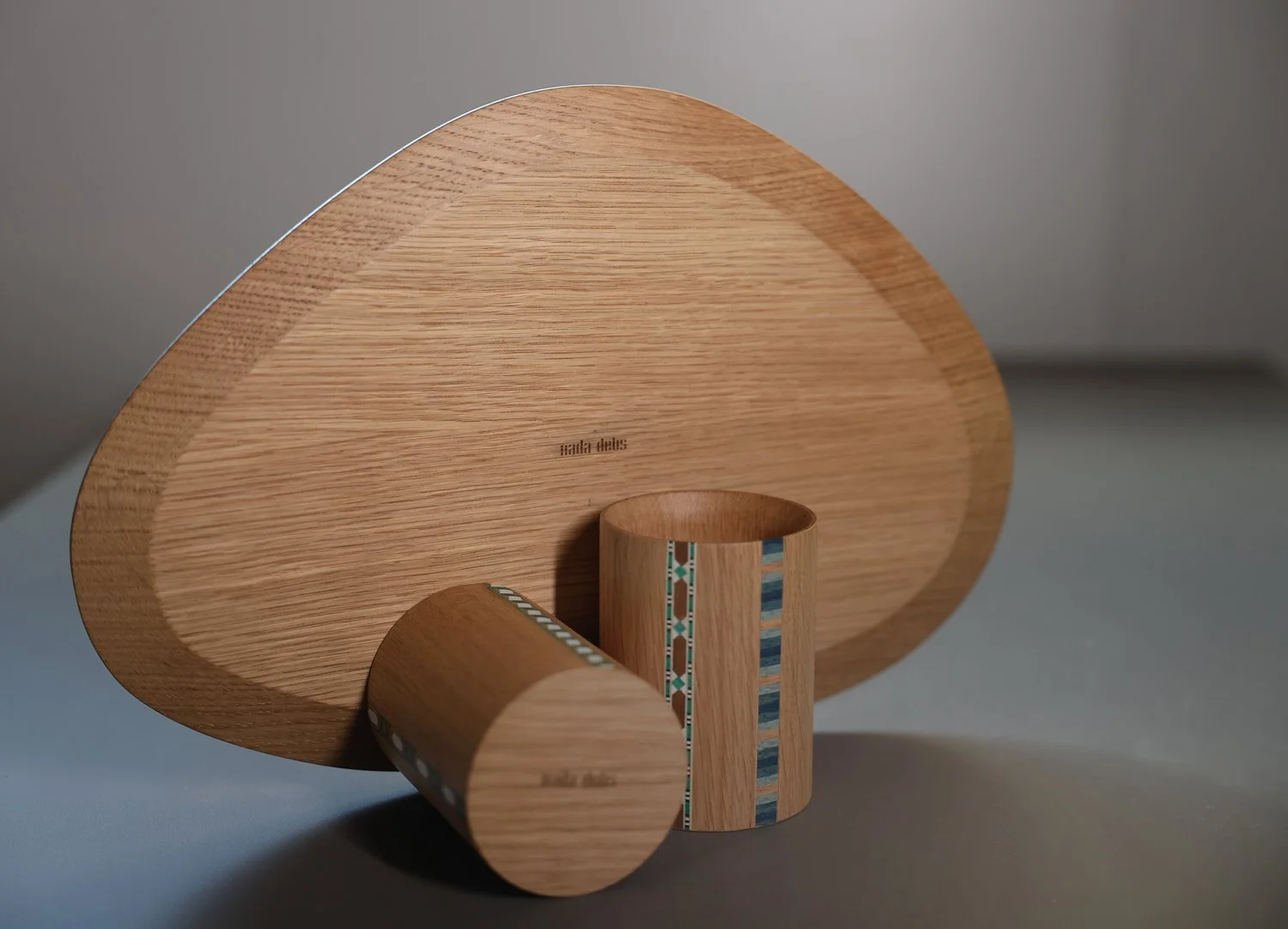
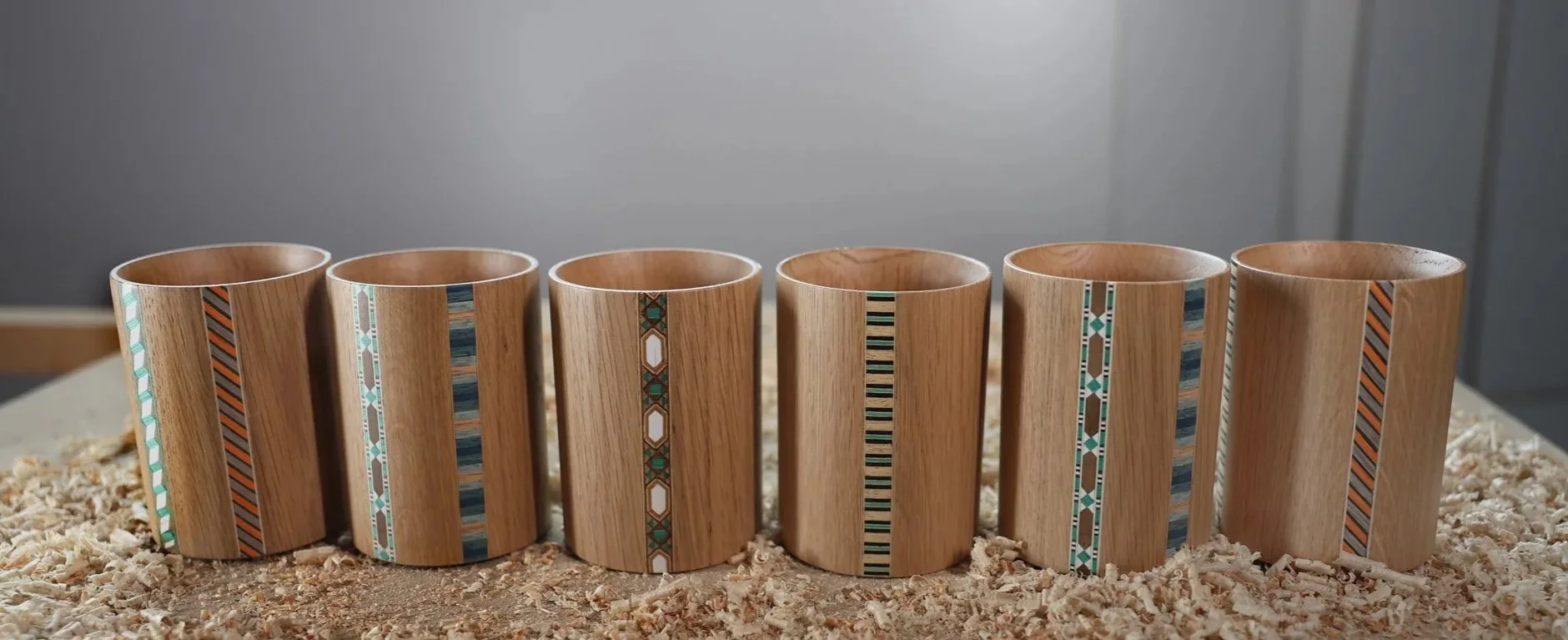
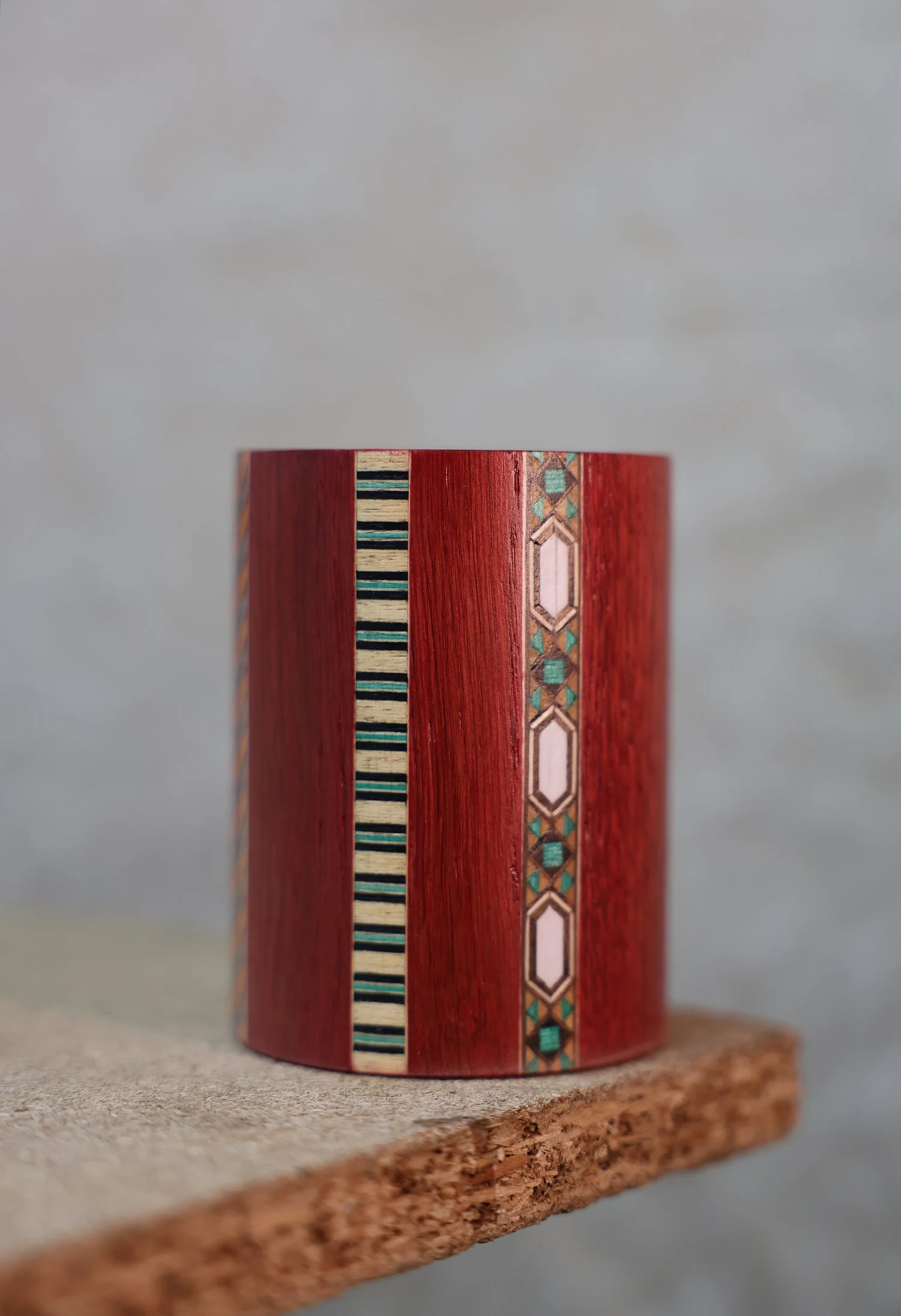
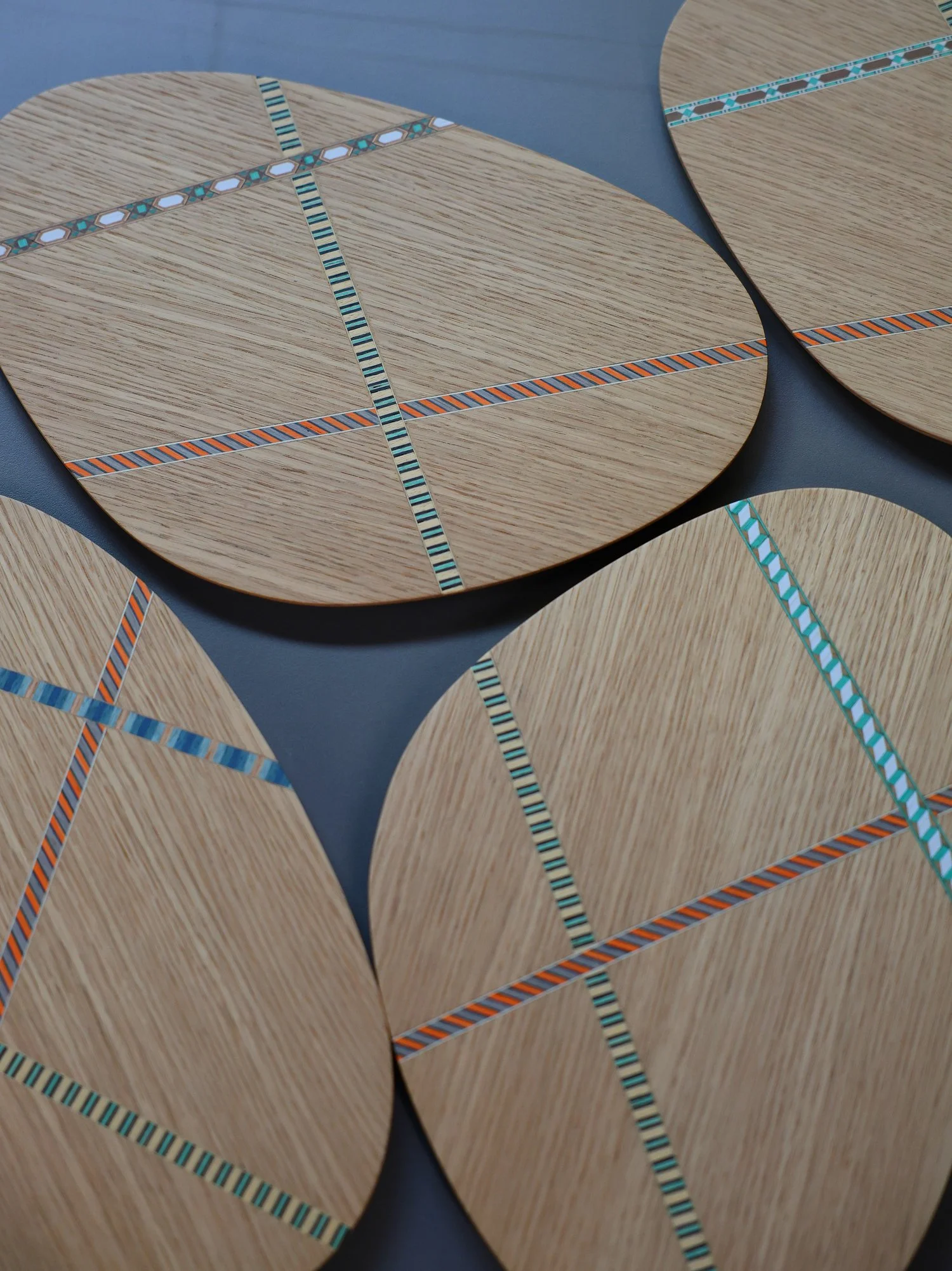
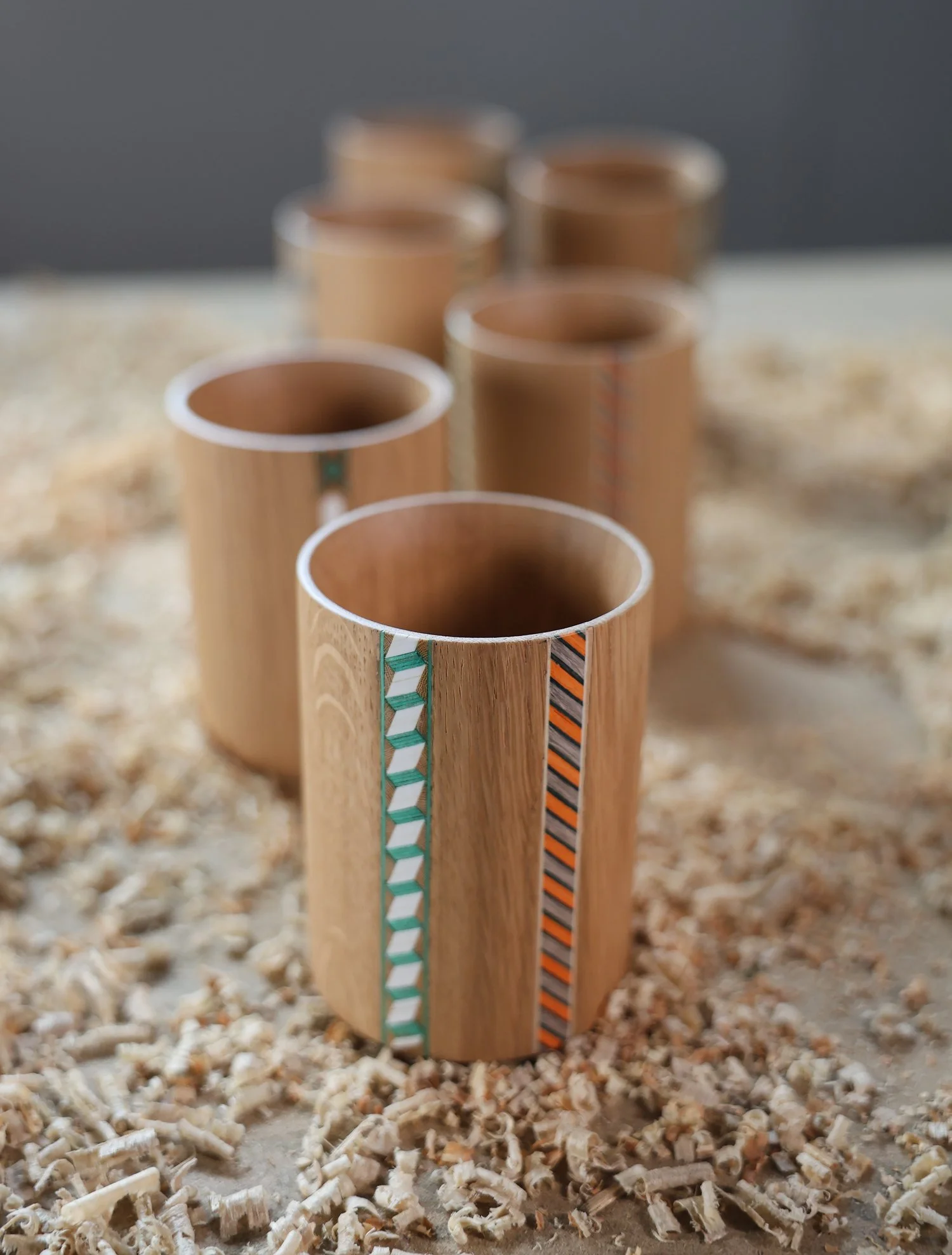
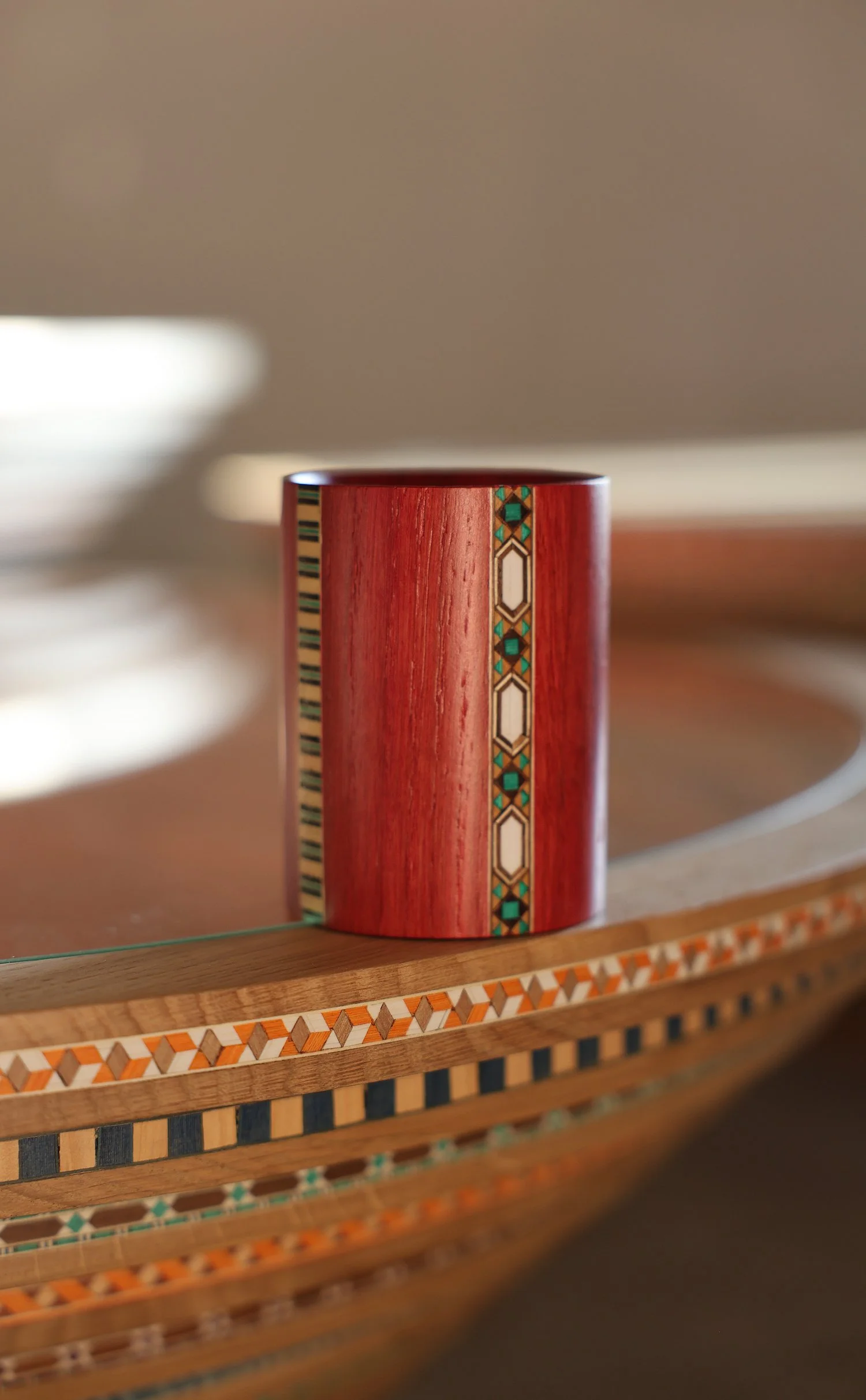
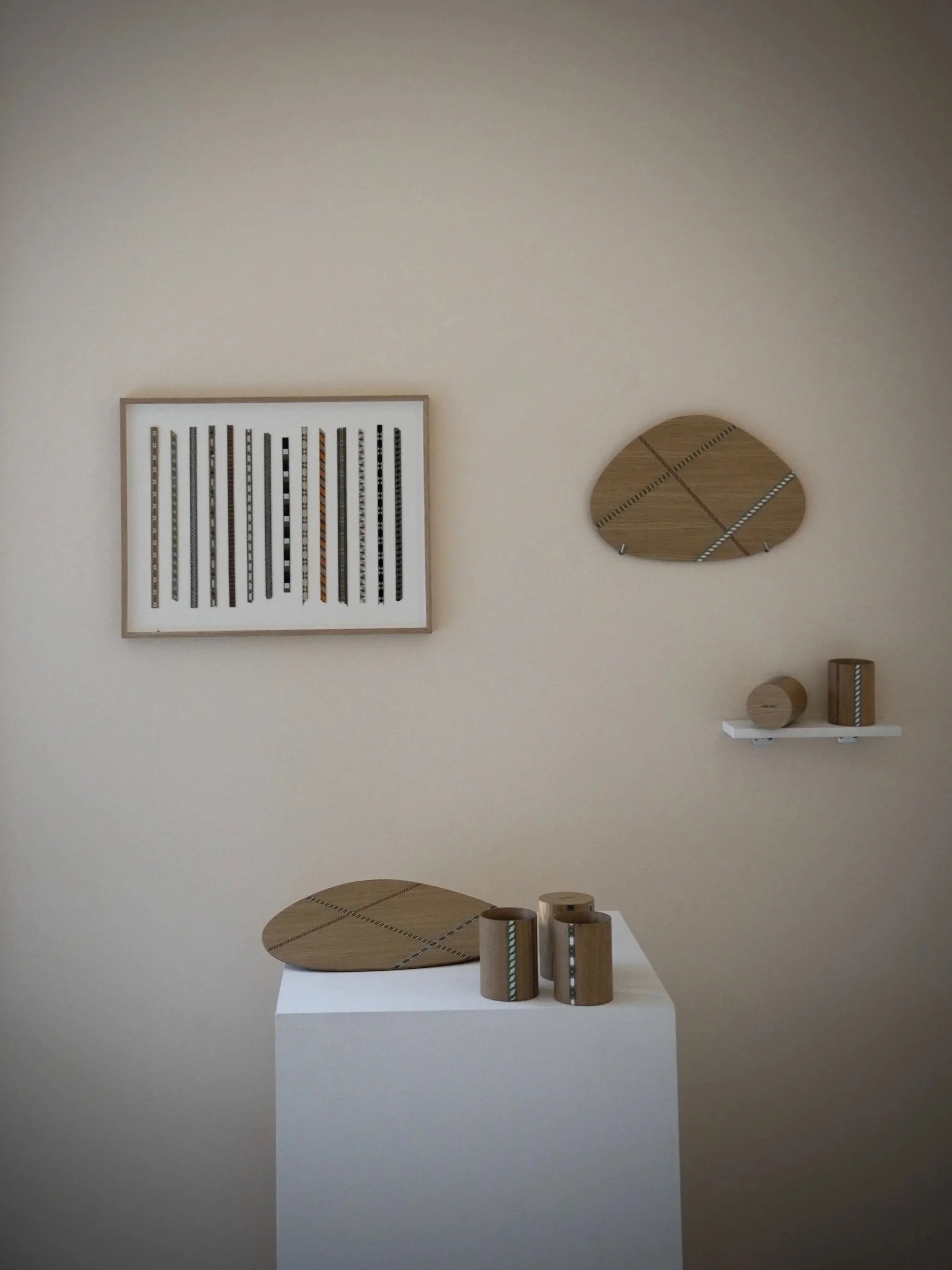
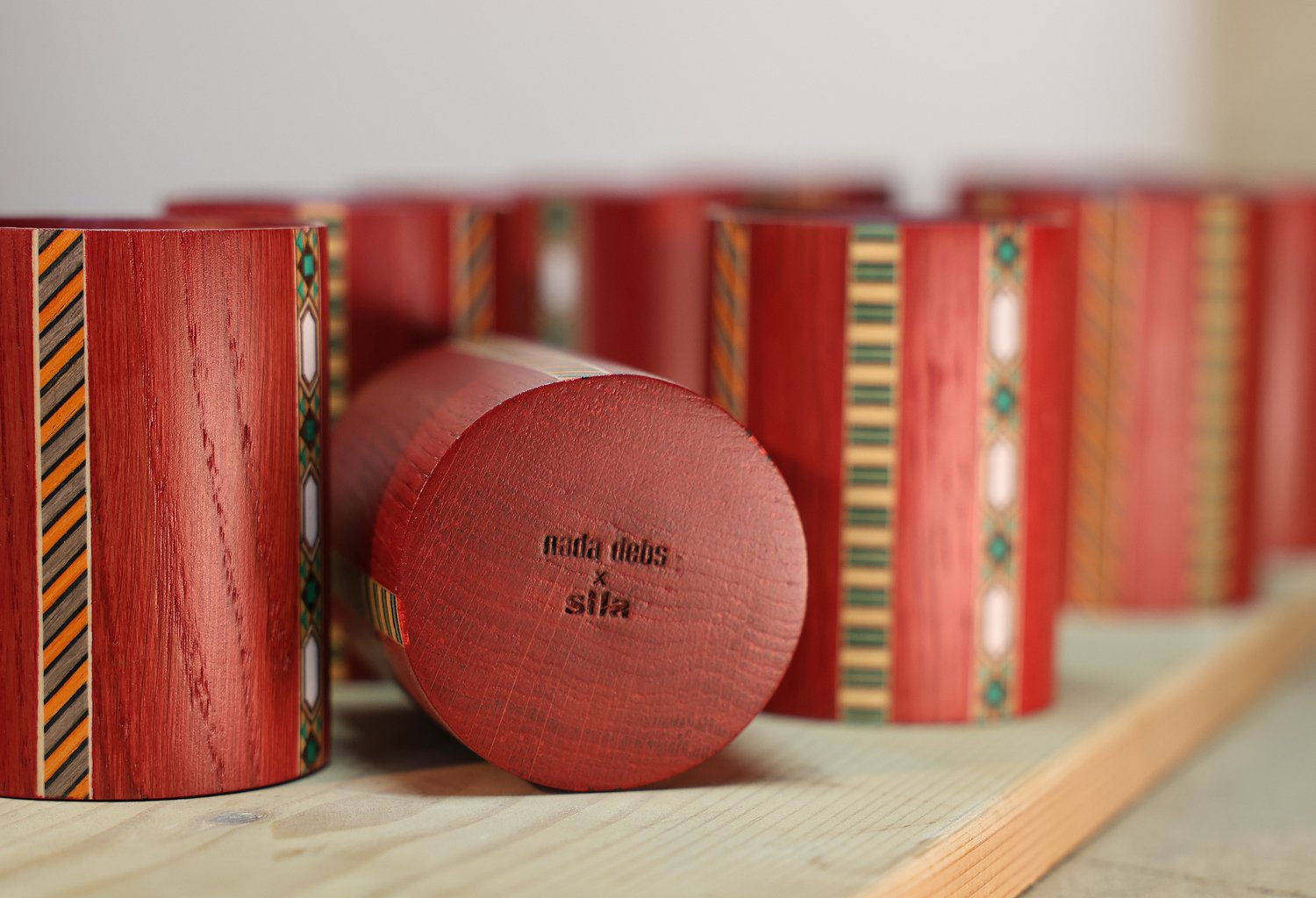
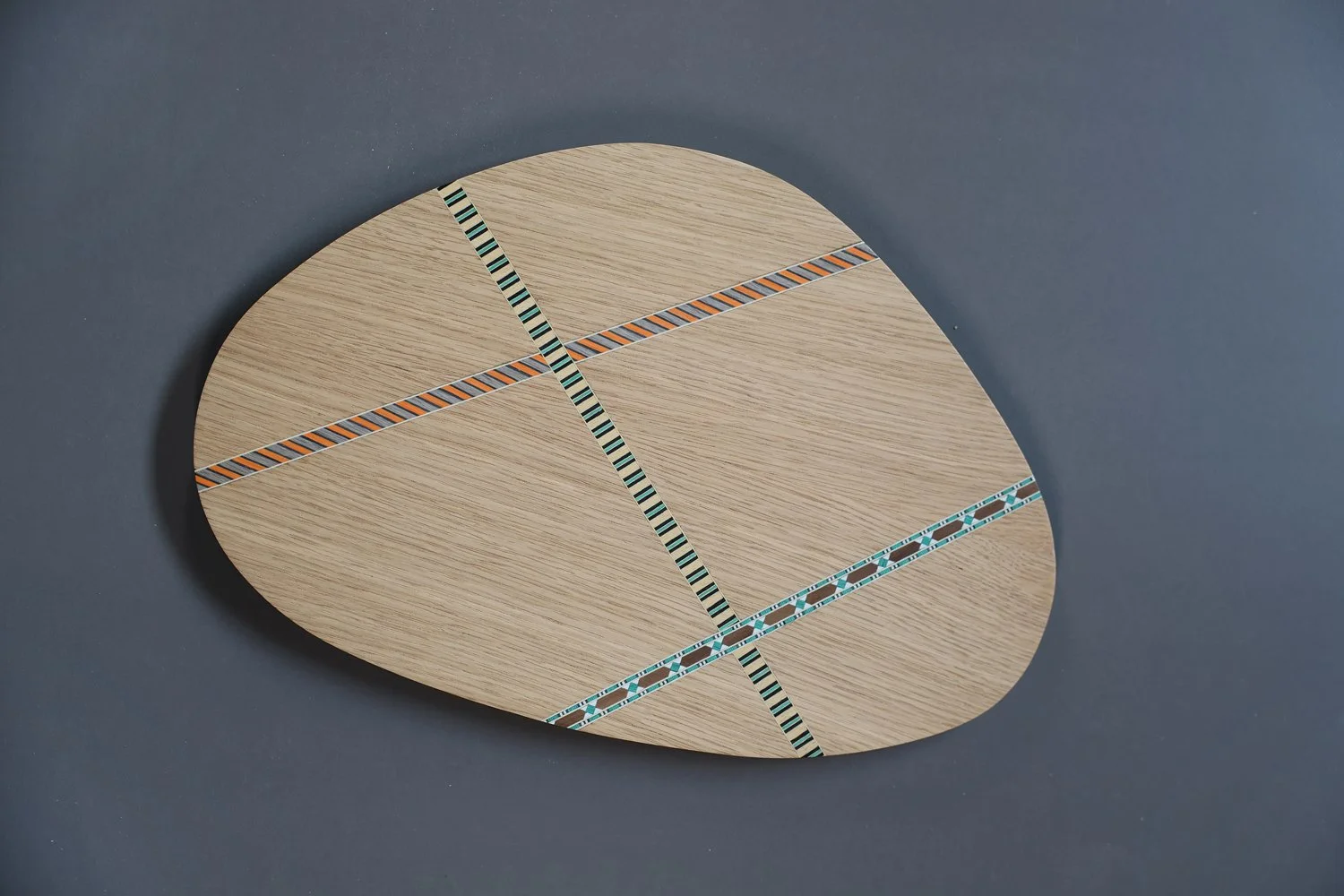
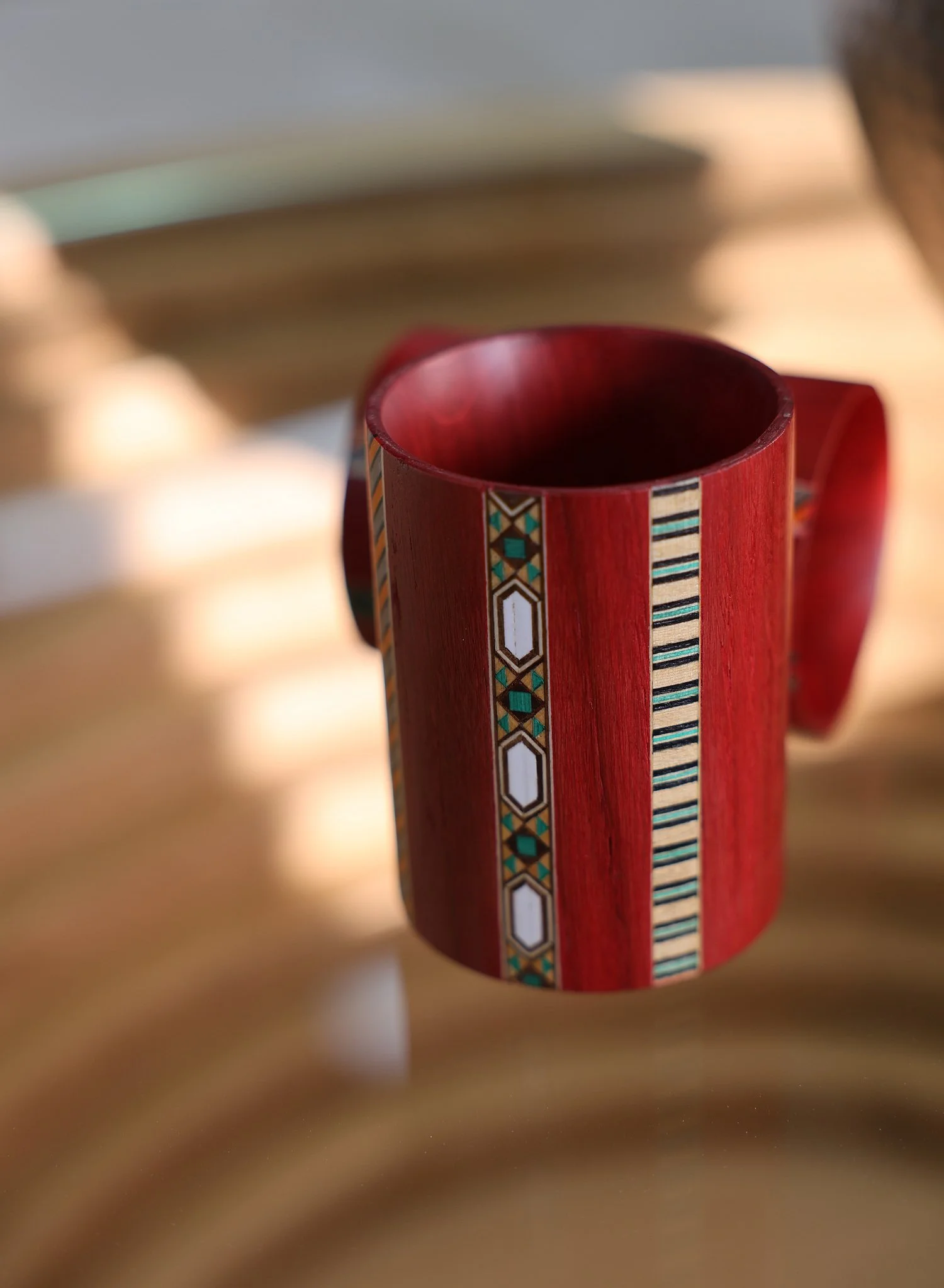
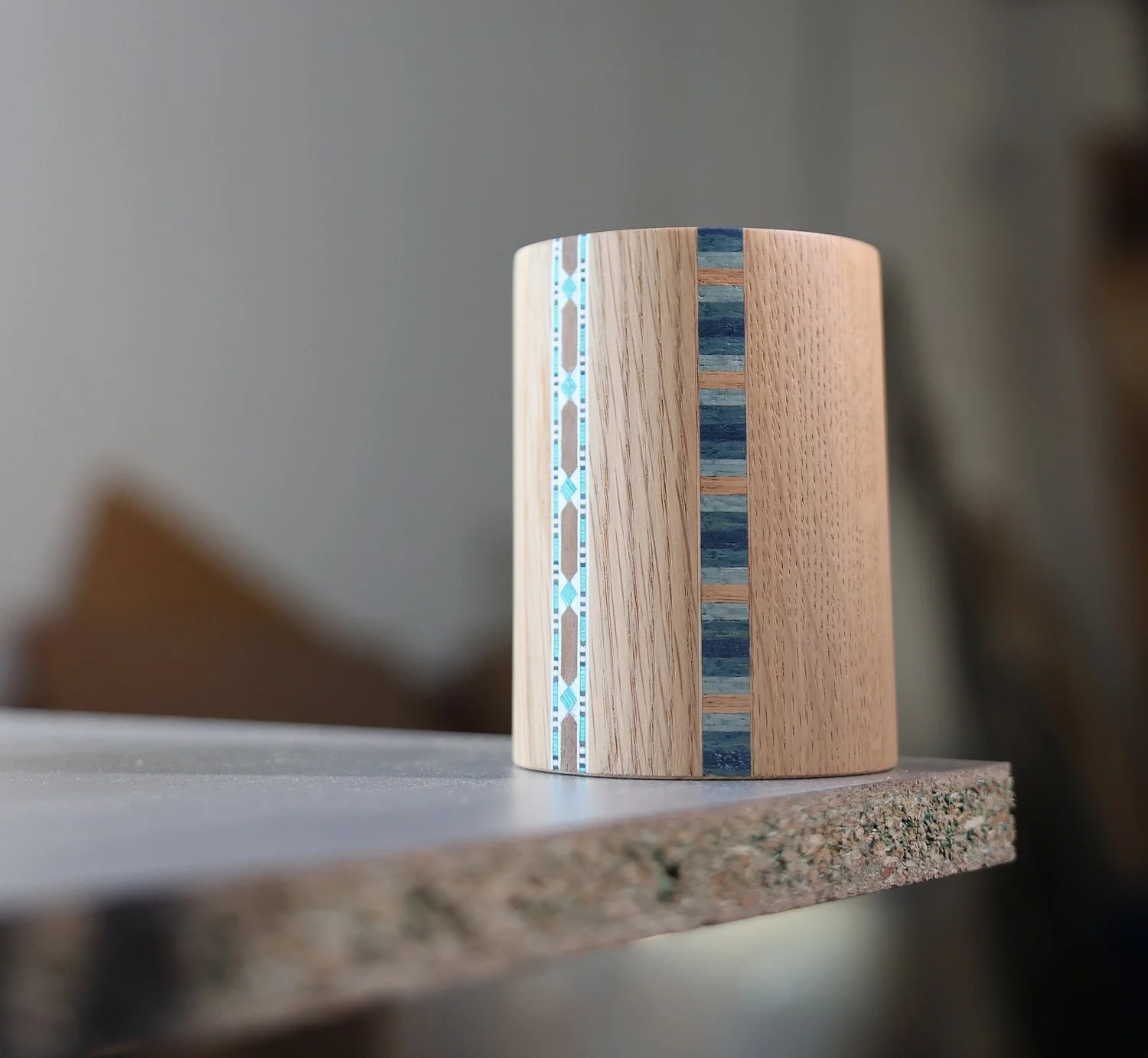
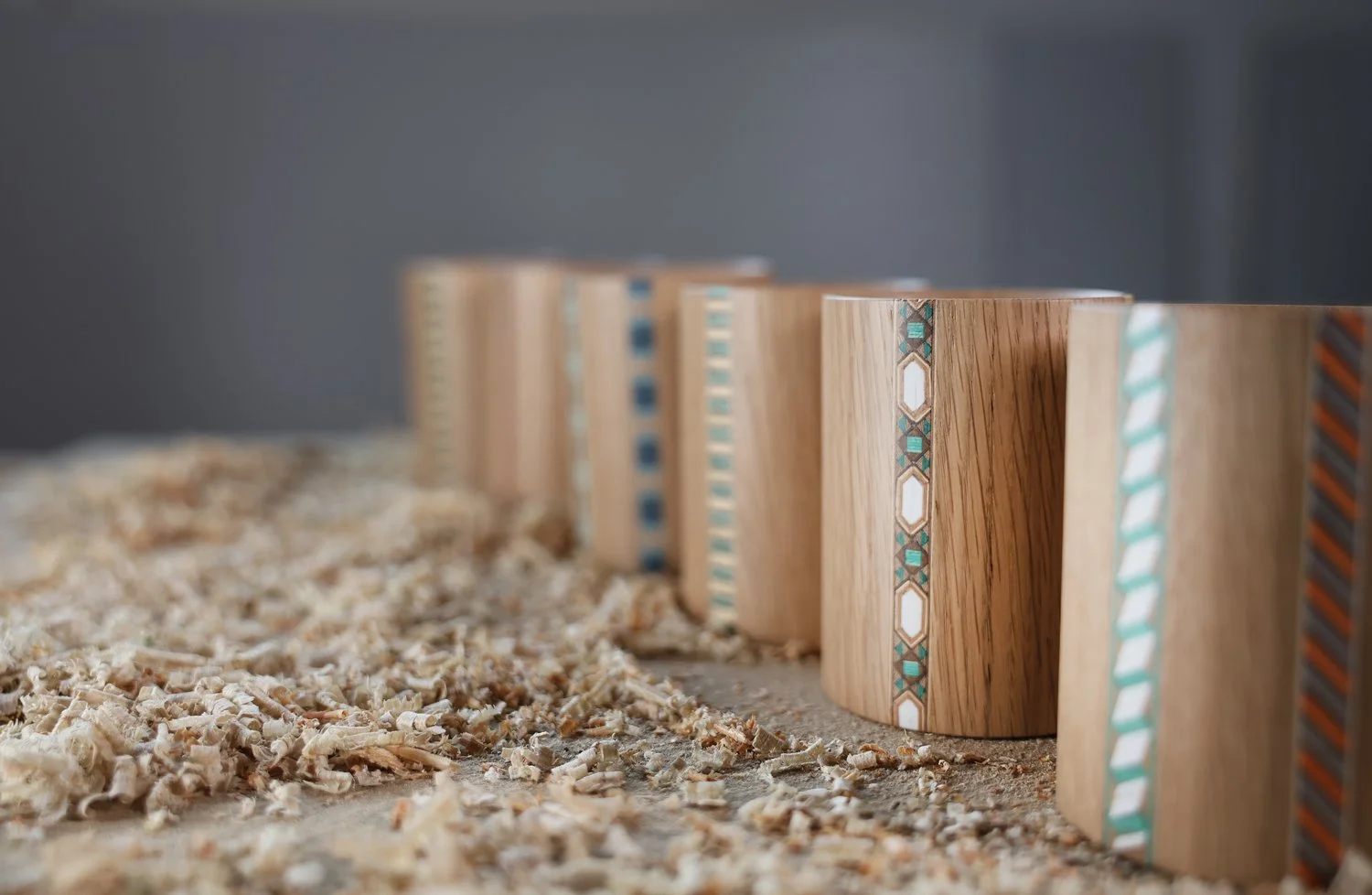
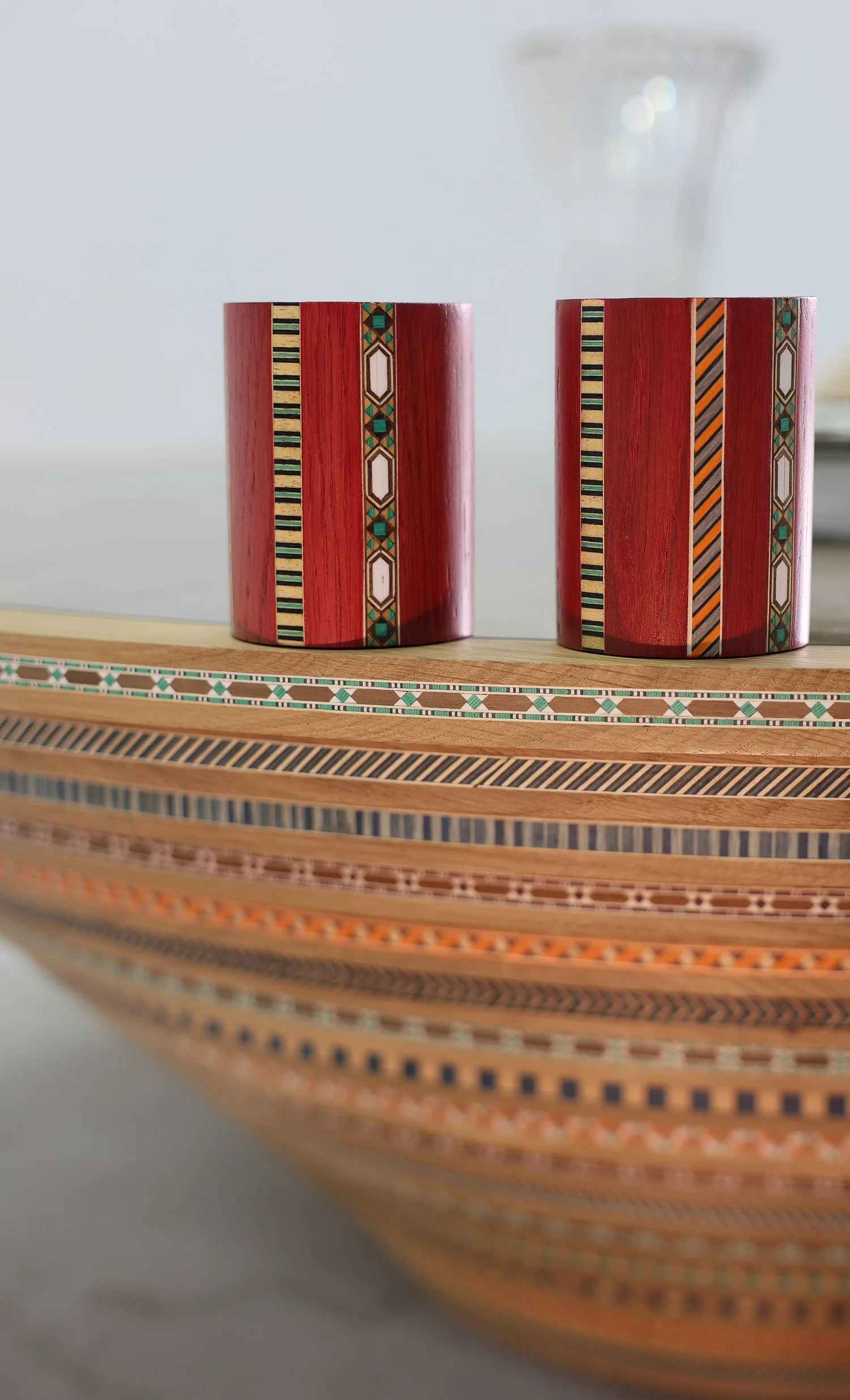
A playful homage to Lebanon’s marquetry heritage, these trays and pencil holders reinterpret a craft that has been practiced in the Levant since the Ottoman era and became a hallmark of Lebanese woodwork, as Beirut’s artisans are renowned for their intricate inlaid furniture and decorative objects.
Rooted in this tradition, marquetry — the art of assembling thin veneers of contrasting wood into patterned surfaces—inspires Nada Debs’ contemporary approach. She works with finely cut strips of colored wood, first inlaid to create a “mother” pattern. Some compositions are then sliced and subtly shifted to break the geometry, while others are applied over pleated, triangulated cuts carved into solid wood, adding depth and rhythm.
Handmade in Beirut, each piece carries the quiet individuality of local craftsmanship, its modern detailing beautifully offset against a base of natural French oak—timeless technique translated into a fresh, collectible form.

NADA DEBS
Levantine Designer (Lebanon).


©Joe Chaaya
MANDALA COLLECTION
BY EVA SZUMILAS
Designer (Polish-Lebanese).
THE PROJECT
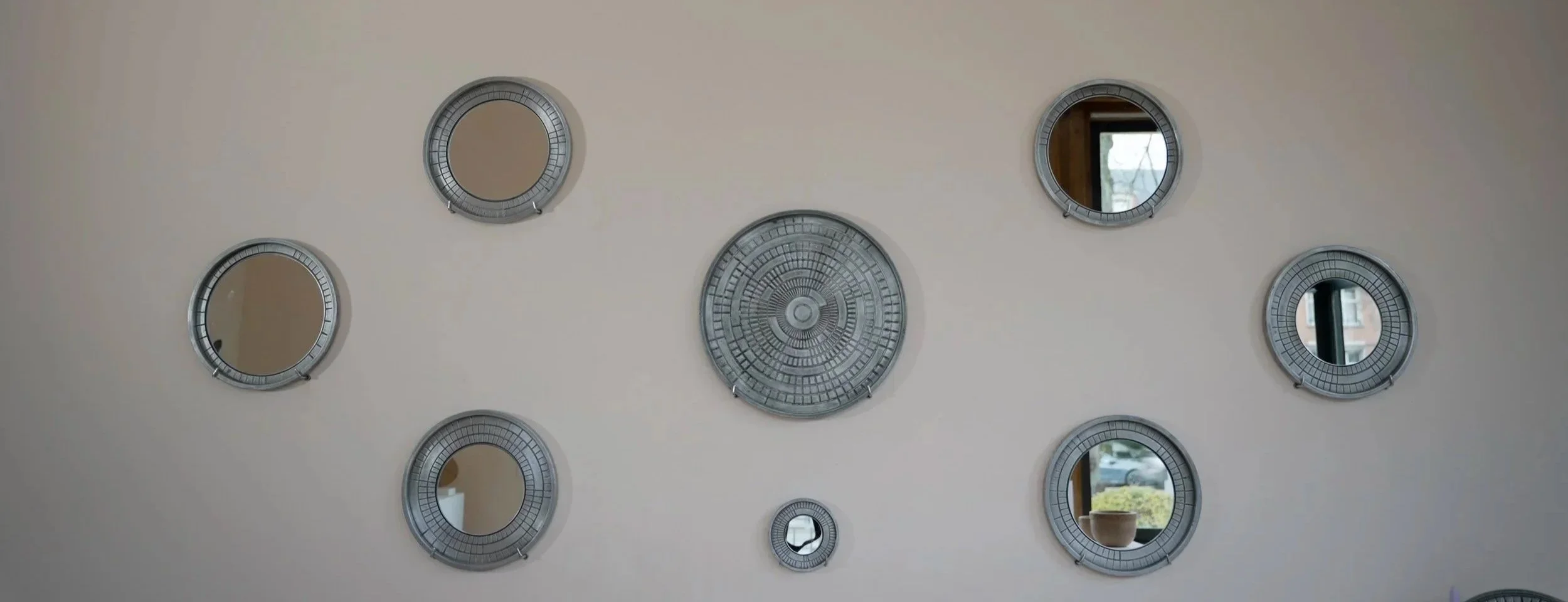
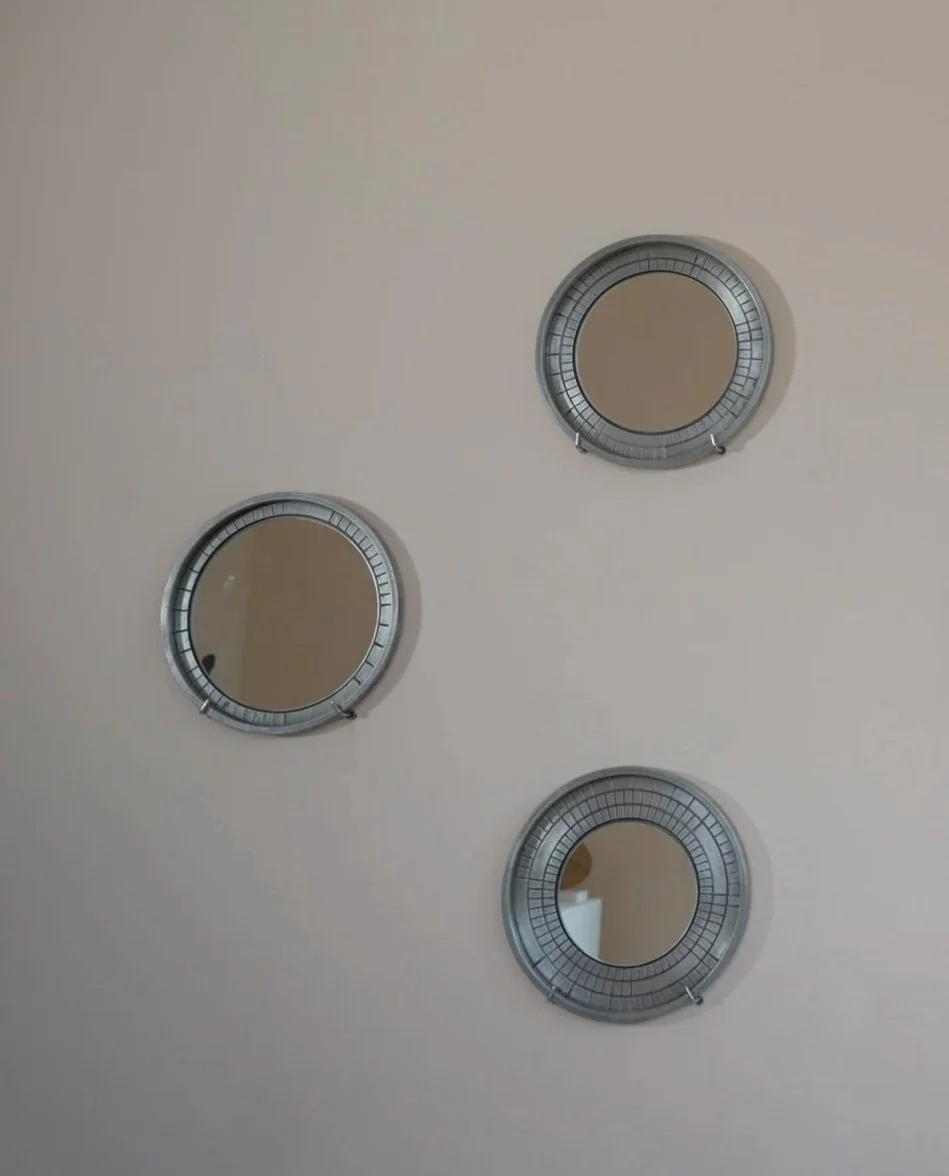
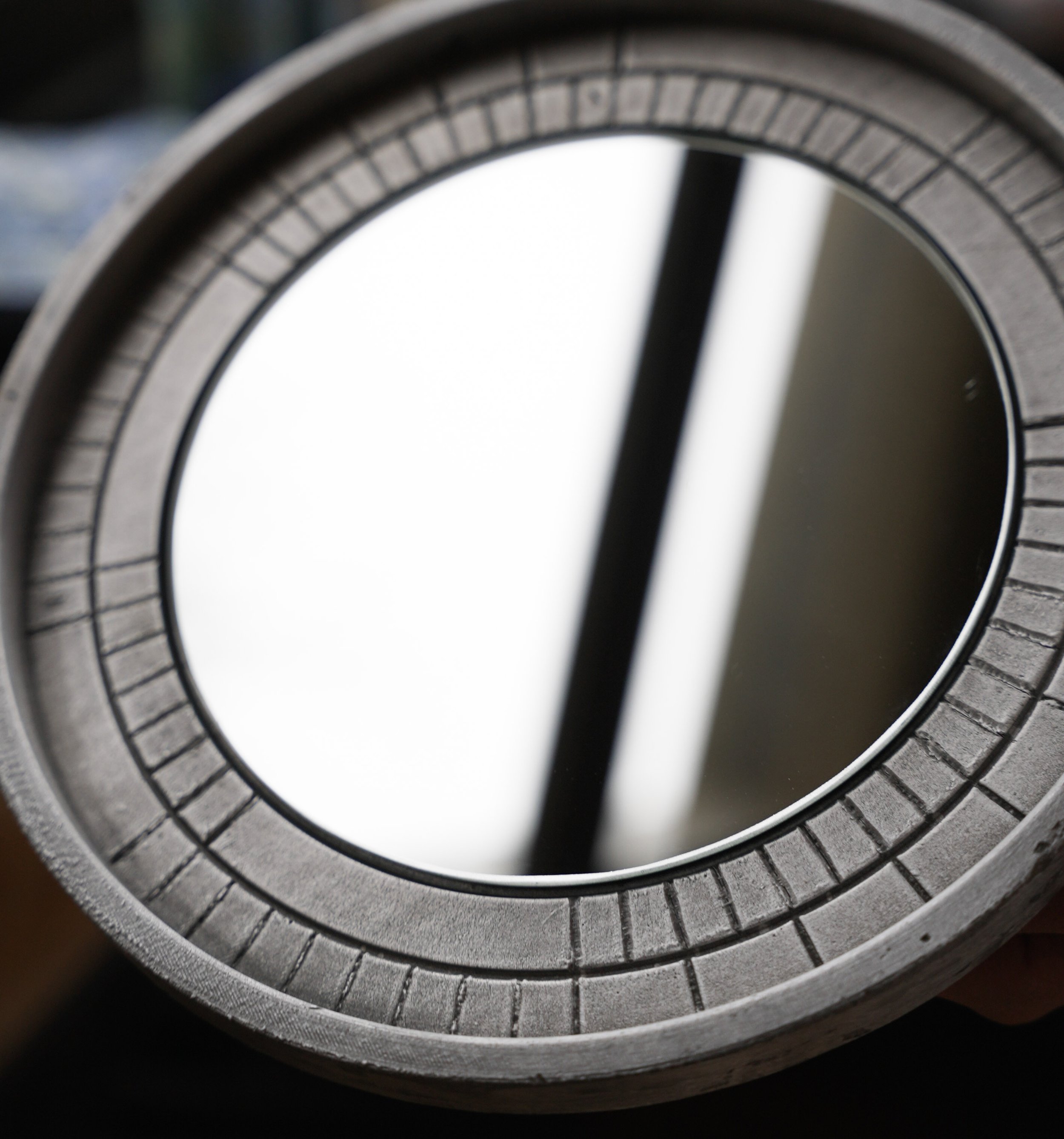
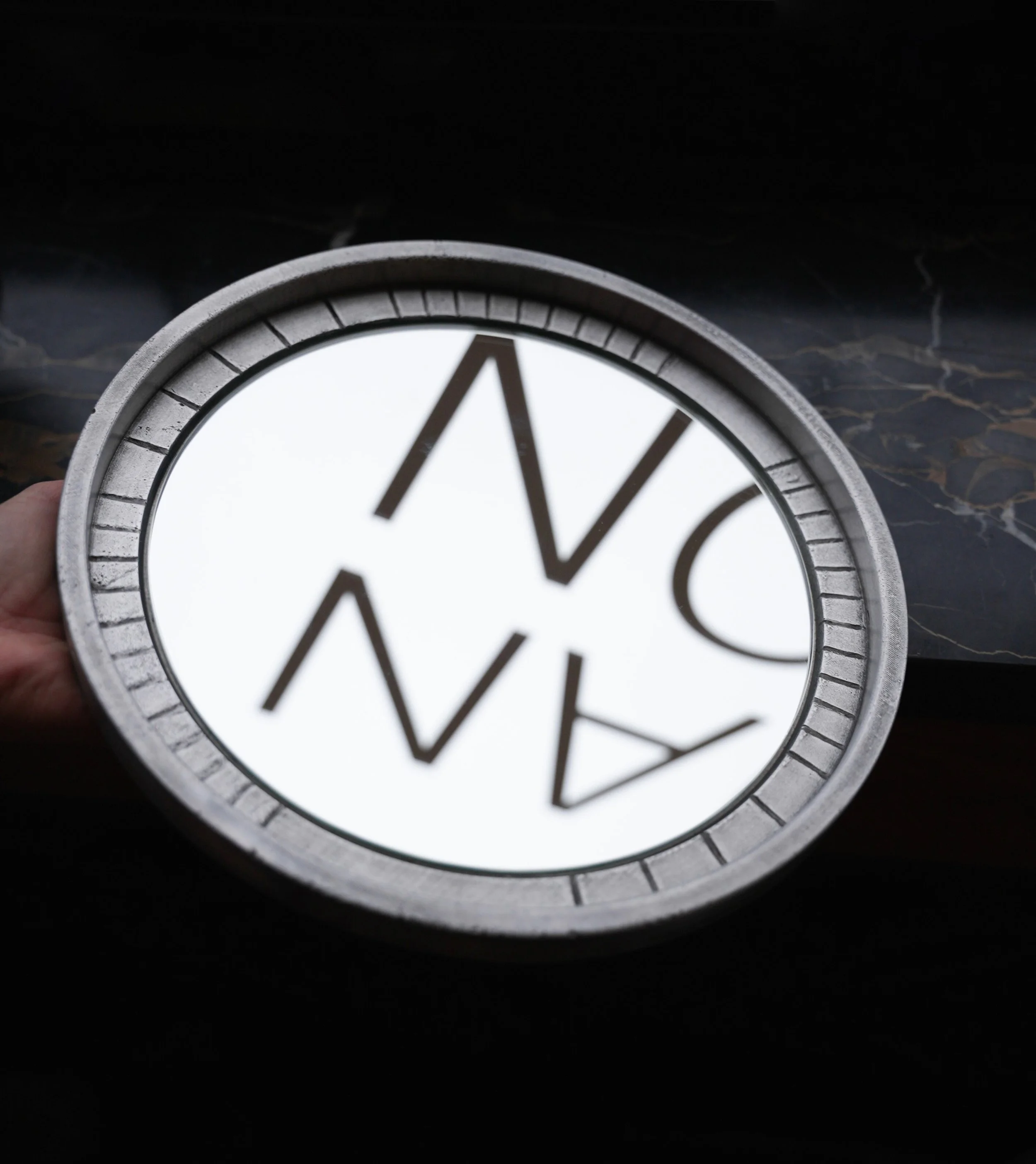
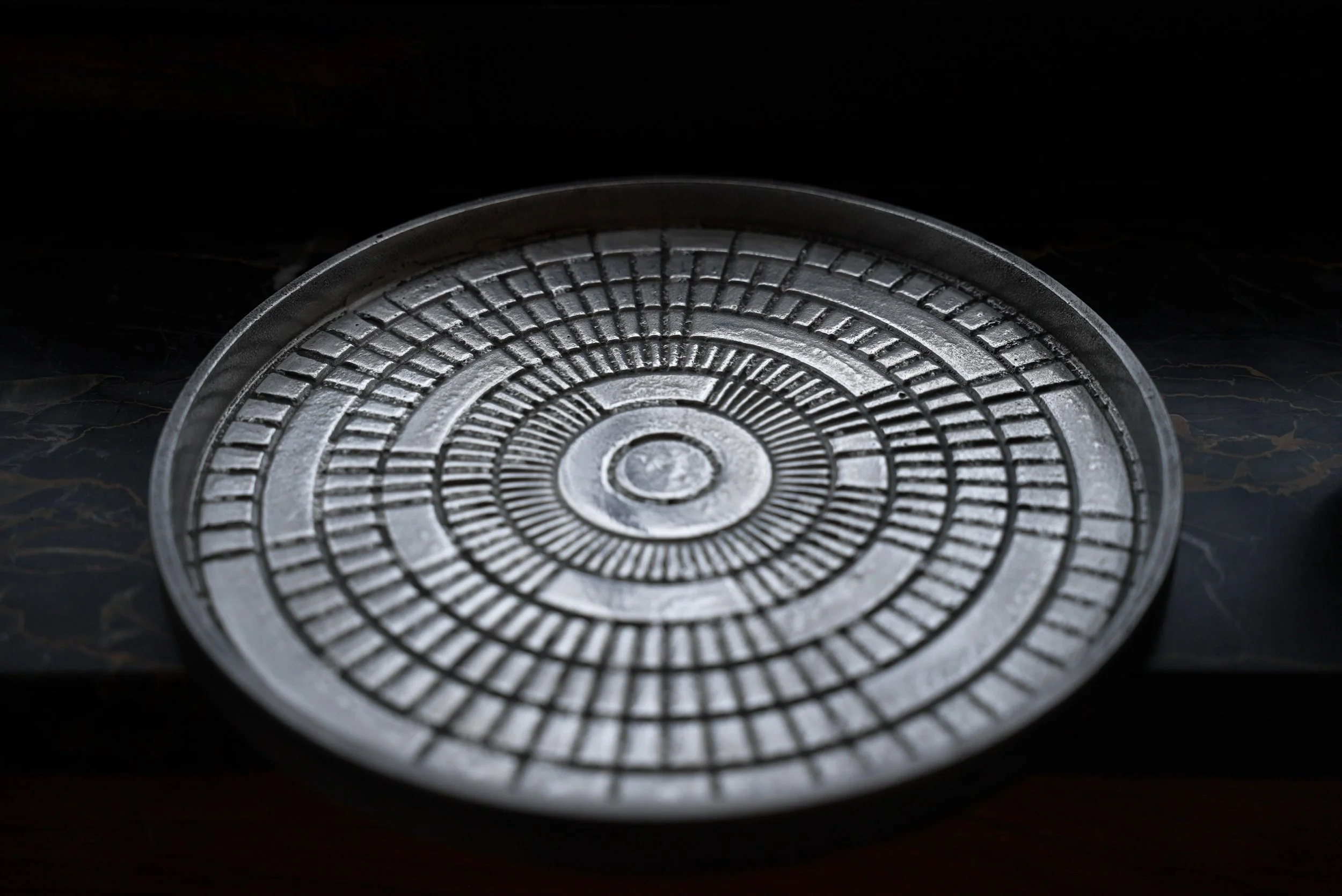
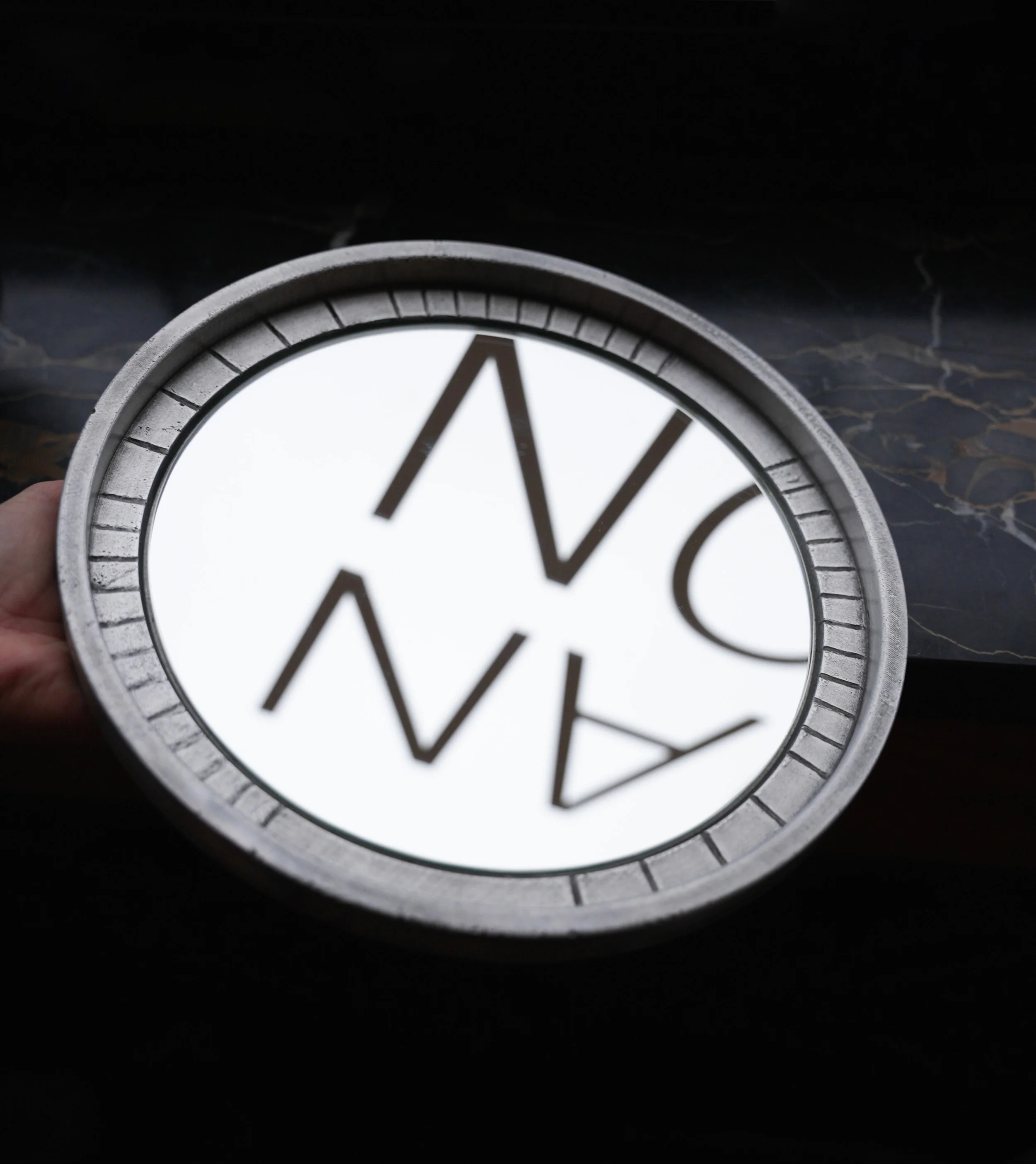
A refined series of mirrors, trays, and plates, each meticulously cast and hand-finished in aluminum. Inspired by the timeless symbolism of the circle, the collection features precise radial geometries that evoke celestial order, mandala-like harmony, and minimalist purity.
Crafted entirely by Lebanese artisans, these pieces embody both tradition and innovation. The collection celebrates Lebanon’s rich heritage of metalwork while reinterpreting it for a modern global audience.
Lebanon’s metalworking heritage dates back to the Phoenician period (c. 1500–300 BCE), when artisans mastered copper and bronze through hammering, casting, and engraving. These techniques evolved through the Mamluk and Ottoman eras (13th–19th centuries), shaping the rich craftsmanship still visible in historic souks and workshops.
Today, aluminum offers a contemporary reinterpretation of this legacy. By applying ancestral gestures—hammering, repoussé, and fine engraving—to a lighter, more malleable metal, Lebanese artisans renew centuries-old traditions for the present day.

EVA SZUMILAS
Designer (Poland-Lebanon).
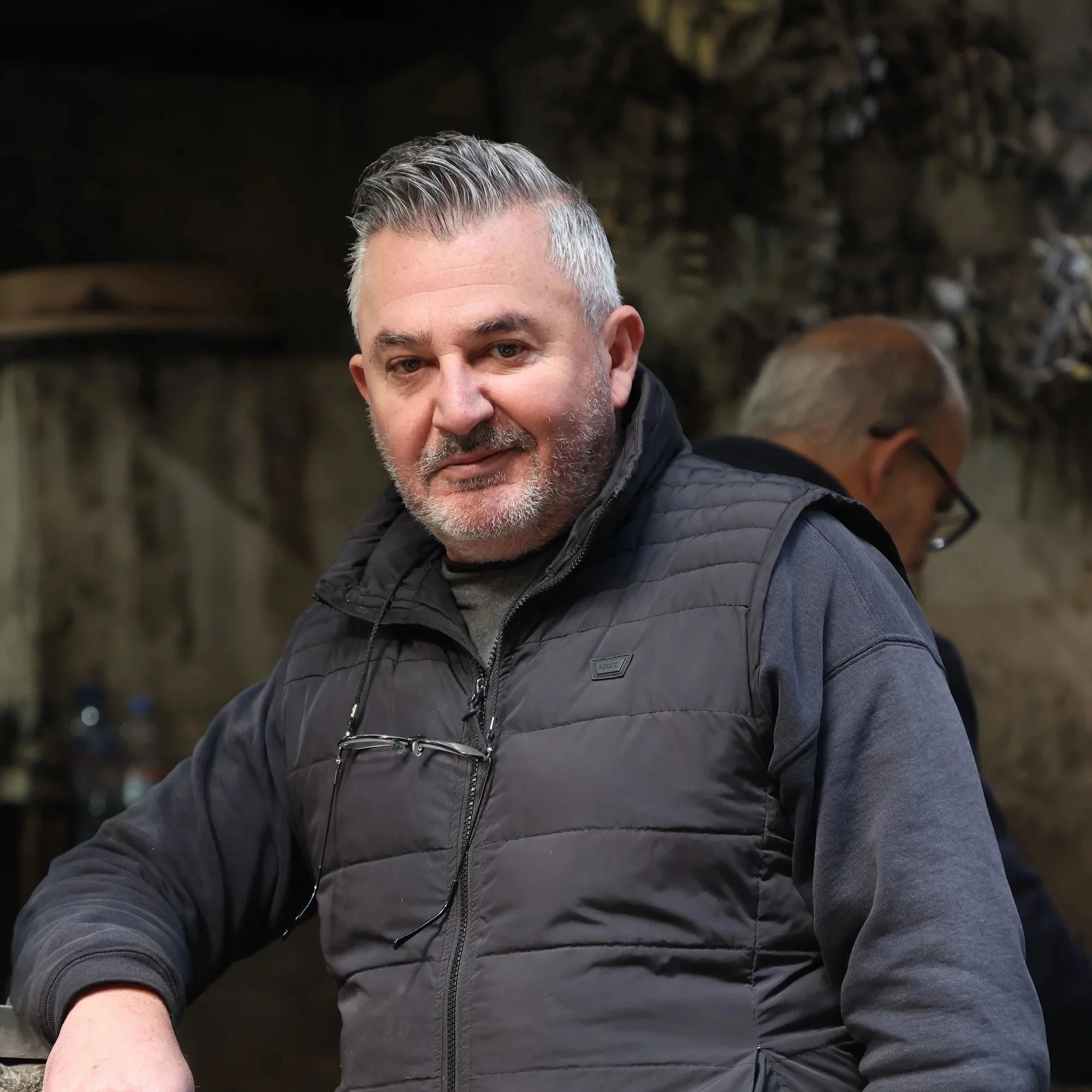
KHATCHADOUR AVEDIS DER ARTINIAN
Artisan (Armenia-Lebanon).

©hélènedecartier